It’s 8:45am in the Cour Napoléon. The glass pyramid is catching the first low sun, the fountains are hissing, and the palace wings are still the color of warm honey. You’ve got a ticket on your phone and a plan in your head. This is what visiting the Louvre looks like when you get it right: by noon you’ve seen the Mona Lisa, the Venus de Milo and the Winged Victory, and you still have the afternoon for Paris.
The whole trick is simple. You can’t see everything (there are more than 35,000 works on display), so you see the right things before the crowds wake up. Most people lose half a day to the wrong queue, the wrong hour and a map they unfold in the middle of a crowded corridor.
This guide fixes all three. Which entrance to use, how the timed tickets work, and a three-hour route that hits the big names in a sensible order. If you’re still building the rest of your trip, keep our full list of Paris tours and guides open in another tab.
The Louvre at a glance
- Time needed: 3 hours for the highlights, a full day if you’re an art lover with good shoes.
- Closed: Tuesdays, plus a few public holidays.
- Late openings: usually Wednesday and Friday evenings.
- Tickets: timed entry, booked online. Adults pay roughly €20 to €35 depending on whether they live in the EEA; under-18s go free.
- Nearest metro: Palais-Royal / Musée du Louvre (lines 1 and 7) or Pyramides (line 14).
- Best entrance: the Carrousel, under the shopping gallery.
Tickets: book the time slot, not just the day
Every standard Louvre ticket comes with a timed entry slot, and that slot is the real skip-the-line system. There’s no secret faster ticket. You pick a date and a half-hour window, show up inside it, and walk into the shorter queue for people who already booked.
Book on the official Louvre ticketing site as early as your plans allow. In summer and around school holidays, morning slots can disappear days ahead. Tickets can’t be changed or refunded, so lock in your Paris dates first. It’s the same timed-slot logic as choosing the right Colosseum ticket in Rome: the slot matters more than the ticket type.
Pricing works on residency. Citizens and residents of the European Economic Area pay a lower rate than everyone else, and a few groups get in free: everyone under 18, EEA residents under 26, and visitors with disabilities plus one companion. Free visitors should still reserve a slot. Rates change, so check the official site for current prices before you book.
The best entrance for visiting the Louvre (it’s not the Pyramid)
The Pyramid is the photo, not the shortcut. It’s the main entrance, so it pulls the biggest crowd, and on a hot afternoon that line shimmers across the courtyard. Here’s how the four doors actually work:
- Carrousel: underground, reached from 99 Rue de Rivoli or straight from the Palais-Royal metro through the shopping gallery. Open to anyone with a ticket, and usually the quickest way in.
- Pyramid: the famous one. Separate lines for pre-booked tickets and walk-ups. Fine early in the morning, slow by late morning.
- Porte des Lions: on the Seine side, ticket holders only. Often quiet, but it closes earlier than the museum, shuts on Tuesdays and isn’t always open.
- Passage Richelieu: for groups, members and people with a museum activity booked. Not for regular ticket holders.
Whichever door you choose, every bag goes through security. Big suitcases aren’t allowed in the galleries, so drop luggage at your hotel first. And remember that once you exit, you’re out: there’s no re-entry on the same ticket.
When to go so the crowds go somewhere else
The first hour after opening is gold. The galleries still smell faintly of polished wood, the guards are chatting, and you can hear your own footsteps in the Grande Galerie. By around 11am the tour groups roll in, and the Mona Lisa room turns into a slow-moving wall of phones.
Your two best windows are the first slot of the day and the late evenings on Wednesdays and Fridays, when day-trippers have gone and the light through the windows turns amber. Mondays tend to run busy because the Musée d’Orsay is closed that day, so plenty of museum lovers head here instead. Weekends and school holidays are the busiest of all.
Last entry is an hour before closing, and rooms start clearing 30 minutes before that, so an evening slot needs to start early enough to be worth it. Some rooms close on rotation for renovation, so glance at the official hours and visitor information on the morning you go.
A 3-hour route through the big names
This route starts in the Denon wing and ends in Richelieu, moving roughly in one direction so you’re not doubling back through the crowds. Grab a free paper map at the information desk under the Pyramid; it’s easier than squinting at your phone.
- Mona Lisa (20 minutes). Go straight up to the Denon wing’s first floor and head for her first, while the rope queue is still short. She’s smaller than you expect and behind glass. Turn around before you leave: the enormous Wedding Feast at Cana covers the wall opposite, and almost nobody looks at it.
- The Grande Galerie (20 minutes). A long, bright corridor of Italian paintings, with Leonardo da Vinci’s other works tucked along the way. Walk it slowly; this is where the palace feels like a palace.
- The big French canvases (25 minutes). In the red-walled rooms nearby, the Raft of the Medusa, Liberty Leading the People and the Coronation of Napoleon are so huge you’ll step back twice to take them in.
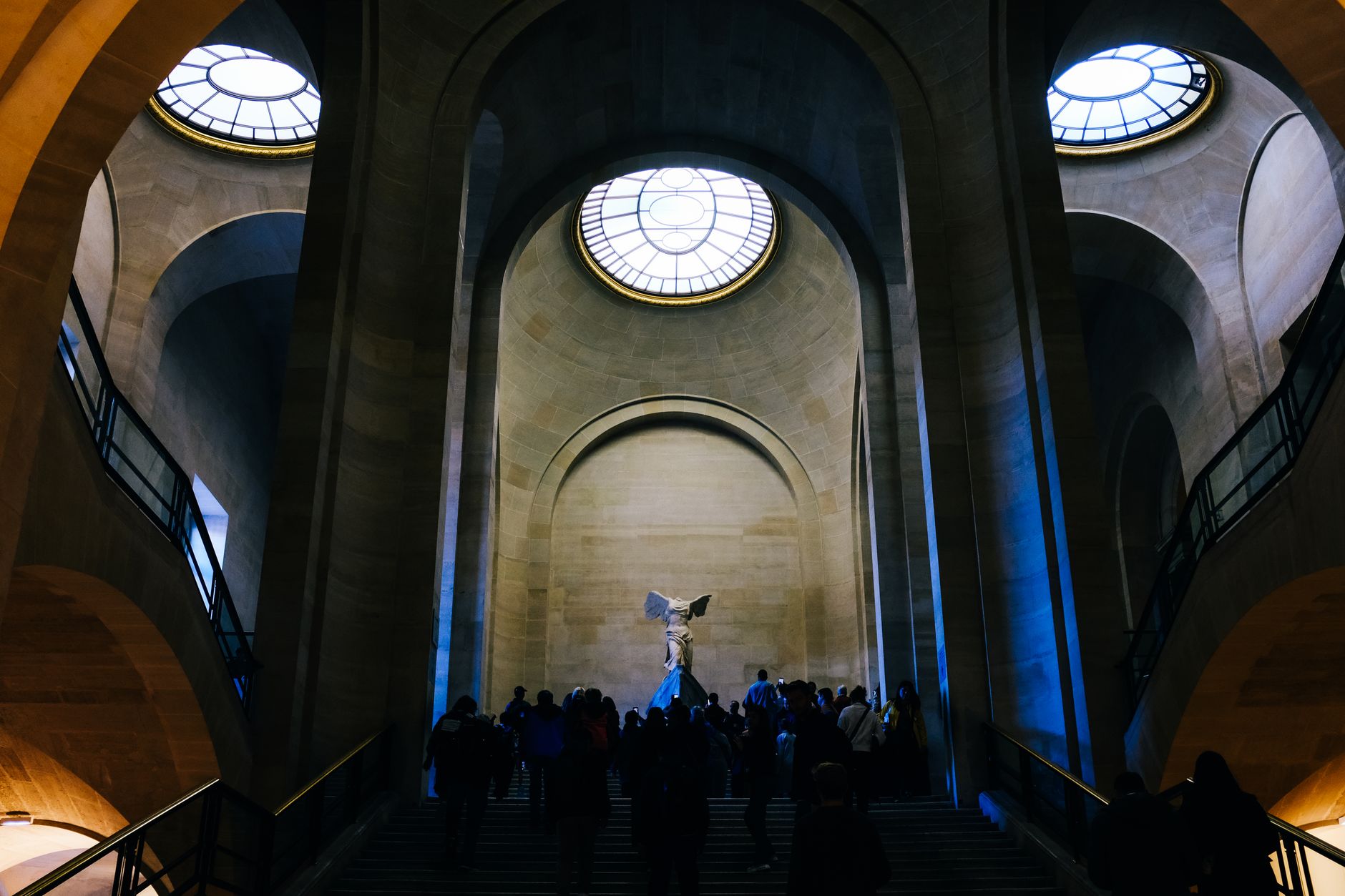
- Winged Victory of Samothrace (10 minutes). She stands at the top of the Daru staircase, wings wide, like she’s about to lift off over the crowd. Go down the stairs and look back up at her; that’s the view.
- Venus de Milo (15 minutes). Head into the Sully wing’s Greek sculpture rooms. Walk a full circle around her; the back is as good as the front.
- The medieval Louvre and the Great Sphinx (25 minutes). Drop to the lower level to walk along the stone foundations of the original fortress, cool and dim, then meet the granite sphinx guarding the Egyptian galleries.
- Egyptian antiquities (25 minutes). Painted coffins, jewelry and the Seated Scribe, whose crystal eyes seem to follow you around the case.
- Napoleon III Apartments (20 minutes). Finish in the Richelieu wing among crimson velvet, gold leaf and chandeliers the size of small cars. It’s the best “wow” per minute in the building.
Guided tour or go solo?
Going solo works well if you like to wander and don’t mind a few wrong turns. The official audio guide is cheap and covers the main works, and the route above keeps you moving.
A guide earns its price on a first visit, in peak summer, or when you only have one morning in Paris. A good one gets you to the Mona Lisa fast, skips the dead ends and adds the stories: the heists, the hidden details, why Napoleon crowned himself. Small groups beat the big flag-waving ones, because you can actually hear and ask questions. If that sounds like you, this well-reviewed small-group option includes reserved entry:
Little things that save your feet (and your mood)
The Louvre is huge, and the floors are hard. Wear shoes you’d walk a city in, because that’s basically what you’re doing. Carry a small water bottle and keep your bag light; you’ll be lifting it onto a security belt and carrying it for hours.
The cafés inside are handy but on the pricey side, and eating isn’t allowed in the galleries. Skip the long café line at lunch and do this instead: finish your route, walk out through the Carrousel arch and picnic in the Tuileries Garden. It’s free, it’s right there, and a baguette on a green metal chair beats a sandwich in a basement queue.
Pickpockets work the crowded rooms, especially around the Mona Lisa. Zip your bag, keep your phone in a front pocket, and be wary of anyone crowding you in the queue. If you’re also lining up the city’s other headline sights, our tips for sorting out Eiffel Tower tickets and timing follow the same early-start logic, and you can compare tickets for the rest of your Paris sights in one place.
Stay close and beat the queue to the door
The easiest way to land that first time slot is to sleep nearby. The 1st arrondissement puts you a short stroll from the Carrousel, so you can have a croissant at a zinc counter and still walk in at opening. It costs more than staying further out, so weigh it up; our breakdown of whether an apartment or a hotel works out cheaper after fees helps with the maths.
Questions travelers ask
How long does visiting the Louvre take?
Three hours covers the most famous works at a comfortable pace, like the route above. Half a day lets you add a department you love, such as Islamic art or French sculpture. Nobody sees it all in one visit, so don’t try.
Do I need to book Louvre tickets in advance?
Yes, in practice. Tickets are sometimes sold on site when it’s quiet, but popular slots sell out and walk-up lines can be long. Booking online guarantees your entry time, and it’s recommended even for free visitors.
Which day is the Louvre closed?
Tuesdays, every week. It also closes on a few public holidays, including New Year’s Day, 1 May and Christmas Day. Check the official site before you plan around a holiday.
Is the Mona Lisa worth the queue?
Once, yes, especially first thing in the morning when the line is short. Expect a crowd, glass and a brief moment at the front. Go early, enjoy it, then spend your real time on the rooms most people rush past.
One last thing before you go: when you leave, don’t dive straight back into the metro. Walk out through the Cour Carrée, the quieter square courtyard on the east side, and stand in the middle for a minute. It’s the oldest part of the palace, the crowds thin to almost nothing, and after three hours of masterpieces, it’s the calmest view in the whole building.
Some links in this post are affiliate links. If you book through them, we may earn a small commission at no extra cost to you.
Cover photo by Sona Manukyan on Unsplash
