It’s 8am on a January morning, prime time for Seoul in winter. Your breath hangs in the air, the sky is that sharp winter blue, and the bungeoppang cart outside the subway exit is already pressing little fish-shaped waffles in cast-iron molds. The smell of hot red bean and toasted batter follows you up the stairs.
The city is cold, dry and bright from December to February, and it’s one of the most underrated times to visit. Palace roofs look like woodblock prints under a dusting of snow, street food carts pop up on every corner, and the queues you’d face in spring simply aren’t there.
The catch is the wind. This guide covers how cold it really gets, where your snow odds are best, which winter snacks to hunt down, and exactly what to pack so the cold never runs your itinerary. For everything else in the city, browse our full collection of Seoul tours and guides.
At a glance
- Season: December to February, with January the coldest month
- Typical temps: daytime highs around freezing to the low single digits (°C), nights well below zero
- Snow: possible but never guaranteed, with the best odds in January
- Must-eats: hotteok, bungeoppang, fish cake skewers, roasted sweet potatoes
- Pack: a long padded coat, thermal layers, touchscreen gloves, and room for hot packs you’ll buy locally
How cold is Seoul in winter, really?
Colder than most people expect. January averages daytime highs of around 0 to 2°C, and nights regularly drop to around -6°C. Most winters also bring a few cold snaps where the thermometer dives below -10°C for several days.
The number on your weather app is only half the story. Dry Siberian wind rips across open plazas and Han River bridges, so -3°C with wind feels far colder than -3°C in still air. You’ll feel it most standing at a crossing on the wide boulevard in front of Gwanghwamun.
The upside: winter here is sunny. Skies are clear far more often than in summer, rain is rare, and the low afternoon sun turns palace roofs gold. December usually starts milder, sunset comes before 6pm, and late February can surprise you with a spring-like day or two.
If reading this has you craving warmth instead, our guide to choosing the right Canary Island for winter sun is the opposite plan.
Snow in Seoul: where your odds are best
Here’s the honest version. A dusting on palace roofs is common enough in January, but heavy snow that sticks around for days isn’t something to bank on. City snow usually melts off the streets within a day or two.
If snow is the whole point, stack the odds in your favor:
- Go in January. It’s the coldest month and the most likely to deliver white rooftops.
- Hit the palaces early. After an overnight snowfall, Gyeongbokgung and Changdeokgung look their best before the footprints arrive.
- Go up. Bukhansan’s granite ridges on the city’s northern edge hold snow longer than the streets below.
- Leave the city. Gangwon Province, a couple of hours east, gets far more consistent snow and has the ski resorts to prove it.
Seoul winter street food worth the frozen fingers
This is where the season really wins. As the temperature drops, carts appear outside subway exits and bus stops, trailing steam and the smell of toasted sugar. Cold weather is basically the starting gun for Korea’s best street snacks.
The winter lineup
- Hotteok: a chewy griddle pancake stuffed with brown sugar, cinnamon and crushed nuts that melt into hot syrup. Bite carefully. Seriously. The savory yachae version comes packed with vegetables and glass noodles.
- Bungeoppang: fish-shaped waffles filled with sweet red bean, or custard if you’re feeling modern. No fish involved, and a couple of them usually cost less than a coffee.
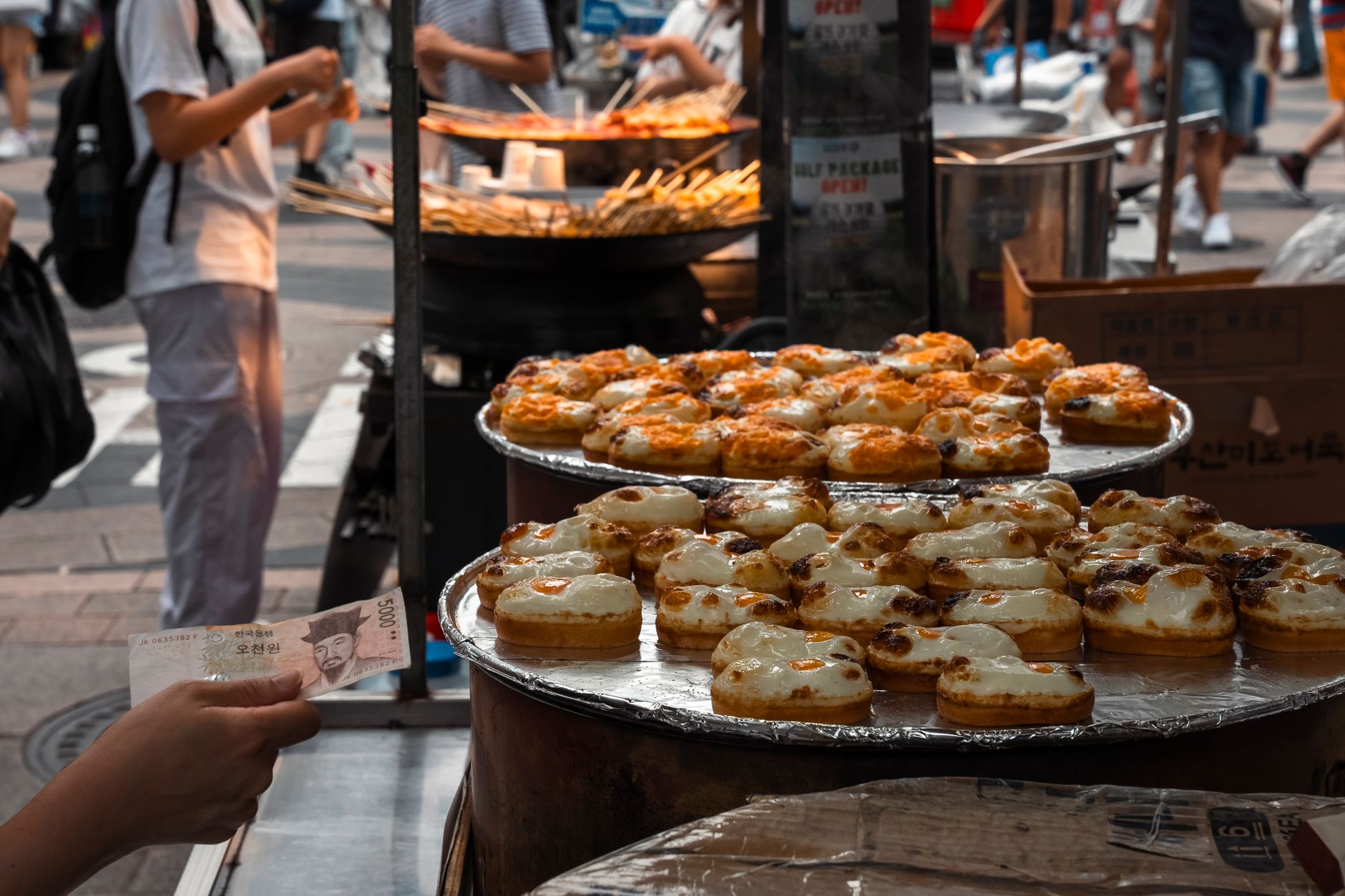
- Eomuk: fish cake skewers bobbing in a pot of broth. Eat standing, and grab a paper cup of that steaming broth, which is usually free.
- Gun-goguma: sweet potatoes roasted in a metal drum until the skin chars and the inside turns almost honey-sweet.
- Gyeranppang: a small loaf of sweet bread with a whole egg baked on top. Breakfast in one hand.
- Tteokbokki: chewy rice cakes in glossy red chili sauce. Spicy, filling and everywhere.
Where to eat like you live here
Gwangjang Market, near Jongno 5-ga station, is the classic: long benches under a covered roof, crispy mung bean pancakes (bindaetteok) sizzling in oil, and hand-cut noodle soup that fogs up your glasses. Namdaemun Market and Insadong are strong for hotteok. Myeongdong is fun for a skewer or two, but it’s noticeably pricier than the traditional markets, so treat it as a stroll, not dinner.
If you’d like the stories behind every bite, join a guided Gwangjang Market food tour. A good guide skips the tourist-facing stalls and walks you to the ones locals queue at.
Things to do in Seoul when it’s freezing
Skate in front of City Hall
Every winter, usually from mid-December into early February, Seoul Plaza turns into an outdoor ice rink. Entry costs about the price of a snack and has traditionally included skate rental, which makes it one of the cheapest good times in the city. Weekend sessions fill up, and gloves are required on the ice, so bring your own. Check the city government’s official rink information for current dates and prices before you go.
Palaces with (almost) nobody around
Winter thins the crowds at Gyeongbokgung and Changdeokgung. Come right at opening, when frost still clings to the courtyard stones and the only sound is gravel crunching under your boots. This is the season for palace photos without a hundred strangers in the frame.
Winter lights and warm-up stops
Most Decembers, the city strings up lights around Gwanghwamun and along Cheonggyecheon stream, often with a winter market nearby. Go after dark with a hot drink in hand. When your toes give up, do what locals do: duck into an underground shopping arcade, a café with heated floors, or a jjimjilbang (Korean bathhouse) and soak until you forget what month it is.
Snowy day trips from Seoul
When the city’s snow melts, the countryside keeps it. Three easy escapes:
- Nami Island: the tree-lined lanes made famous by the drama Winter Sonata look their best with snow on the branches. Take the ITX-Cheongchun train from Yongsan or Cheongnyangni to Gapyeong, then a short taxi or bus to the ferry. The island is flat, walkable in a few hours, and far calmer than in autumn.
- Garden of Morning Calm: close to Nami, this garden runs a winter light display that makes a lovely second stop before you head back.
- Ski slopes: Vivaldi Park is roughly 1.5 to 2 hours from central Seoul, with shuttle buses in season. First-timers can book a ski day trip with transport and rentals included and skip sorting the gear themselves.
If you’re heading beyond the capital, our South Korea travel guides collect every new trip idea for the country in one place.
What to pack for Seoul in winter (without overpacking)
The trick is layers, not bulk. Outside it’s freezing; inside, Korean heating is so strong you’ll be peeling off a sweater within minutes of sitting down in a café. You want clothes that come off fast.
The must-haves
- A long padded coat. Locals wear knee- or ankle-length “long padding” for a reason: it blocks the wind on your legs. Wear it on the plane to free up suitcase space.
- Thermal base layers, top and bottom. Two or three sets is plenty.
- Touchscreen gloves, because you’ll check Naver Map constantly.
- A hat that covers your ears, plus a scarf or neck gaiter.
- Waterproof boots with grip for icy sidewalks and slushy crossings.
- Warm socks without holes. Plenty of restaurants have shoes-off floor seating, and easy slip-on boots save you a lot of fumbling.
- Lip balm and rich moisturizer. The air is seriously dry.
- A power bank. Cold drains phone batteries fast.
Buy these when you land
Hot packs, the disposable hand warmers, are sold in every convenience store for about a dollar or two. Locals slip them into coat pockets and even shoes. Forgot thermals? Uniqlo, Spao and Top Ten sell affordable winter basics all over the city. And if Japan is your next stop, here’s what’s actually worth grabbing in Tokyo’s convenience stores.
Questions travelers ask
Is Seoul worth visiting in winter?
Yes, if you dress for it. You get clear skies, thinner crowds at the palaces and the best street food of the year. The trade-offs are biting wind and short days, so plan indoor breaks.
Does it snow in Seoul in winter?
Sometimes. January gives you the best odds, but city snow is usually light and melts within a day or two. For reliable snow, take a day trip toward Gangwon Province or Nami Island.
What should I wear in Seoul in January?
A long padded coat over thermal layers, with a warm hat, gloves and boots with grip. Wear layers you can remove easily, because shops, cafés and the subway are heated well.
Is December or January better for Seoul?
December is milder and more festive, with winter lights around the city center. January is colder and quieter, with the best chance of snowy palace scenes. Late February is a good compromise if you want fewer crowds and the occasional milder day.
One last thing: when you spot a bungeoppang cart with a line of office workers in long black padding, join it. The line is the review. Then wrap your cold hands around that warm paper bag and walk to the nearest palace while the light is still gold.
Some links in this post are affiliate links. If you book through them, we may earn a small commission at no extra cost to you.
Cover photo by Younyoun Park on Pexels