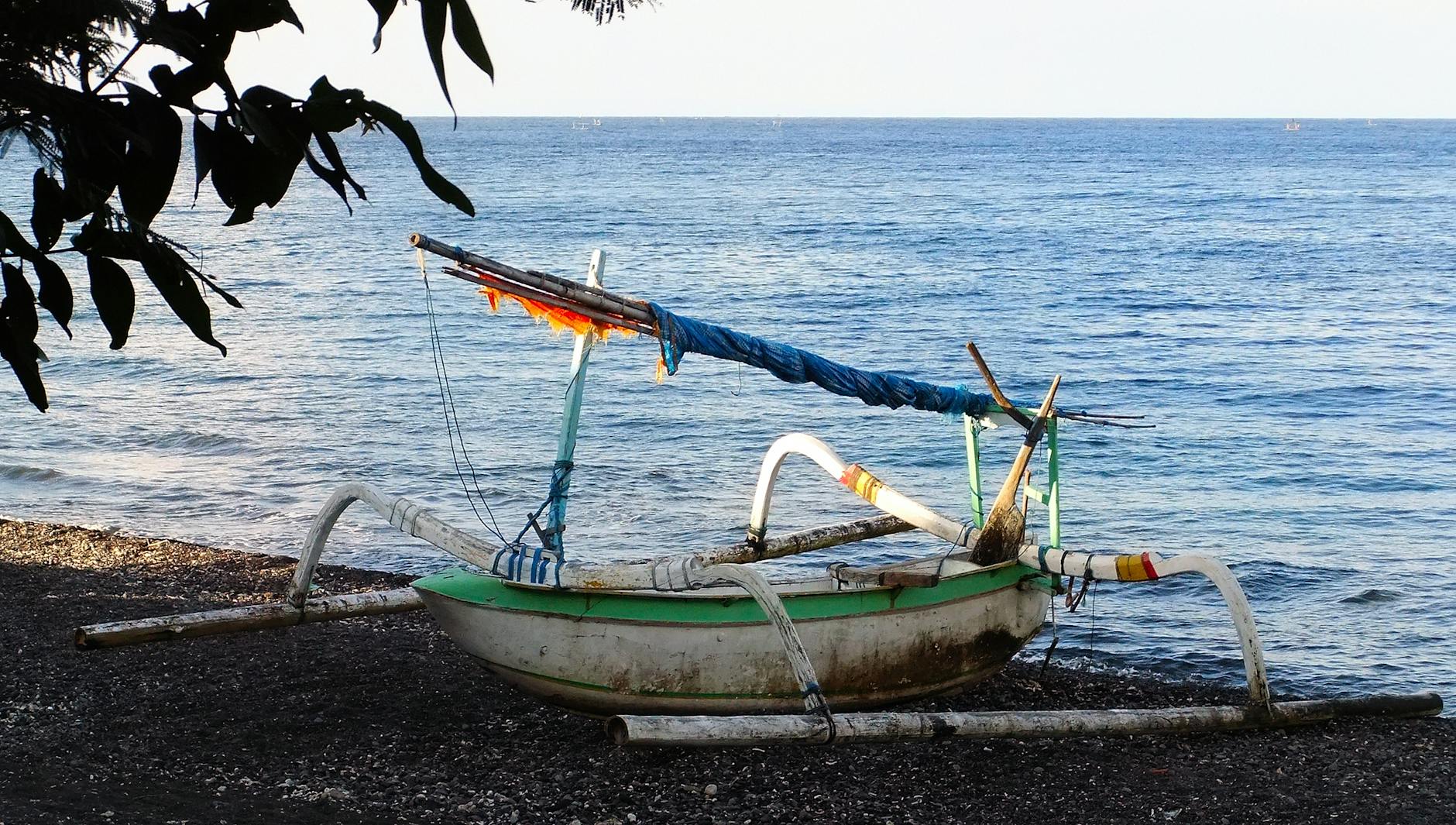
It’s just after sunrise in Amed. Fishing boats slide back onto the black sand, the top of Mount Agung is still pink, and the loudest thing around is a rooster with strong opinions. If that sounds more like your Bali than a Kuta bar crawl, you’re asking the right question: where to stay in Bali when you want beaches, green views and actual quiet.
Kuta is fine for a night near the airport. Beyond it, the island splits into very different moods: reef-calm sand in the south, a snorkeling coast in the east, slow black-sand villages in the north and cool rice-field valleys in the middle. Pick the right mix and your trip feels twice as long.
Here’s where to base yourself, who each area suits, what’s overrated, and how to link them without spending your holiday in a car. Once you’ve picked your spots, browse our Bali tours and travel guides to fill the days.
- Calm swimming beaches: Sanur, Nusa Lembongan, Amed
- Rice fields and valleys: Sidemen, the villages outside Ubud
- Cool air and waterfalls: Munduk
- Slow north coast: Lovina, Pemuteran
- Time per base: 2 to 3 nights (the east and north deserve the longer end)
- Getting around: a private driver for transfers, a scooter only if you’re confident
Where to stay in Bali for calm, swimmable beaches
Most of Bali’s famous west-coast beaches are about surf, strong currents and beach clubs. For water you can actually float in, head east of the airport.
Sanur: the easy, early-to-bed beach town
Sanur sits on the southeast coast, around 30 minutes from the airport when traffic behaves. An offshore reef keeps the water calm and shallow, so it’s the go-to for families, first-timers and anyone who’d rather swim than surf.
Mornings are the whole point. The coast faces east, so the sun rises straight out of the sea, and a paved beachfront path runs for several kilometers past warungs, cafés and colorful jukung boats pulled up on the sand. Rent a bicycle for a couple of hours and you’ve done Sanur properly.
The honest downside: Sanur gets sleepy after dark, and parts of the shoreline turn very shallow at low tide. If you want nightlife, this isn’t it. If you want to be asleep by eleven with the sea breeze through the window, it’s perfect.
Nusa Lembongan: small-island life, 30 minutes away
From Sanur’s fast boat terminal, the crossing to Nusa Lembongan takes about 30 to 45 minutes. Step off (often straight into knee-deep water, so wear shorts) and Bali’s traffic simply disappears. There’s no Grab or Gojek on the island. You get around by scooter, bicycle or on foot.
Days fill themselves: kayak through the mangroves, cross the little yellow bridge to Nusa Ceningan, or join a snorkel boat that goes looking for manta rays. Nights are sunset drinks and early dinners. It’s the same kind of trade-off we cover in our guide to Maldives resorts versus local islands: simpler, slower, more local.
Two nights is the sweet spot. Pick a hotel near where your boat lands, because boats arrive either at Jungut Batu on the northwest coast or at Mushroom Bay to the south.
Amed: snorkeling straight off the sand on the east coast
Amed isn’t one village but a string of fishing hamlets along roughly 14km of coast, about 2.5 to 3 hours from the airport. Black volcanic sand, painted outrigger boats and Mount Agung filling the sky behind you. It’s the quietest beach base on this list and, for plenty of travelers, their favorite.
The real show is underwater. At Jemeluk Bay, the coral starts a few meters from shore and there’s an underwater temple you can float over with just a mask and fins. Further along the coast, a small Japanese shipwreck sits in shallow water, and the famous USAT Liberty wreck at nearby Tulamben is close enough for a morning dive.
What you trade: the beaches are pebbly black sand, not powder white, and evenings are low-key. Stay at least two or three nights. The drive is too long for less, and Amed is at its best once you’ve slowed down to its speed.
North Bali: Lovina and Pemuteran for slow days
The north coast feels like a different island. Tourism arrived later here, the pace is slower, and the sea is usually calm enough for kids to paddle.
Lovina
Lovina’s long black-sand beach is known for sunrise dolphin boats that head out at first light. It’s a lovely way to start a day, but be warned: lots of boats often chase the same pod, so it can feel more like rush hour than wildlife watching. Go for the sunrise over the water and count the dolphins as a bonus.
Inland, the Banjar hot springs make an easy half-day trip. Lovina is roughly three hours from the south, so it works best as part of a loop rather than a quick detour.
Pemuteran
Further west, the small bay village of Pemuteran is the base for snorkeling trips to Menjangan Island in West Bali National Park, where the water is clear enough to see the reef from the boat and wild deer wander the shore. Right off the beach, the Biorock reef restoration project gives you easy snorkeling too. It’s a long drive from the south, so pair it with Munduk rather than making a dedicated trip.
Rice fields and cool air: Sidemen, Munduk and Ubud’s quieter side
Sidemen
Sidemen is a small village in east-central Bali, about two hours from the airport, wrapped in rice fields, forest and mountains. This is Bali the way the postcards promised: farmers in the paddies, mist in the valley at dawn, Mount Agung on a clear day.
There’s not much to “do,” which is exactly the point. Walk the rice-field paths, book a massage, read on your balcony, eat at a small local warung. Sidemen slots neatly between Ubud and Amed. Don’t use it as a halfway stop to Lovina, though: the mountain road north takes about three hours, as long as driving from the south.
Munduk
Up in the northern highlands, Munduk swaps beach heat for cool mountain air, coffee and clove plantations, and waterfalls in every direction. The classic trek links several falls in a few hours of hiking, and the twin lakes of Buyan and Tamblingan sit just up the road. Take a traditional canoe across Tamblingan to the lakeside temple of Ulun Danu Tamblingan for the quietest morning of your trip.
Pack a light jacket. Evenings up here get properly cool, and clouds roll in fast. From the south, allow up to three hours in daytime traffic.
Ubud (just not the center)
Ubud is Bali’s cultural heart, but the center is busy now: traffic on the main streets, and crowds at the Monkey Forest and the Tegallalang rice terraces by mid-morning. The fix is simple. Stay a few kilometers out in a villa or guesthouse overlooking rice fields, and dip into town for dinner and a dance performance.
If you’re weighing a private villa against a hotel, our breakdown of Airbnb versus hotel costs after fees shows you the real price. Ubud is about 1.5 hours from the airport and makes a smart first base, central enough to reach Sidemen, Munduk and the east coast.
How to choose where to stay in Bali (a quick match-up)
- First trip, young kids or a short stay: Sanur, with a couple of nights on Nusa Lembongan.
- Snorkelers and divers: Amed, then Pemuteran for Menjangan Island.
- Couples chasing quiet: Sidemen plus Amed.
- Hikers and waterfall hunters: Munduk.
- Culture with calm evenings: the rice fields outside Ubud.
Got ten days? This loop keeps drives short:
- Ubud outskirts: 3 nights
- Sidemen: 2 nights
- Amed: 3 nights
- Sanur: 2 nights before your flight
Two weeks? Add Munduk and Pemuteran at the start, or swap Sanur for Nusa Lembongan. Skip the one-night stops. Two nights is the minimum that makes a long transfer worth it.
Getting between bases (without losing half a day)
Bali looks small on a map. It isn’t. Roads are narrow, villages run into each other, and a temple procession can stop traffic for as long as it takes. Drives that look like an hour regularly take two.
The easiest way to move is a private car with a driver, arranged through your hotel. Many drivers will stop at a waterfall or temple on the way, turning a transfer into a sightseeing day. For your arrival, you can pre-book an airport taxi to your first hotel instead of bargaining at arrivals after a long flight.
Scooters are cheap and everywhere, but only ride one if you’re confident on busy roads and your license and travel insurance cover it. Check both before you go.
One more thing to sort before you fly: international visitors pay a one-off Bali tourist levy per person. Pay it only on the official Love Bali website or app, and check the current amount there.
Questions travelers ask
Is it worth staying outside Kuta and Seminyak in Bali?
Yes, if you want calm water, green views or quiet nights. Kuta and Seminyak are convenient and lively, but the beaches there are surf beaches and the streets are busy. Sanur, Amed and Sidemen show you a slower, more local Bali.
Which part of Bali has the calmest beaches for swimming?
Sanur is the easiest pick: an offshore reef keeps the water calm and shallow, and it’s close to the airport. On the east coast, Amed’s sheltered bays have coral close to shore, great for snorkeling. The north coast around Lovina is usually calm too.
How many nights should you spend in each area?
Plan two to three nights per base. Amed, Munduk and the north coast are long drives from the airport, so three nights there makes the travel worthwhile. Sanur works well for your first or last night.
What’s the quietest place to stay in Bali?
Inland, Sidemen and Munduk are the quietest, with rice fields, forest and cool nights. By the sea, Amed and Pemuteran are hard to beat. Expect fewer restaurants and almost no nightlife in exchange.
One last trick before you book
Spend your final night in Sanur, not Kuta. You’re still around half an hour from the terminal, and you get one more sunrise swim in calm, warm water before the flight home. Not a bad way to say goodbye to the island.
Some links in this post are affiliate links. If you book through them, we may earn a small commission at no extra cost to you.
Cover photo by Mikhail Nilov on Pexels