It’s 7am, and your Maldives resort vs local island decision from back home is about to show you what kind of morning you booked.
In one version, you step off a wooden deck straight into a glassy lagoon, and the only sound is a staff member raking the sand. In the other, the call to prayer drifts over a white sand street, a kid pedals past on a bike, and the café next door is frying tuna for breakfast.
Same ocean. Same absurdly blue water. Completely different holiday. This one choice shapes what you pay, what you wear, whether you get a cocktail at sunset, and how you spend your days. Here’s how the two really compare, with no brochure gloss, and you’ll find more ideas in our growing collection of Maldives guides and tours.
At a glance
- Private resort: one island, one hotel, total privacy, alcohol, swimwear anywhere, big price tag.
- Local island: guesthouses in a real Maldivian village, far cheaper, modest dress in town, no alcohol on the island.
- Getting there: resorts use speedboats, seaplanes or domestic flights; local islands add cheap public ferries and shared speedboats.
- Best for: resorts suit honeymoons and switch-off weeks; local islands suit divers, snorkelers, budget travelers and the curious.
The resort bubble: one island, one hotel, zero decisions
The Maldives runs on a simple idea: every resort owns its own island. Nobody lives there except staff. There are no streets, no shops that aren’t the resort’s, no traffic. You arrive by boat or seaplane, and the island becomes your whole world for the week.
That’s the magic and the catch. Mornings are breakfast over the water, afternoons are hammock naps interrupted only by the thud of a coconut. Swimwear goes everywhere, from the beach to the pool bar. Wine lists are long. Many resorts have a house reef you can snorkel straight from the sand, with reef sharks cruising the drop-off.
The trade-off? You’ll rarely see a Maldivian who isn’t serving you. Every meal, every excursion and every bottle of water is priced by the resort, because there’s nowhere else to buy it.
Life on a local island (it’s not a cheap resort)
Local islands are where Maldivians actually live, work, pray and raise families. They only opened to overnight tourists in the late 2000s, and small guesthouses have spread across dozens of them since. The official Visit Maldives guide to guesthouse culture sums up the vibe well: you’re a guest in someone’s hometown.
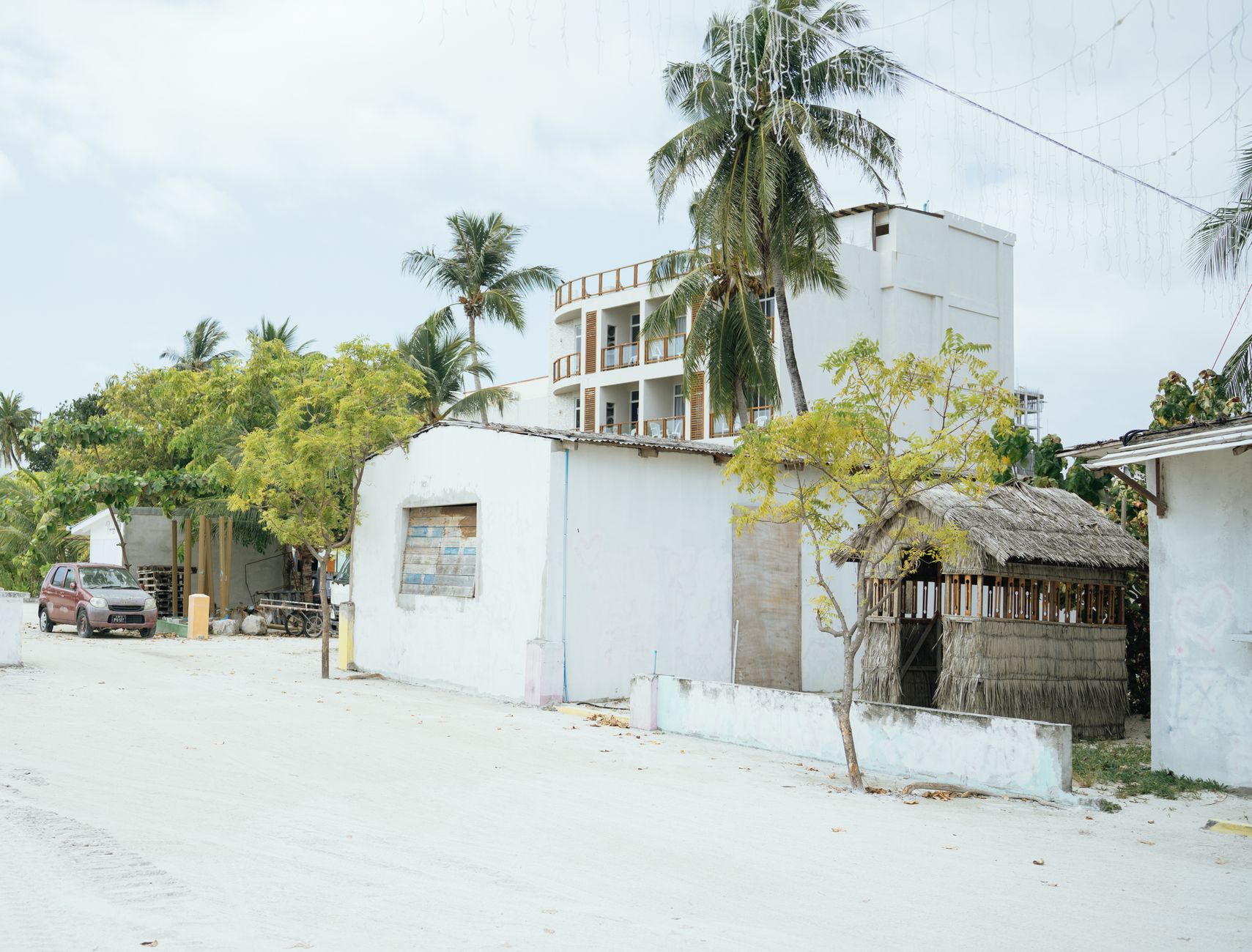
Expect sandy lanes instead of boardwalks, scooters buzzing past the mosque, a football pitch full of teenagers at dusk, and tiny cafés serving mas huni (tuna, coconut and chili) with warm flatbread for breakfast. Your guesthouse is more likely to be a tidy three-storey building than a thatched villa.
Some islands have their own personality. Maafushi, close to the airport, is the busiest guesthouse island, with plenty of dive shops and excursion desks. Thulusdhoo draws surfers to its breaks. Dhigurah, in South Ari Atoll, sits in whale shark territory, and Thoddoo is known for its farms and sweet watermelons.
The rules that change everything: beaches, dress and drinks
This is where most first-timers get caught out. The Maldives is a Muslim country, and the rules shift the moment you step off a resort.
On a local island:
- Swimwear only on the designated bikini beach. Not every island has one, so check before you book.
- Around town, cover shoulders and knees. A light dress, linen shirt or long shorts works fine.
- No alcohol anywhere on the island: not in cafés, not in guesthouses. Pork isn’t served either.
On a resort: treat it like any upmarket beach hotel. Swimwear anywhere, drinks at the bar, no stress.
A few rules apply everywhere. You can’t bring alcohol into the country, and airport scanners will find it. Local islands have a workaround, though: some, like Maafushi, have licensed “floating bar” boats moored offshore, where drinking is legal because you’re on the boat, not the island.
Maldives resort vs local island: what it really costs
The price gap is huge. Plenty of guesthouse rooms go for well under $150 a night, and budget travelers often keep daily costs modest by eating in local cafés. Resort villas start at several hundred dollars a night and climb into the thousands, before meals.
Taxes widen the gap. Resort stays attract a higher per-person green tax than small guesthouses on inhabited islands, and tax plus service charge is stacked on top of the room rate. The Maldives Inland Revenue Authority’s green tax page is the place to check current rates before you budget.
Food is the sneaky one. On a resort, you pay resort prices three times a day, so the meal plan matters. Our breakdown of whether all-inclusive or half board saves more money applies perfectly to Maldivian resorts, where there’s no cheap café down the road to escape to.
If the Maldives still stretches the budget too far, Thailand’s islands give you warm water for much less. Our guide to when each Thai coast has its best weather helps you line up the timing.
Getting there (without losing half a day)
Everyone lands at Velana International Airport, next to the capital Malé. What happens next depends on where you’re sleeping.
Resorts arrange your transfer, and the distance decides the method. Nearby resorts use speedboats, which run around the clock. Far-flung ones use seaplanes, which only fly in daylight, or a domestic flight plus a boat. Seaplane and long speedboat transfers can run to several hundred dollars per person, so ask what’s included before you book.
Local islands give you more choice:
- Public ferries: a few dollars, slow, open-sided, and a real slice of island life. They don’t run on Fridays, the weekly day off.
- Shared speedboats: scheduled services to popular islands like Maafushi, usually a few tens of dollars per person, and far quicker.
- Private speedboats: pricey for two, reasonable when split between a group.
Snorkeling, diving and the underwater decider
Here’s what surprises people: local islands can beat resorts underwater. Guesthouse islands are built around excursions, so dive shops and snorkel boats head out daily to reefs, manta points and sandbanks.
Stay on Dhigurah and whale shark trips are on your doorstep. Dharavandhoo, in Baa Atoll, is a base for manta and whale shark excursions. The catch is that many local islands have limited reef right off the beach, so you’ll rely on boats.
Resorts flip that. A good house reef means you can grab a mask at 4pm and be floating over coral five minutes later, no booking needed. If lazy, spontaneous snorkeling is your dream, check each resort’s house reef reviews before anything else.
Which Maldives trip fits you?
Pick a resort if:
- It’s a honeymoon or a big celebration and privacy matters most.
- You want a drink at sunset, every sunset.
- You plan to barely move for a week, and you mean it.
Pick a local island if:
- You’d rather spend your budget on dives and boat trips than on villa upgrades.
- You’re curious about how Maldivians actually live.
- You’re traveling solo, as friends, or for more than a week.
Choosing between two very different islands is really about choosing your kind of trip. It’s the same logic we used when weighing up Santorini against Mykonos: the island matters less than how you want to spend your days.
The split-stay trick
Can’t decide? Don’t. A popular move is four or five nights on a local island, then two or three on a resort. You get the reef trips and local cafés at guesthouse prices, then finish with the overwater villa and a cocktail. Some resorts near guesthouse islands also sell day passes, so you can test the resort life for a day before committing a whole week.
Questions travelers ask
Is a local island in the Maldives as beautiful as a resort?
The water is the same stunning blue, and many local islands have lovely beaches. What’s different is the setting: houses, mosques and harbors instead of manicured villas. The prettiest local island beaches are often the bikini beach and nearby sandbanks.
Can you drink alcohol on a local island in the Maldives?
No. Alcohol is banned on inhabited islands, including in guesthouses. You can drink on resort islands and on licensed boats, and some local islands have a floating bar boat moored just offshore.
Can you visit a resort if you’re staying on a local island?
Often, yes. Some resorts sell day passes that include the boat, lunch and use of the beach. Ask your guesthouse, since they usually know which nearby resorts accept day visitors and roughly what it costs.
Is the Maldives a good trip for families on a local island?
It can be, especially on quieter islands with a calm bikini beach. Local islands feel safe and friendly, and kids usually love the ferry rides. Resorts are easier for very young children thanks to kids’ clubs and pools.
One last thing before you book
Whichever way you go, message your guesthouse or resort before you pay and ask three questions: what transfers cost all-in, what’s included in the meal plan, and where the best snorkeling is. Their answers will tell you more than any photo. Then pack a mask, a light cover-up, and plenty of reef-safe sunscreen. The fish are waiting.
Some links in this post are affiliate links. If you book through them, we may earn a small commission at no extra cost to you.
Cover photo by Asad Photo Maldives on Pexels