It’s half past four, the sky over the Herengracht has already gone inky blue, and every canal house window is a little square of yellow light. Somewhere a bike bell rings. You’re holding a paper cone of hot, sugar-dusted oliebollen and your fingers are finally warm. Amsterdam in winter is darker, damper and quieter than the postcard version, and honestly, that’s the best part.
The crowds thin out, museum slots open up, and the city switches into cozy mode: candlelit brown cafés, heated glass boats sliding under the bridges, thick pea soup that could hold up a spoon. You just need a plan that respects the short days.
This guide gives you exactly that: what the weather really does, how to enjoy the canals without freezing, how to book the big museums, and a 3-day cold-weather plan. When you’re ready to book, our full list of Amsterdam tours and guides is the place to start.
- Best winter window: late November to mid-January for lights and festive energy; February for the cheapest, quietest trip
- Daylight: roughly 8 hours in the darkest weeks, sunset around 4:30pm
- Time needed: 3 days covers the canals, two big museums and the Jordaan
- Getting in: about 15 minutes by train from Schiphol Airport to Amsterdam Centraal
- Budget: mid-range; the big museums run in the €20s each (check official sites for current prices)
What Amsterdam in winter really feels like
Forget the snow globe. Amsterdam’s winter is cool, grey and windy rather than bitterly cold. Daytime highs usually sit in the mid single digits Celsius (low 40s Fahrenheit), and nights hover around freezing.
The number on the thermometer lies, though. Damp air and wind off the water make it feel several degrees colder, and rain likes to arrive sideways. Snow does fall some years, but it rarely sticks for more than a day or two.
Then there’s the light. In the darkest weeks the sun rises close to 9am and sets around 4:30pm. That sounds grim until you realize the canals look their absolute best after dark, reflecting every window and string of lights. Plan outdoor sightseeing for the middle of the day and save museums and cafés for the dark hours, and the short days start working for you.
Canals in the cold (and how to enjoy them warm)
The canal ring is a UNESCO World Heritage site, and in winter it’s gloriously uncrowded. Walk the Prinsengracht, Keizersgracht and Herengracht in the early afternoon, when the low sun turns the brick facades honey-colored. The Nine Streets (De 9 Straatjes) cut across all three canals and are perfect for ducking into a shop or café when your ears start to sting.
Want to be on the water? Canal cruises run all year, and most big operators use enclosed, heated glass boats. You get the view without the wind, often with an audio guide and a hot drink. Go around dusk: you’ll see the houses in the last light, then watch the bridges light up on the way back.
From late November to mid-January, the Amsterdam Light Festival fills the canals with around 20 light artworks along a route that changes every edition. Walking the route is free. The boat version gets you closer to the pieces designed to be seen from the water, and evening sailings fill up fast around the holidays.
Museums that make a grey day the best day
This is where winter wins. Amsterdam has world-class museums within a short tram ride of each other, and the off-season makes the hard tickets easier to get. One rule for all of them: book a timed slot online, even if your entry is free with a card.
Rijksmuseum
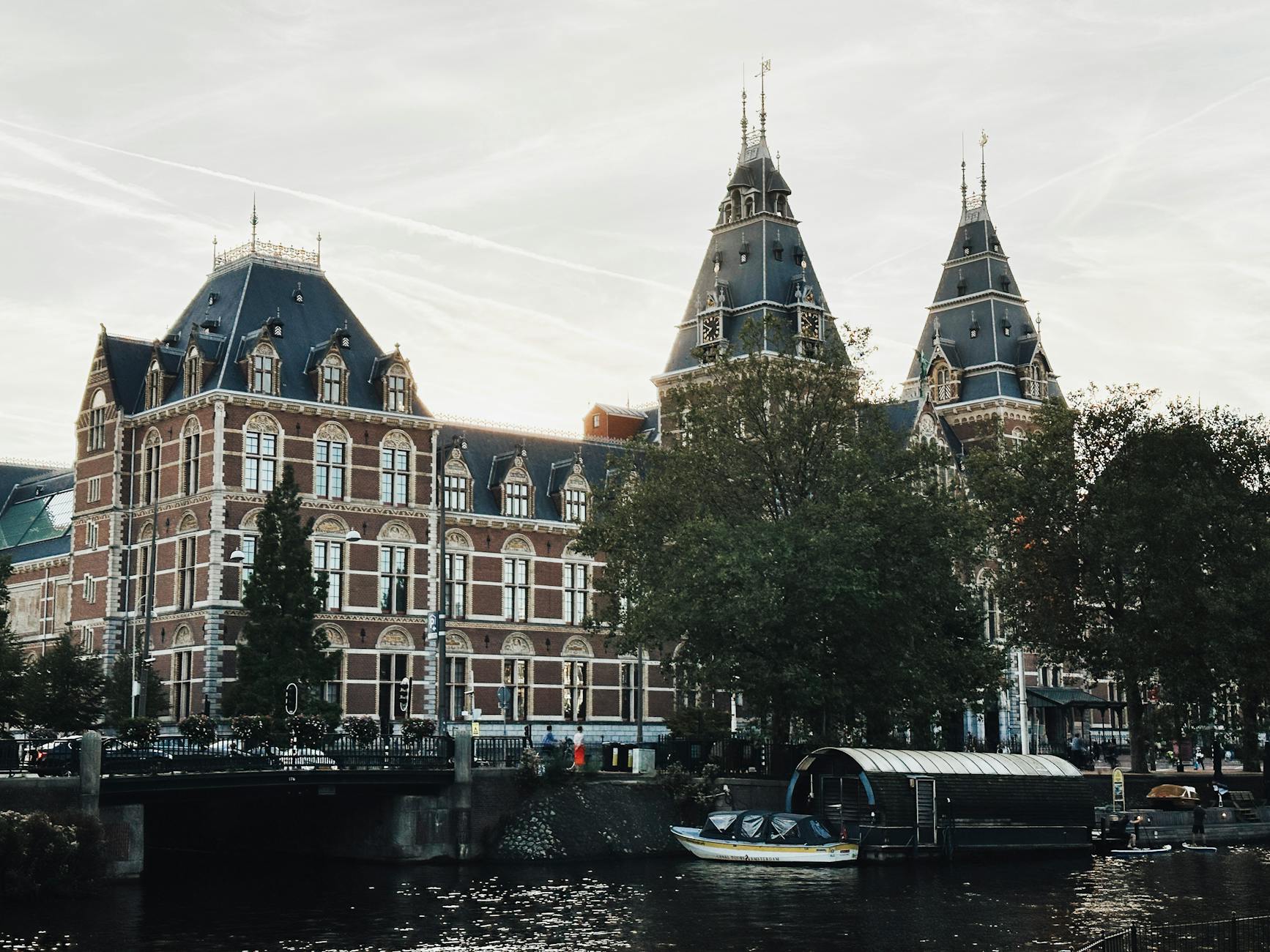
Rembrandt’s Night Watch, Vermeer’s quiet kitchens and 800 years of Dutch history under one spectacular roof. The museum opens every day of the year, and your slot is just an entry time, so you can stay until closing. Under-18s go free. Check hours and current prices on the Rijksmuseum’s official visitor page.
The Night Watch hall is where everyone heads first. Do the opposite: explore the quieter floors, then circle back to Rembrandt in the last hour or two before closing, when the room thins out.
Van Gogh Museum
Sunflowers, the swirling self-portraits and the painter’s letters, all arranged to walk you through his short, intense life. Tickets are online-only with a start time, and Friday evenings usually run late, which is the easiest good slot of the week. It’s not included on the I amsterdam City Card, so book it separately.
Anne Frank House
Small, bare and deeply moving. Tickets are sold only on the official Anne Frank House website, usually released on Tuesdays for visits about six weeks ahead, with no sales at the door. Winter demand is lower, but still set a reminder. Expect steep, narrow stairs inside.
Room for more? The Stedelijk (modern art, next to the Van Gogh) and Our Lord in the Attic, a secret church tucked inside a 17th-century canal house, are both perfect for a rainy afternoon.
A 3-day plan for Amsterdam in winter
This plan puts outdoor time in the brightest hours and saves indoor stops for the dark ones. Swap days around to match the forecast.
Day 1: Canals, Jordaan and your first brown café
- Morning: Coffee and a slice of apple pie in the Jordaan, then wander its narrow streets and small canals while the light is best.
- Midday: Walk the Nine Streets and the main canal ring. On a Saturday, browse the Noordermarkt farmers’ market.
- Afternoon: Anne Frank House (if you’ve booked), then a covered canal cruise as the sun goes down.
- Evening: Settle into a candlelit brown café with bitterballen and a local beer.
Day 2: Museum Quarter marathon
- Morning: Rijksmuseum at opening, saving the Night Watch for later.
- Lunch: A bowl of pea soup somewhere near Museumplein.
- Afternoon: Warm up with a walk through Vondelpark, then hit the Stedelijk or De Pijp’s Albert Cuyp Market (closed Sundays).
- Evening: Van Gogh Museum on a Friday late opening, or dinner in De Pijp.
Day 3: Across the water and onto the ice
- Morning: Take the free ferry from behind Centraal Station to Amsterdam Noord. The ride alone is a great view of the harbor.
- Midday: Head up the A’DAM Lookout tower for a 360-degree view on a clear day.
- Afternoon: Skate at Jaap Eden, the big outdoor 400-meter rink in the east of the city, with skate rental on site during its October-to-March season.
- Evening: Walk the Light Festival route if it’s running, or save it for one last canal-side dinner.
Where to eat like you live here (when it’s freezing)
Dutch winter food is built for exactly this weather. Order erwtensoep (also called snert), a pea soup so thick it’s practically a stew, loaded with smoked sausage. Stamppot is mashed potato mixed with kale or sauerkraut, topped with a sausage and a puddle of gravy. Simple, and exactly what you want at 5pm in the drizzle.
Snack-wise, bitterballen are crisp, molten-centered meatballs you dunk in mustard. Around the end of the year, oliebollen stands pop up all over town selling fried dough balls buried in powdered sugar. Yes, you’ll get sugar on your coat. Yes, it’s worth it.
Wash it all down with warme chocolademelk met slagroom: hot chocolate crowned with a cloud of whipped cream. Then find a brown café (bruin café), the city’s old wood-paneled pubs where the walls are stained from centuries of conversation.
A quick honest note: Amsterdam’s Christmas markets are small and scattered. If markets are the whole point of your trip, Vienna’s Christmas markets are on another level.
Where to stay for a cozy winter base
In winter, location matters more than usual, because you’ll pop back to your room to warm up and change layers. The Canal Ring and Jordaan put you steps from brown cafés and the prettiest after-dark walks. The Museum Quarter is calmer and ideal for art lovers. De Pijp has great food and slightly better value, with fast trams to the center.
Hotel prices usually dip after New Year and through February, then climb again toward spring. Book early if you want the Light Festival weeks or the holidays.
Getting there and around (without freezing)
From Schiphol Airport, trains to Amsterdam Centraal leave several times an hour and take about 15 minutes. You can tap in and out with a contactless bank card or phone on the station readers, which also works on the city’s trams, buses and metro.
In the city, trams are your winter best friend. The center is walkable, but on a wet, windy day a 10-minute tram ride beats a 30-minute walk. Renting a bike is iconic, just be honest with yourself about riding in the dark and rain among locals who’ve done it since age four.
What to pack for the cold and wet
- A waterproof, windproof coat (more useful than a huge down jacket)
- Hat that covers your ears, scarf and gloves
- Waterproof shoes with grip for wet cobbles
- Layers you can peel off inside warm museums and cafés
- A compact umbrella, though the wind will test it
Questions travelers ask
Is Amsterdam worth visiting in winter?
Yes, if you like museums, food and atmosphere more than long sunny walks. You get thinner crowds, easier museum bookings and the canals at their coziest. If you’d rather thaw out completely, look at the best Canary Island for winter sun instead.
Does it snow in Amsterdam in winter?
Sometimes, but not much. Light snow falls on a few days most winters and usually melts quickly. Rain and wind are far more common, so pack for wet rather than white.
Do the canals freeze?
Rarely. It takes a long, hard cold spell, and when it happens the whole city grabs its skates. Don’t plan around it; go to an ice rink like Jaap Eden instead.
Do I need to book museums in advance in winter?
Yes. The Rijksmuseum, Van Gogh Museum and Anne Frank House all use timed online tickets. Winter slots are easier to get, but the Anne Frank House still sells out, and holiday weeks behave like summer.
One last thing before you go: do your sightseeing between late morning and mid-afternoon, then let the darkness bring you indoors to paintings, soup and candlelight. That rhythm is the secret to loving this city in the cold. And when you want to go further, there are more Netherlands trip ideas waiting.
Some links in this post are affiliate links. If you book through them, we may earn a small commission at no extra cost to you.
Cover photo by Firdavs Murodov on Pexels