It’s grey at home, the heating’s on, and every flight search shows the same seven islands off the coast of Africa. Picking the best Canary Island for winter comes down to one honest question: do you want a warm beach all week, or warm weather to explore in?
All the islands stay mild from December to February. Daytime highs usually sit in the low 20s °C on the coast, nights drop to the low-to-mid teens, and proper rain is rare. The differences are in the details: which coast you stay on, how much wind you’ll get, and what you’ll do on the one cloudy day.
Here’s how the main islands compare, and which one fits which kind of trip.
At a glance
- Most reliable beach weather: southern Gran Canaria, southern Tenerife and Fuerteventura
- Best all-rounder: Tenerife, if you stay in the south
- Best for scenery on a short trip: Lanzarote
- Best for hiking over sunbathing: La Palma and La Gomera
- Time needed: a week for one island, 10 days or more to add a second
- Budget: winter is high season here, so book flights and stays well ahead
What winter weather in the Canaries is really like
Think late spring, not tropical summer. You’ll get T-shirt afternoons and long, bright days, but you’ll want a light jacket after sunset and on any trip up into the mountains.
The sea is the part people get wrong. It hovers around 19–20°C through winter, which is swimmable but bracing. If a heated pool matters to you, check before you book.
The biggest factor isn’t the island, it’s the side of the island. The trade winds push cloud onto the north-facing slopes of the mountainous islands, so the north is greener, cooler and cloudier. The south sits in a rain shadow and gets the sun. That’s why nearly every beach resort is on a southern coast.
Winter isn’t guaranteed sunshine, either. Every so often an Atlantic low brings a few days of wind and rain across the archipelago. Plan one flexible day and you won’t mind.
Tenerife: the best all-rounder
If you can only pick one island and you want both sun and things to do, Tenerife is the safest bet. The south coast around Los Cristianos, Playa de las Américas and Costa Adeje gets some of the most dependable winter sun in the islands.
What makes Tenerife different is range. You can swim in the morning and stand in snow on Mount Teide by lunchtime. Teide is Spain’s highest peak, and the cable car takes you most of the way up. In winter it closes fairly often for wind or ice, so keep your Teide day flexible and check the weather at altitude, not at your hotel.
The summit itself needs a separate, limited permit (with a small fee) on top of your cable car ticket. Book it through the island’s official Tenerife ON booking platform well before you travel, because slots go quickly. If you’d rather skip the logistics, you can buy cable car tickets from the official operator, or book a guided Mount Teide tour with transport and let someone else handle the mountain roads.
Whale watching is the other big draw. Pilot whales and dolphins live off the south-west coast all year, and boats leave from Los Cristianos and Puerto Colón most days.
The downside: parts of Playa de las Américas are loud, crowded and built for package holidays. Costa Adeje is calmer and more polished, and Los Cristianos still feels like a real town. If you want a base with good winter weather and a bit of choice, compare hotels in Costa Adeje before you settle on anything further north.
Puerto de la Cruz in the north is charming and cheaper, but it’s noticeably cloudier in winter. Great for a day trip, less great as your only base.
Gran Canaria: the warmest beaches and a real city
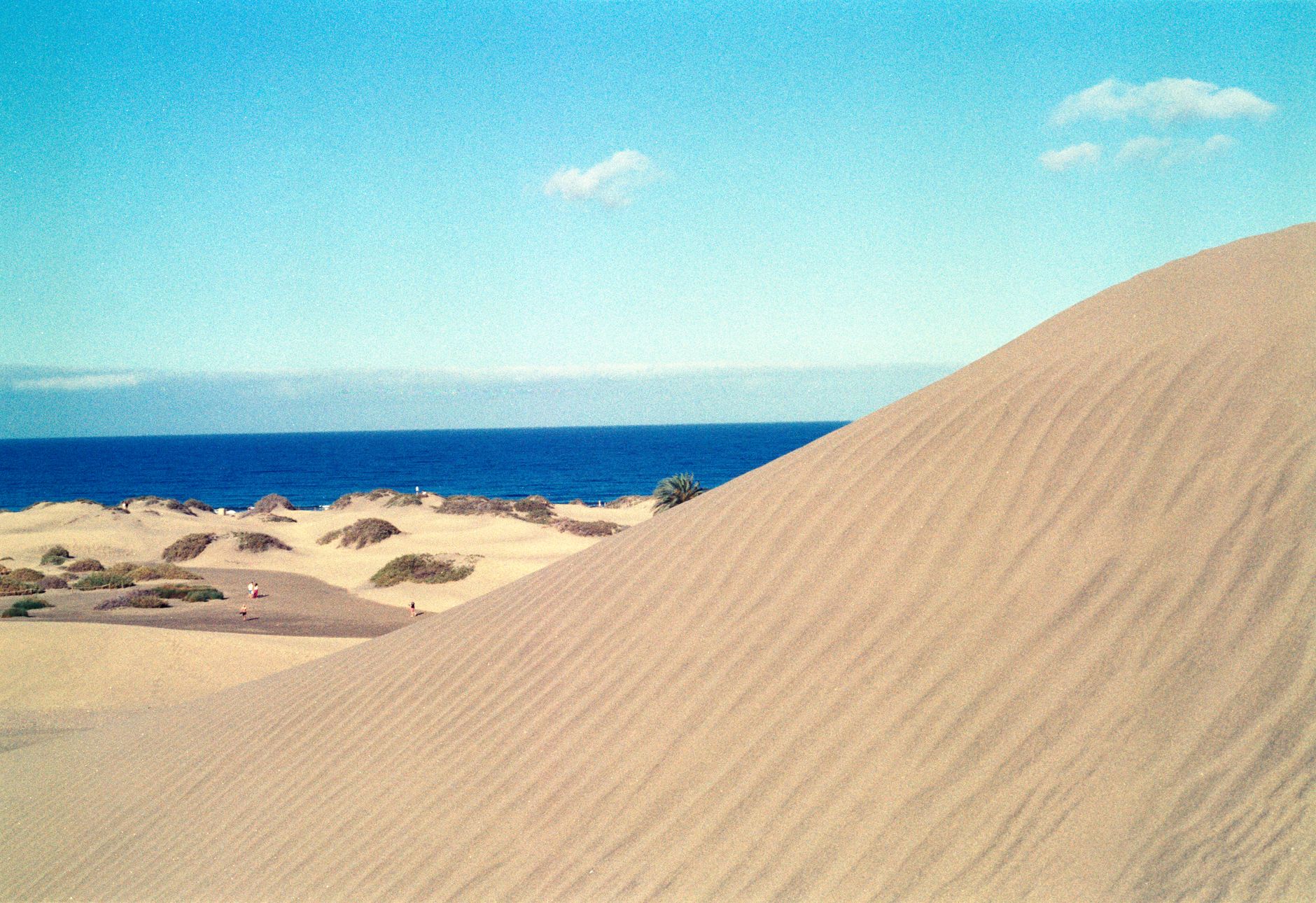
Many regulars would name Gran Canaria the best Canary Island for winter beach time. The southern stretch from Maspalomas and Playa del Inglés to Puerto Rico and Puerto de Mogán is warm, sheltered and dry, often a degree or two warmer than the north of any island.
The Maspalomas dunes are the headline: a protected sweep of golden sand that runs straight into the sea. Walk them early in the morning before the heat and the crowds build up.
Gran Canaria also has something the other resort islands lack: Las Palmas, a proper city of several hundred thousand people. Las Canteras beach there has a natural reef that keeps the water calm, and the old quarter of Vegueta is worth an afternoon. It’s cloudier than the south, but it gives you real restaurants, museums and everyday Canarian life.
Inland, the roads climb to Roque Nublo and mountain villages like Tejeda. It gets cold up there in winter, so take a layer.
Skip Playa del Inglés if you want quiet. Puerto de Mogán, with its small harbour and low-rise houses, is the calmer, prettier choice, though it’s pricier and a long way from the airport.
Lanzarote: volcanic scenery at a slower pace
Lanzarote is lower and flatter than Tenerife or Gran Canaria, so there’s less cloud and plenty of winter sunshine across most of the island. Its real draw is the landscape: black lava fields, red craters and whitewashed villages with green shutters.
Timanfaya National Park is the one stop you shouldn’t skip, a sea of solidified lava you visit on a guided coach route. Entry is paid, so check the official site for current prices before you go. Artist César Manrique shaped much of the island’s look, and his former home and the Jameos del Agua caves show why it feels so different from the other resort islands.
The best beaches are the Papagayo coves in the far south, reached by a bumpy dirt track. Playa Blanca makes an easy, quieter base nearby.
The trade-off is wind. Lanzarote is breezy most days, and the beach can feel cooler than the thermometer says. Pick a sheltered cove and you’ll be fine.
Fuerteventura: for beaches and space
Fuerteventura is the flattest of the big islands, which means the fewest clouds and some of the steadiest winter sun you’ll find. It also has the best beaches in the archipelago: long, pale sand and clear turquoise water.
Corralejo in the north sits beside a protected dune park and has the liveliest town. Jandía in the south has the widest, emptiest beaches. Both suit people who want to do very little, very well.
The catch is the wind. It’s great news for kitesurfers and windsurfers, less so for anyone lying on a towel. Look for beaches in the lee of a headland, and bring a windbreak if you rent a car.
There’s less to do on bad-weather days than on Tenerife or Gran Canaria. If you get restless on beach holidays, this probably isn’t your island.
La Palma, La Gomera and El Hierro: for hikers
These smaller western islands are greener, steeper and far quieter. They’re wonderful in winter if you want to walk, but they’re not beach-holiday islands.
La Gomera is the easiest to add on, with regular ferries from Los Cristianos in southern Tenerife. Its Garajonay laurel forest and deep valleys make an excellent day trip or a slow few days. La Palma is known for its dark skies and big hiking routes. El Hierro is the most remote, with diving and very little tourism.
Expect cooler, more changeable weather than on the eastern islands, especially at height. Pack for rain even if the forecast looks clear.
The best Canary Island for winter, by trip type
Here’s the short version, matched to the kind of week you want:
- Families: southern Tenerife or southern Gran Canaria, for easy airports, calm beaches and plenty to fill rainy days.
- Couples wanting quiet: Puerto de Mogán on Gran Canaria or Playa Blanca on Lanzarote.
- Pure beach time: Fuerteventura, as long as you don’t mind a breeze.
- Hiking and nature: Tenerife as a base, with La Gomera as a side trip, or La Palma on its own.
- Short break of 3–4 days: Lanzarote, where the main sights are close together.
- Long winter stays: Gran Canaria, for the mix of reliable southern sun and city life in Las Palmas.
If you’re torn between the two big islands, go with Tenerife for variety and Gran Canaria for beach warmth. Both are strong contenders.
Whichever you pick, stay on the sunny side. If Fuerteventura’s beaches won you over, check stays in Corralejo; otherwise, look at the south coast of whichever island you’ve settled on.
Getting there and hopping between islands
Tenerife, Gran Canaria, Lanzarote and Fuerteventura all have international airports with plenty of winter flights from Europe. Tenerife has two: Tenerife South, close to the resorts, and Tenerife North, mainly for domestic routes. Fly into the south airport if you’re staying in the south.
Moving between islands is simple. Short inter-island flights take well under an hour, and ferries link the main islands too. The ferry from southern Tenerife to La Gomera and the crossing from Lanzarote to Fuerteventura are the easiest hops.
Rent a car if you want to see more than your resort. Buses exist on the bigger islands, but mountain routes and remote beaches are much easier to reach by car. Book early in winter, as rental fleets fill up.
The islands are part of Spain and the EU, so entry rules follow Spain’s. The euro is the currency, and the islands run on the same time as the UK, one hour behind mainland Spain. For official island information, the Canary Islands tourism board’s winter guide is a good starting point.
Questions travelers ask
Which Canary Island is warmest in winter?
The south of Gran Canaria and the south of Tenerife are usually the warmest spots, with Fuerteventura close behind. The gap between them is small, often just a degree or two. Where you stay on the island matters more than which island you choose.
Can you swim in the Canary Islands in winter?
Yes, but the sea is cool, around 19–20°C. Most people manage a quick swim on calm, sunny afternoons. If you want long swims, look for a hotel with a heated pool.
Is December or February better for winter sun?
The weather is similar across the whole winter. December and early January are busier and pricier around the holidays, while late January is often the quietest and best value. February brings carnival season, which is fun but pushes up prices in the bigger towns.
Is Tenerife or Gran Canaria better for winter?
Tenerife has more variety, with Mount Teide, whale watching and very different landscapes. Gran Canaria has slightly warmer, more sheltered beaches and a real city in Las Palmas. Pick Tenerife for sightseeing and Gran Canaria for beach time.
One last tip: before you book anything, open a map and check which way your hotel faces. A south-coast room with a sheltered terrace will give you far more sunshine than any island choice ever could.
Some links in this post are affiliate links. If you book through them, we may earn a small commission at no extra cost to you.
Cover photo by Marian Florinel Condruz on Pexels