It’s early morning at Split’s harbour and the Split to Dubrovnik ferry is idling at the quay, engines humming. The stone of Diocletian’s Palace is still cool behind you and a coffee is going cold in your hand. In a few hours you could be in Dubrovnik. Stop on an island on the way and the trip gets a whole lot better.
That’s the beauty of this route: the fast boat that links the two cities also calls at Hvar, Korčula and Mljet. You can ride straight through in an afternoon, or get off, sleep on an island, and climb back aboard a day or two later.
This guide shows you how the route works, which boat docks where, and how to plan it so you spend your time on terraces, not in ticket queues.
The short version before we get into it:
- Best time: late spring to early autumn, when the direct catamaran runs daily.
- Split to Hvar Town: about an hour by fast catamaran.
- Hvar to Dubrovnik: roughly three to four hours by catamaran, with short island stops.
- Time needed: 5 to 7 nights for Split, Hvar and Dubrovnik without rushing.
- Budget: catamaran tickets are cheap on short hops and pricier on the long leg; check the operator for current fares.
How the Split to Dubrovnik ferry route actually works
There’s no single slow “ferry” gliding down the coast. What you’ll ride is a fast passenger catamaran that runs a line from Split to Dubrovnik and stops at islands in between. Operators such as Kapetan Luka (Krilo), TP Line and Jadrolinija run versions of it, with stops that typically include Milna on Brač, Hvar Town, Korčula Town and sometimes Pomena on Mljet.
Three things shape the whole plan:
- It’s seasonal. The through catamaran generally sails from spring into autumn. Outside that window, it’s short hops and buses.
- It’s foot passengers only. No cars on the catamarans. If you’re driving, you’ll use car ferries and the coast road instead.
- Timing depends on direction. Boats heading south usually leave Split in the morning; boats heading north tend to leave Dubrovnik in the afternoon.
Your ticket can be for one long ride or for separate legs. Buying Split to Hvar and then Hvar to Dubrovnik on another day is how you turn a transfer into a trip. Timetables shift between operators and seasons, so check the Krilo sailing schedule and the other operators for your dates.
Leg one: Split to Hvar (the easy hour)
All boats leave from Split’s ferry port, a short walk south of the old town and right next to the bus station. Roll your bag along the waterfront, find your operator’s berth, and you’re off.
If you’re on foot, take the catamaran to Hvar Town. It takes about an hour and drops you in the harbour, steps from the main square. On a calm day you’ll sit on the back deck watching Brač slide past, salt spray drying on your sunglasses.
The other option is the Jadrolinija car ferry to Stari Grad. It takes around two hours and lands on the opposite side of the island, roughly 20 km from Hvar Town. That’s the right choice if you have a car or you’re staying in Stari Grad, Jelsa or Vrboska. For everyone else, it just adds a bus ride.
What to do with two nights on Hvar
Hvar Town is small, loud in the best way at night, and ridiculously pretty. The harbour glitters with yachts, the lanes smell of grilled fish and pine, and the square in front of St Stephen’s Cathedral fills with people as the light goes gold.
Two nights is the sweet spot. Here’s how to use them:
- Climb to the Fortica in the late afternoon for the view over the rooftops, the harbour and the Pakleni Islands.
- Swim off the Pakleni Islands. Taxi boats shuttle across from the harbour, or you can hop on a Pakleni Islands boat trip that strings together a few bays and a lunch stop.
- Get out of town for an afternoon: the old stone streets of Stari Grad and the lavender-covered hills inland feel like a different island.
- Eat slowly. Order grilled fish by weight and a plate of local cheese, and don’t book anything for the hour after sunset.
Skip the overpriced cocktails on the busiest stretch of the harbour. Walk five minutes along the waterfront toward the quieter bays and sit where your feet can almost touch the water.
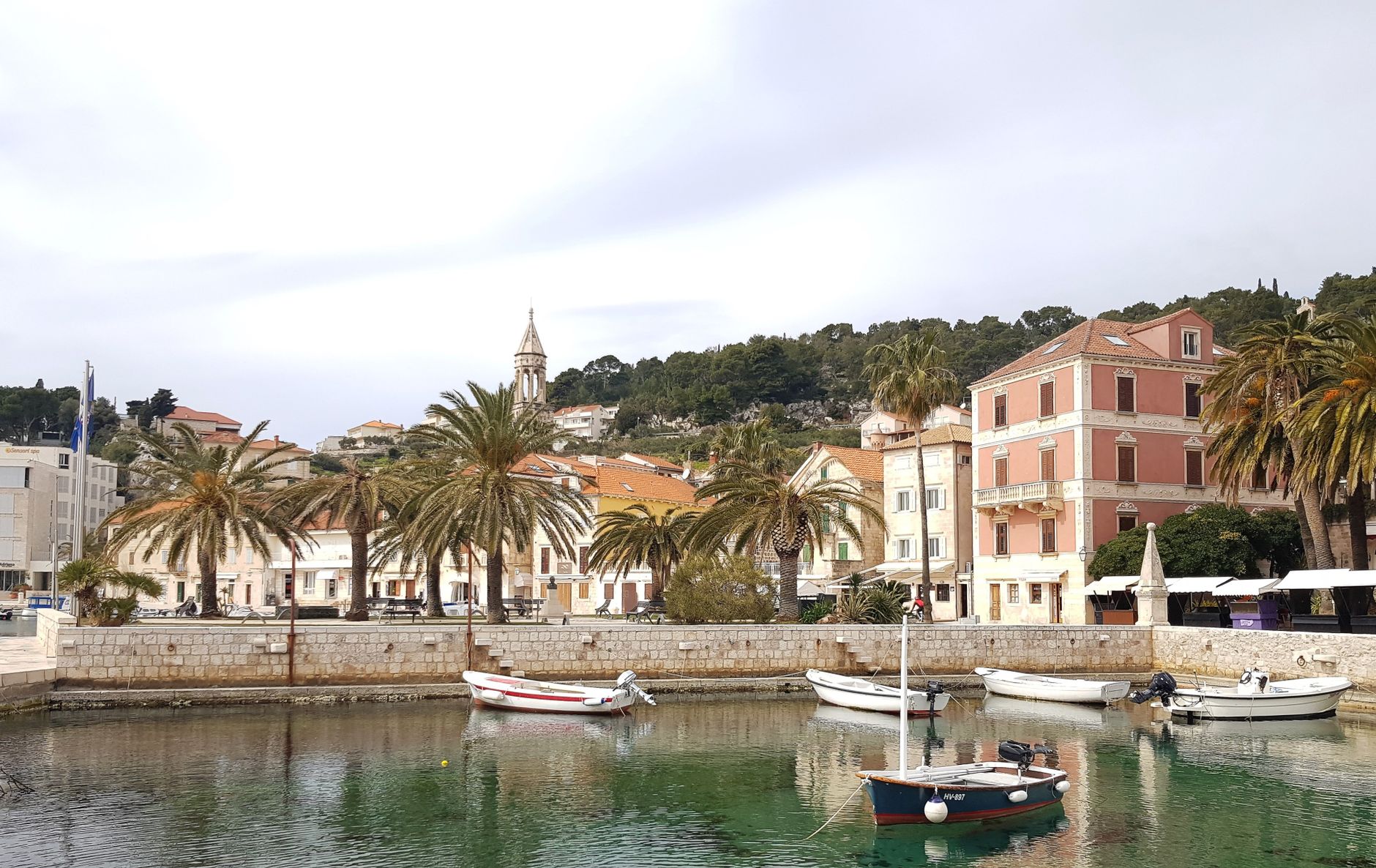
Leg two: Hvar to Dubrovnik, with island stops thrown in
The catamaran south picks up in Hvar Town harbour, usually in the morning, and runs down the coast with quick stops at Korčula and often Mljet. Plan on roughly three to four hours from Hvar to Dubrovnik.
The stops are short: a rope thrown ashore, a few people off, a few on, and you’re moving again. It’s still a lovely ride. Korčula’s walled old town pokes out on its little peninsula like a stone ship, and Mljet’s green hills look close enough to touch.
Want more island time? Break the leg in Korčula for a night. You’ll get a compact medieval town, fresh seafood on the walls and a sunset that rivals Hvar’s, with far fewer crowds.
A few practical things for the long leg:
- Bags go in a luggage area near the door. Keep valuables, water and a jacket with you.
- Snacks are basic onboard. Grab a burek or a sandwich from a bakery before you board.
- The sea can get choppy. If you’re prone to seasickness, sit low and toward the middle.
Landing in Dubrovnik (the port isn’t the Old Town)
This catches people out. The catamaran docks at Gruž harbour, a few kilometres north of the Old Town, not below the famous walls.
Local buses 1A, 1B and 3 run from the port area to the Old Town in about ten minutes. A taxi is quicker if you’re hauling luggage up the hill to a stepped street, which in Dubrovnik is most of them.
Once you’re in, walk the city walls early or late, when the stone isn’t radiating heat and the cruise crowds have thinned. The limestone streets shine like they’ve been polished, because thousands of feet have done exactly that.
Where to sleep at each stop
Where you stay matters more than the room itself, because every leg starts or ends at a harbour.
- Split: inside or right beside the old town. You’ll walk to the ferry port with your bags.
- Hvar: Hvar Town if you want restaurants and nightlife on your doorstep. Stari Grad or Jelsa if you want calm evenings and have a car.
- Dubrovnik: the Old Town for atmosphere; Lapad or Gruž for easier access, sea swims and lower prices.
Families and groups often find apartments better value than hotels on the islands. If you’re weighing the two, our breakdown of whether an apartment or a hotel really costs less after fees helps you run the numbers.
Booking your Split to Dubrovnik ferry without the summer panic
In the middle of summer, catamarans to Hvar Town can sell out days ahead, and the long leg to Dubrovnik fills up too. Outside the peak weeks, you’ll usually have more room to play.
Here’s the order that works:
- Lock in your first and last nights (Split and Dubrovnik) around your flights.
- Check which days the through catamaran runs for your dates.
- Book both boat legs, then book the island nights around them.
- Build in a spare evening before any flight out of Dubrovnik.
That last one matters. The fast catamarans can be cancelled in strong wind, while the big car ferries usually keep sailing. Never plan a same-day boat-to-flight connection.
If you’re traveling outside the catamaran season, or the boat is fully booked, the coast road is a solid backup. Buses between Split and Dubrovnik take around four to five hours and cross a short stretch of Bosnia and Herzegovina, so keep your passport handy. You can check coastal bus times between Split and Dubrovnik and compare them with the boats.
Weighing Croatia’s islands against Greece for the same trip? Our guide to choosing between two very different Greek islands shows how different the vibe can be.
For beaches, towns and regional ideas, the official Croatian National Tourist Board site is a good place to start.
Questions travelers ask
How long is the ferry from Split to Dubrovnik?
The direct catamaran usually takes about four and a half to five hours, including short stops at islands like Hvar and Korčula. Exact times vary by operator and sailing, so check the timetable for your date.
Can you take a car on the Split to Dubrovnik catamaran?
No. The catamarans carry foot passengers only. With a car, you’d take the car ferry from Split to Stari Grad on Hvar and then drive and use other car ferries, or simply drive the coast road.
Does the ferry from Split to Dubrovnik run all year?
The through catamaran is seasonal and generally runs from spring into autumn. In winter, short routes like Split to Hvar still operate, but for the full trip most people take the bus.
Is it better to go from Split to Dubrovnik or the other way?
Either works. Southbound boats usually leave Split in the morning, which suits travelers flying into Split. If your flight lands in Dubrovnik, go north and enjoy the afternoon sailings back to Split.
One last thing: when the catamaran pulls away from Hvar, head to the back deck and watch the town shrink into a stack of red roofs under the fortress. It’s the best ten minutes of the whole ride, and it’s free.
Some links in this post are affiliate links. If you book through them, we may earn a small commission at no extra cost to you.
Cover photo by Butch Aleksich on Pexels