It’s an hour before sunset in Oia. The whitewashed walls turn honey-gold, a church bell rings somewhere below, and people are already claiming every ledge along the caldera. A couple of hours north by fast ferry, Mykonos Town is just waking up: shutters opening in Little Venice, grilled octopus smoking on taverna grills, a DJ testing the bass. So, Santorini or Mykonos? They’re neighbors, but they sell completely different trips.
Here’s the short version. Santorini is the view. Mykonos is the beach and the party.
The rest of this guide helps you match the island to the trip in your head, shows what each one really costs, and explains how to do both if you can’t let one go. When you’re ready to plan the rest of the country, our Greece tours and travel guides pick up where this one ends.
- Pick Santorini for: caldera views, sunsets, couples, wine and volcanic scenery
- Pick Mykonos for: sandy beaches, nightlife, beach clubs and an easy boat trip to ancient Delos
- Best time for both: late May, June, September and early October
- Time needed: 3 to 4 nights each, or at least 2 each if you combine them
- Getting between them: seasonal fast ferry, roughly 2 to 3.5 hours
- Budget: both are among Greece’s priciest islands, and Mykonos usually edges ahead
Santorini or Mykonos: the one-minute answer
Choose Santorini if your dream trip photo is you, a glass of local white and a cliff dropping into a deep blue volcanic lagoon. It’s the honeymoon island. The “sit and stare” island. Its beaches are black volcanic sand and pebble, dramatic but not the soft stuff of postcards.
Choose Mykonos if you want golden-sand bays, long lunches that turn into dancing, and a whitewashed town you’ll get lost in on purpose. It’s smaller, easier to beach-hop and much louder after dark.
First time in Greece and torn between the two? You’re in good company. The ferry between them is one of the most popular island routes in the Aegean for exactly that reason.
The vibe: cliff-edge drama vs whitewashed party town
Santorini: cinematic, romantic, a bit crowded
Santorini is the rim of a volcano that collapsed into the sea. Fira, Firostefani, Imerovigli and Oia cling to the edge, and half the hotel pools seem to hang right over the drop. The rhythm is slow: breakfast on a terrace, a swim, a nap, a sunset, a very long dinner.
The honest downside is cruise ship days. When several ships are anchored in the caldera, Fira’s lanes and Oia’s viewpoints fill up from late morning to late afternoon. Early mornings and late evenings feel like a different island.
Mykonos: glamorous, loud, and calmer than its reputation
Mykonos Town, which locals call Chora, is a white maze of alleys draped in bougainvillea, tiny chapels with red and blue doors, and boutiques tucked into old sea captains’ houses. By day the island drifts to the south-coast beaches. By night, everyone ends up back in town.
The party reputation is earned, but it’s not the whole story. Drive inland to the village of Ano Mera or out to the wild north-coast bays and it’s stone walls, goats and a surprising amount of silence.
Beaches: Mykonos wins this round
If beach days top your list, the decision gets easy. Mykonos has soft, sandy, swimmable bays along its south coast: Ornos and Platis Gialos for families and easy tavernas, Psarou for the glamorous crowd, Elia for a longer, calmer stretch. In summer, water taxis hop between several of them, so you can do two beaches in a day without going back to town.
Santorini’s beaches are volcanic. Perissa and Perivolos form one long black-sand strip with sunbeds and beach bars, and Kamari is the tidy option backed by a taverna-lined promenade. They’re fun, but the dark sand gets hot enough by midday in summer to have you hopping. Pack water shoes.
Sunsets, views and photo spots
This round belongs to Santorini. Watching the sun sink behind the caldera while the whole cliff blushes pink, then orange, is the reason most people book. Oia is the famous spot, and on summer evenings it’s shoulder to shoulder, phones up, applause when the sun disappears.
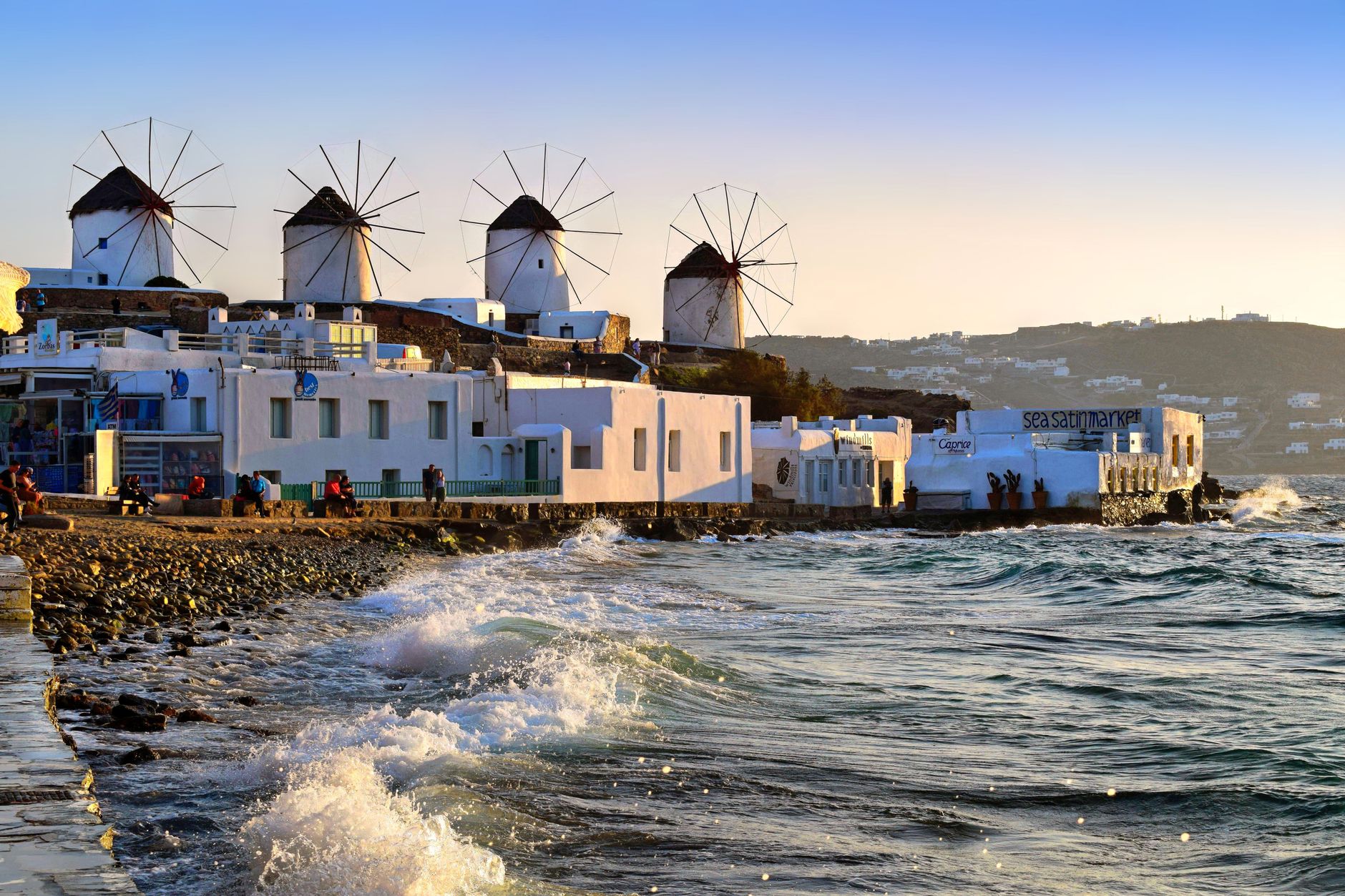
Mykonos has its own golden hour. The row of windmills on the hill above town and the colorful balconies of Little Venice, leaning right over the water, light up as the sun drops. Grab a waterfront table early, order something cold, and watch the waves splash the terrace below your feet.
What to do when you’re not on a sunbed
On Santorini
- Hike Fira to Oia: about 10 km along the caldera rim, 3 to 5 hours with photo stops. Start early, because there’s almost no shade.
- Ancient Akrotiri: a Bronze Age town buried and preserved under volcanic ash, often called the Pompeii of the Aegean.
- Sail the caldera: boats stop at the volcano, warm springs and swimming coves. The sunset catamaran cruises around the caldera are the classic way to do it, and you get the sunset without the Oia crowds.
- Taste the local wine: vines here grow low, coiled into basket shapes against the wind. Order a crisp, salty Assyrtiko.
On Mykonos
- Take the boat to Delos: a whole island of ruins, the mythical birthplace of Apollo and a UNESCO World Heritage Site, about 30 minutes from the old port. There’s no shade and nobody lives there except caretakers, so bring water and a hat.
- Go with a guide: the ruins are huge and barely signposted, which is why guided Delos tours from Mykonos make the visit far more rewarding. Boats and the site keep limited days and seasonal hours, so check the schedule before you plan your Delos day.
- Get lost in Chora: no map, no plan, just left and right until you hit the sea.
- Beach-hop by water taxi: the easiest way to see the south coast without renting anything.
- Lunch in Ano Mera: a village square with tavernas and a monastery, and prices that feel refreshingly local.
Food and nightlife: sunset dinners vs 3am dancing
Santorini eats beautifully. Try tomatokeftedes, crispy fritters made with the island’s small, intensely sweet tomatoes, and creamy yellow fava drizzled with olive oil and capers. Then head down to Ammoudi Bay below Oia for grilled fish a few steps from the water. Nights are about long dinners with a view, not clubs.
Mykonos is the opposite. Its beach clubs start the music by lunchtime, and bars in town keep going until the sky turns pale. Not your scene? Chora’s backstreet tavernas serve louza (cured pork) and kopanisti, a tangy, peppery local cheese, to people who plan to be asleep by midnight.
Money talk: which island costs more
Neither is a budget island. Both sit near the top of Greece’s price list in summer, and you always pay for location: caldera views on Santorini, beachfront and town-center stays on Mykonos.
Mykonos usually stings more on the extras. Sunbeds on mid-range beaches often run roughly €20 to €50 a pair, while front-row loungers at the famous clubs can cost several times that. Taxis are scarce and pricey in high season. Santorini’s big splurge is the room: a caldera-view hotel costs far more than a similar room a few minutes inland.
Prices shift every season, so treat these as ballpark figures and check current rates on official sites before you book.
Best time to visit (and when to skip)
Late May, June, September and early October are the sweet spot for both islands: warm sea, long days and noticeably fewer people than the July and August peak. September is a quiet favorite because the water is at its warmest.
July and August bring the heat, the biggest crowds, the highest prices and the meltemi. That wind keeps temperatures bearable, but it can make north-facing beaches rough and sometimes delays fast ferries.
Winter is sleepy on both. Many hotels, restaurants and beach clubs close, and there’s no dependable direct ferry between the two. For seasonal info and official updates, the Visit Greece tourism site is a good place to start.
Can’t choose? Do both Santorini and Mykonos
Good news: you don’t have to pick. Direct high-speed ferries link the islands from spring through autumn, taking roughly 2 to 3.5 hours depending on the boat and any stops. They sail between Athinios port on Santorini and the New Port in Tourlos on Mykonos, and standard seats usually cost somewhere around €60 to €110. Compare ferry times between the islands before you lock in hotels, since the schedule decides which day you move.
A good split for a week: three nights on Santorini, three on Mykonos, ferry in between. Skip the same-day round trip. Port transfers and ferry times eat most of the day, so give each island at least two nights.
Leave some slack at the end, too. Fast ferries are the first to be delayed or cancelled on very windy days, so don’t book your flight home for the same afternoon you sail.
Where to stay on each island
Santorini
- Oia: the postcard views, the best sunsets and the highest prices
- Imerovigli and Firostefani: caldera views, quieter than Oia, an easy walk to Fira
- Fira: the main town, handy for buses, restaurants and nightlife
- Perissa and Kamari: beach towns with better value, but no caldera view
Mykonos
- Mykonos Town: walk to restaurants, bars and the Delos boats
- Ornos and Platis Gialos: calm sandy beaches, family-friendly, bus links to town
- Psarou: the luxury bay, priced accordingly
Questions travelers ask
Is Santorini or Mykonos better for a honeymoon?
Santorini, for most couples. Sunsets over the caldera, suites with plunge pools and slow dinners with a view are hard to beat. Mykonos works better if you both care more about beach days and nightlife than views.
Can you visit Mykonos on a day trip from Santorini?
It’s possible in peak season, but rushed. You’ll spend around four hours on ferries for a few hours on the island, and one delay can wreck the plan. Stay at least one night, two if you can.
Which island is better for families?
Mykonos, surprisingly. Ornos and Platis Gialos have calm, shallow, sandy water that’s easy with kids. Santorini’s cliffside hotels come with steps everywhere, which is tough with strollers and small children.
Is Mykonos only for partying?
No. The party concentrates in a few beach clubs and in town late at night. Stay in Ornos or near the quieter north coast and your days can be beaches, Delos and village tavernas, with the nightlife there only if you want it.
One last trick, whichever island wins: set an alarm for sunrise at least once. The lanes are empty, the bakeries are pulling out the first trays of bread, and for an hour the most famous islands in Greece feel like they belong to you.
Some links in this post are affiliate links. If you book through them, we may earn a small commission at no extra cost to you.
Cover photo by Federico Abis on Pexels