It’s 7am at Piraeus. Diesel and strong coffee hang in the air, horns bounce off the hulls, and a hundred suitcases rattle across the concrete toward a ship with its ramp lowered to the dock. This is Greek island hopping on day one, and it’s far easier than it looks once you know which boat to pick, which gate to find and what to do with that big bag.
Most first-timers worry about the wrong things. Summer ferries run often, tickets live on your phone, and nobody weighs your suitcase. What actually trips people up is the wind, a mix-up between ports and a connection home that’s far too tight.
This guide covers all three: ferries, luggage and a booking strategy that keeps the trip calm. For ideas on what to do once you land, browse our Greece travel guides and tours.
At a glance
- Easiest island group for beginners: the Cyclades (Paros, Naxos, Mykonos, Santorini and their neighbors)
- Main ports near Athens: Piraeus for most islands, Rafina for the northern Cyclades, Lavrio mostly for Kea
- Two kinds of boat: big conventional ferries (slower, steadier, cheaper) and high-speed catamarans (faster, bumpier, pricier)
- Luggage: no check-in, no bag tags, you leave big bags on racks near the entrance
- Golden rule: one spare day between your last ferry and your flight home
Pick your islands first, then the ferries
Greek islands come in clusters: the Cyclades, the Dodecanese, the Ionian islands, the Saronic Gulf. Ferries mostly run inside a cluster and back to Athens. Jumping between clusters is possible, but it often means long rides or backtracking through the mainland.
That’s why the Cyclades are the classic first trip. There are 24 inhabited islands, every one has a port, and the hops between neighbors are short. You get whitewashed villages, salty swims and grilled octopus by the harbor without spending your holiday at sea.
Here’s a relaxed first loop that works for about ten days:
- Athens to Paros (3 nights): an easy port, good beaches and ferries to almost everywhere.
- Paros to Naxos (3 nights): a short hop to a big, green island with the best food in the group.
- Naxos to Santorini (3 nights): the grand finale, all cliffs, caldera views and sunsets.
- Santorini back to Athens: by plane or ferry, with a night in Athens before your flight.
Torn between the two famous names? Our side-by-side look at Santorini and Mykonos helps you pick the one that fits your style.
One strong opinion: skip the urge to squeeze six islands into ten days. Every ferry day eats half a day of packing, waiting and checking in again. Three or four nights per island feels like a holiday. One night per island feels like a relay race.
Slow boat or fast boat: choosing your Greek ferry
You’ll see two very different kinds of boat on the timetables, and the choice changes your whole day.
Big conventional ferries
These are the floating apartment blocks, with Blue Star the best-known name. They’re slower, but they’re cheaper and far steadier when the sea gets lumpy. You can walk around, sit on the open deck with a frappé, and watch the islands slide past. Cars ride in the belly, so this is also the boat if you’re driving.
High-speed catamarans
Seajets is the name you’ll see most. They cut travel time a lot, you get an assigned indoor seat, and they cost more. The catch is the wind. Light, fast boats bounce hard in choppy water and are the first to be cancelled when conditions turn.
That wind has a name: the Meltemi, a dry north wind that blows hardest in July and August and churns up the central Aegean. It doesn’t make ferries unsafe, since the port authorities stop sailings when it’s too strong. It can make a normal crossing very uncomfortable, though.
Skip: the fast catamaran on a windy afternoon if your stomach is delicate. Do: book the big ferry, sit low and near the middle of the ship, and keep your eyes on the horizon.
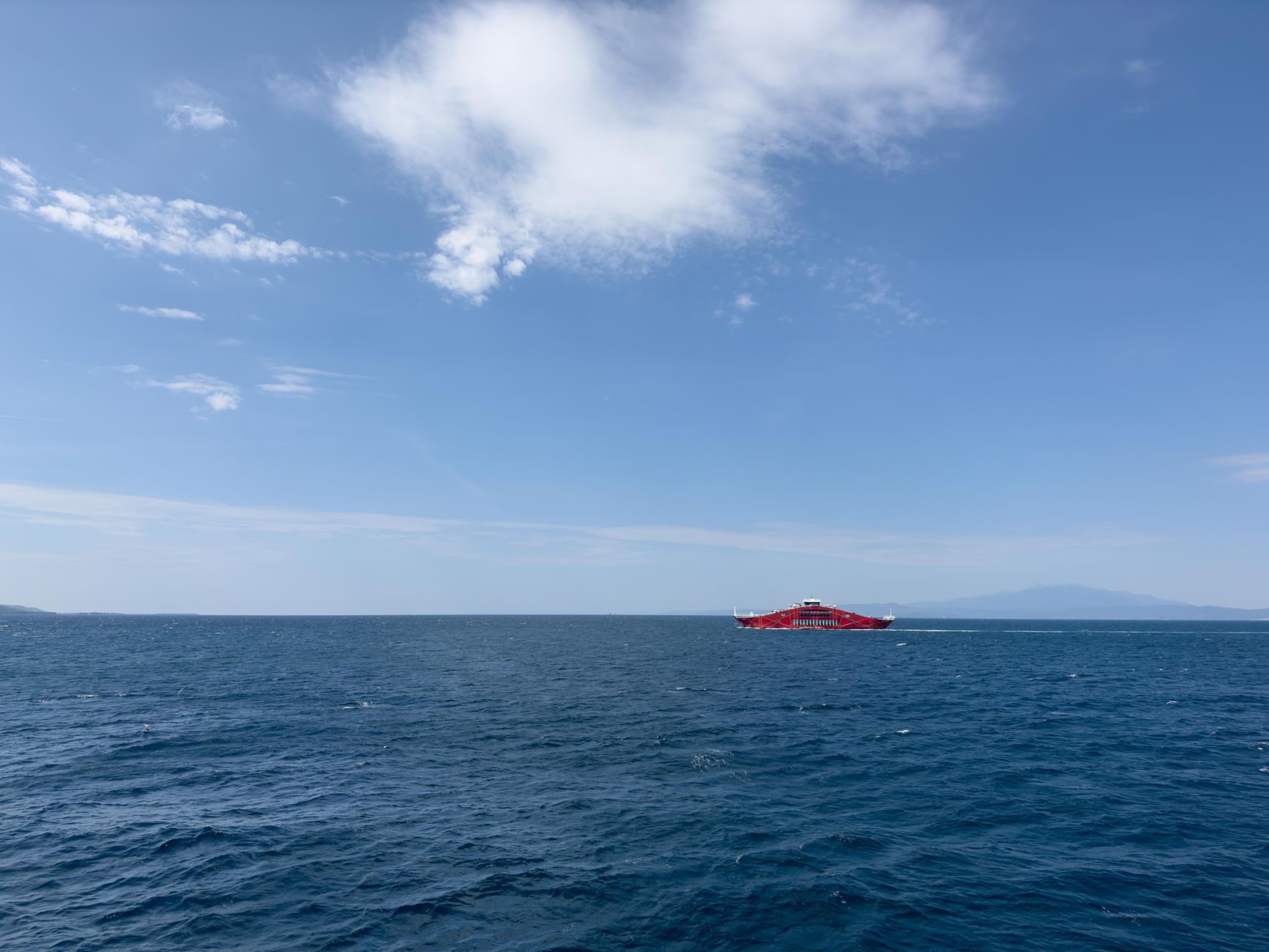
Greek island hopping booking strategy that actually works
Here’s the order that saves the most headaches, and the reason for each step.
- Lock your international flights first. Everything else hangs off these dates.
- Book the ferry back to Athens next, one day early. Wind, delays and the odd strike happen. A night in Athens before your flight turns a cancelled boat into a shrug instead of a missed plane.
- Book the other ferry legs. In July, August and around Greek holidays, popular routes and car spaces fill up, so book well ahead. In spring and autumn you can usually buy a few days out.
- Book hotels with free cancellation. If a ferry shifts by a day, you don’t want to pay for two rooms.
A few smart habits while you book. Compare operators on each leg, since the same crossing can differ a lot in time and price. Check the departure port on every ticket: take a taxi to Piraeus when your boat leaves from Rafina, and you’ll be waving at it from the wrong side of Athens. And check in online when the booking site offers it, so your QR code is ready before you reach the port.
Luggage on Greek ferries: what really happens
Forget everything you know about airports. There’s no bag drop, no tags, no scales. You wheel your suitcase up the ramp through the car deck, and a crew member points you to luggage racks near the entrance or on the lowest level, often grouped by destination.
The allowance is generous, far beyond any airline, but there are two catches. Ferry companies generally don’t take responsibility for bags left in those areas, and you usually can’t go back to them once the ship sails. So your daypack does the heavy lifting: passport, phone, charger, medication, cash and anything you’d hate to lose.
On the catamarans, space is tighter and bags sometimes get stacked by stop, which means someone getting off before you can block yours in. On the big ferries, expect plenty of stairs between decks.
The strongest argument for packing light isn’t the boat, it’s the islands. Santorini’s villages are all steps, old towns are cobbled lanes, and cars can’t get close to many hotels. A carry-on and a backpack beat a giant case every time. Travelling with the whole clan? Our tips for planning a trip with three generations cover how to split the load.
The trickiest luggage moment is the gap between hotel checkout and an evening ferry. Many hotels will keep bags for a few hours if you ask. Where that’s not an option, book a luggage storage spot near the port and spend the afternoon on one last beach instead of dragging a suitcase through the heat.
Port day: how not to miss your boat
Ferry boarding looks chaotic from the outside. It moves surprisingly fast once you know the rhythm.
- Find your gate before the day. Piraeus is huge, with gates spread far along the waterfront, and a port shuttle links them. Your ticket shows which gate to aim for.
- Arrive about an hour early. That’s what operators ask for, and it gives you time to find the right spot, buy water and breathe.
- Watch for the ship, not just the clock. Boats can run late, and two ferries may leave the same port minutes apart. Match the ship’s name on your ticket.
- Scan and board. Staff scan your QR code at the ramp, you drop big bags on the racks, then head upstairs.
- Get ready before your island. When your stop is announced, collect your things and head down. The ramp opens, people pour off, and the ship is gone again within minutes.
Port strikes do happen now and then, sometimes at short notice. Before a travel day, it’s worth a glance at the official UK safety and security advice for Greece and any messages from your ferry company.
Your phone is your ticket, so keep it happy
Island hopping in Greece runs on your phone. Your tickets are QR codes, timetable changes arrive by email or text to the details you booked with, and live ferry trackers tell you whether your boat has even left the last island.
So save every ticket offline (a screenshot works), book with an email you actually check, and carry a power bank on long conventional crossings, where free sockets vanish fast. Mobile data between islands saves you from hunting for café wifi at the exact moment your ferry gets moved.
Questions travelers ask
Do I need to book Greek ferries in advance?
For July, August and Greek holidays, yes, especially popular routes, cabins and car spaces. In spring and autumn you can usually book a few days ahead. Either way, book your return to Athens early and leave a spare day before your flight.
How early should I get to the port?
Aim for about an hour before departure, which is what operators ask. Allow extra time at Piraeus, where the gates are spread out, and more again if you’re driving onto the ferry.
Can I take a big suitcase on a Greek ferry?
Yes. There’s no check-in and no weighing, and you leave big bags on racks near the entrance. Keep valuables and medication with you, since you usually can’t reach the racks during the crossing.
What happens if my ferry is cancelled because of wind?
You’re usually offered another sailing or a refund, but the details depend on the operator and your ticket, so check its terms. This is exactly why a spare day before your flight home matters so much.
Is Greek island hopping a good idea for a first trip to Greece?
Very much so. Start with the Cyclades, keep it to three or four islands, and choose big conventional ferries when the wind is up. The system is simpler than it looks.
One last trick for your first crossing: on the big ferries, head straight to the top deck as the ship pulls away. The island shrinks behind you, the wake stretches out white across the blue, and the next harbor slowly turns from a smudge into little white cubes. That view is the moment most people start planning their next hop.
Some links in this post are affiliate links. If you book through them, we may earn a small commission at no extra cost to you.
Cover photo by Xavier Messina on Pexels
