It’s 7am. The ship slides into a harbor ringed with pale cliffs, the town below is still waking up, and the smell of fresh coffee drifts across the top deck. That’s the promise of a first Mediterranean cruise, and it really does deliver. What the brochure skips is everything between the gangway and that perfect photo.
Your fare covers maybe half of what you’ll spend. “Rome” can be an hour’s train ride from the pier. And some of the prettiest stops make you queue for a small boat before your feet touch land.
None of this should stop you booking. It should just change how you book. For more trip ideas beyond the ship, dip into our worldwide travel guides.
- Best months: May, June, September and October for warm water without the worst heat and crowds.
- Typical length: 7 nights, with a port almost every day.
- Real budget: fare plus daily service charges, drinks, Wi-Fi and excursions.
- Biggest rookie mistake: flying in on the same day the ship sails.
Your first Mediterranean cruise fare is only the opening bid
The price on the booking screen covers your cabin, the main restaurants, the buffet, the shows and the pools. The rest shows up on a bill slipped under your door on the last night, and it can make you spill your morning cappuccino.
- Daily service charges: most big lines add an automatic fee per person, per day, commonly somewhere around $15 to $25 depending on the line and cabin. A few premium lines fold it into the fare.
- Drinks: tap water, basic coffee and tea are free. Soda, cocktails, wine and fancy coffee are not, and many lines add a service charge of roughly 18 to 20 percent on top.
- Wi-Fi: sold per device, per day or per voyage.
- Shore excursions: often the single biggest extra on the whole trip.
- Specialty restaurants and the spa: tempting, and priced like it.
Drink packages only pay off if you drink a lot. Two espressos and a glass of wine at dinner rarely beat the daily package price. Sipping spritzes by the pool from noon is a different story. Count honestly before you buy, and check your cruise line’s site for current charges.
Why “Rome” might be an hour from your ship
Cruise lines name ports after the famous city nearby. Ships dock where the deep water is. The gap between the two can eat half your day.
- Rome means Civitavecchia, about 80 km from the city. Regional trains to Roma Termini take roughly 45 minutes to over an hour, and the station is a shuttle or a sweaty walk from the pier.
- Florence and Pisa mean Livorno. Florence is around 120 km inland.
- Pompeii and the Amalfi Coast mean Naples.
- Athens means Piraeus, the port just outside the city.
- Ephesus means Kusadasi on the Turkish coast.
- Venice is the tricky one. Big ships are barred from sailing past St Mark’s, so they use mainland terminals, and some “Venice” cruises actually leave from Ravenna or Trieste, hours away by road.
So a “day in Rome” becomes five or six hours in the city once you subtract the trains. That’s enough for the Colosseum or the Vatican, not both. If you pick the Colosseum, figure out which Colosseum ticket actually suits a short visit before you sail, because timed entries can sell out on busy days.
Tender ports: the little boat nobody mentions
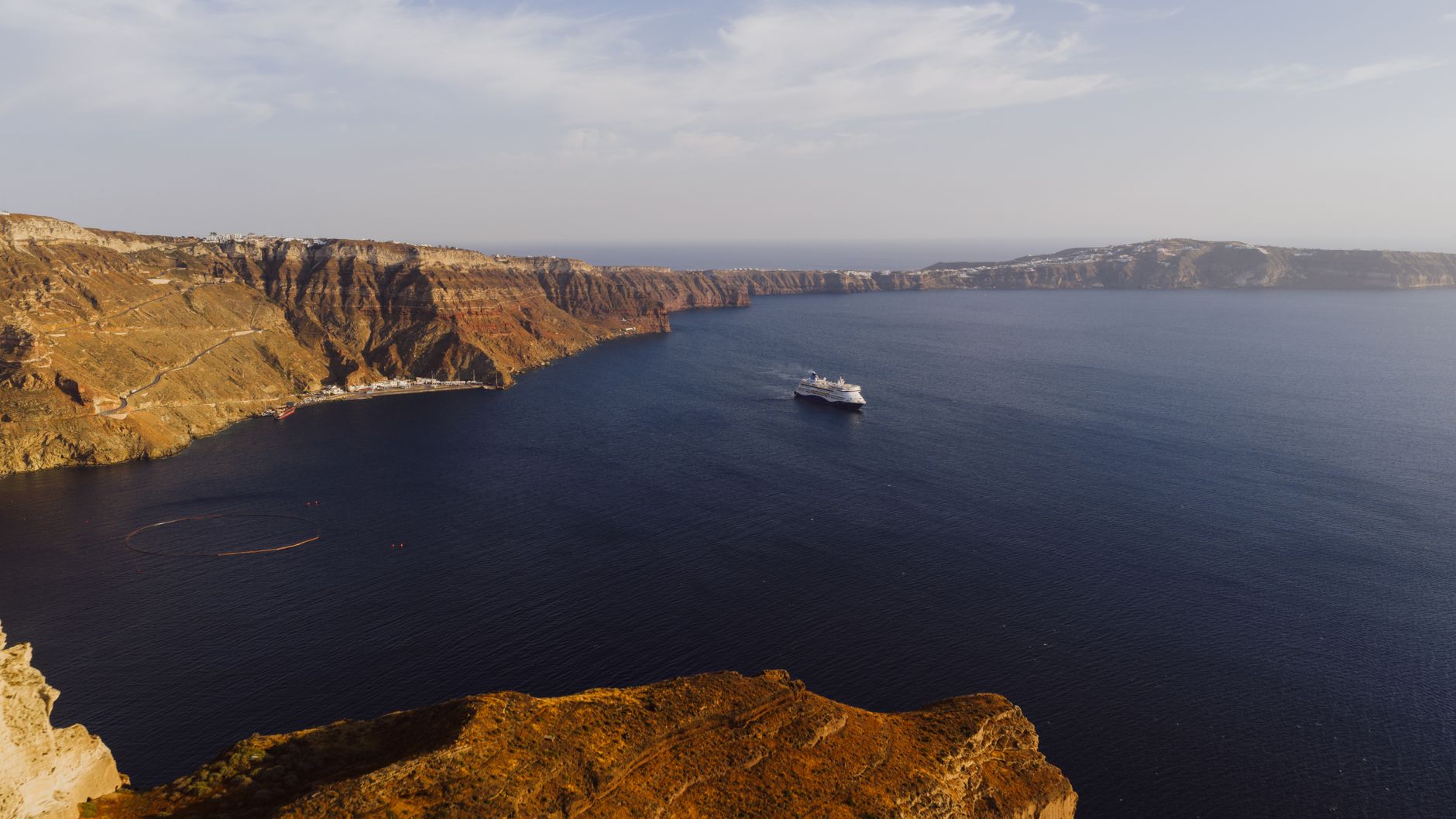
Picture Santorini from the deck. The ship drops anchor in the flooded volcanic caldera, the cliffs rise straight up, and the white houses of Fira sit on top like sugar cubes. Then you realize there’s no pier.
In a tender port, small boats shuttle you ashore, usually a 10 to 20 minute ride with salt spray on your face. You’ll often need a tender ticket and a queue first. In Santorini you land at the Old Port far below Fira, then choose between the cable car (a few minutes), 588 steep stone steps, or the donkeys, which we’d skip.
Here’s the catch. When several ships are in, the cable car line can stretch past 45 minutes, and it’s worst in the late afternoon when everyone heads back at once.
- Skip this: a slow breakfast and a mid-morning tender.
- Do this: grab an early tender, ride straight up, and come back down well before the final rush. Walking down the steps is far easier than climbing them.
Rough seas can pause tenders, and now and then a port gets skipped entirely. It’s the one part of cruising nobody controls. If the Greek islands are your main draw, it helps to know how Santorini and Mykonos compare so you can pick an itinerary that hits the one you care about most.
Port days are sprints, not strolls
Most Mediterranean itineraries pack in a port nearly every day. Brilliant for seeing a lot. Tiring if you treat every stop like a marathon.
All-aboard time is usually 30 to 60 minutes before the ship sails, and it’s printed in your daily planner. Check whether it’s ship time or local time. Greece and Turkey sit ahead of Italy and Spain, and ships don’t always change their clocks to match.
Then there’s the big choice: book through the cruise line or go on your own. Ship excursions cost more and move in big groups, but the ship generally waits if its own tour runs late. Independent tours are cheaper and smaller, and if you’re late, that’s on you.
If you’ve got one big-city port day, keep it simple:
- Be one of the first off and head straight for the train or your pre-booked transfer.
- Do one headline sight, booked ahead.
- Eat a long lunch two streets away from the main square.
- Be back at the pier with a proper buffer before all-aboard.
Carry some small euro notes and coins. Buses, kiosks and beach stalls often want cash, and ATM lines near the pier get long on busy mornings.
Picking your first Mediterranean cruise route
Western Mediterranean routes usually loop Spain, France and Italy: Barcelona’s tiled rooftops, the Riviera, Tuscany and Rome. Big cities, big museums, lots of trains to catch. Eastern Mediterranean routes lean toward Greece, Croatia and Turkey: whitewashed islands, walled towns, turquoise swimming coves and more tender ports.
Timing matters as much as the map. July and August bring the hottest days, the fullest ports and the highest fares. Late spring and early autumn feel softer, with warm sea and far shorter queues.
Ship size changes the whole trip. Giant ships come with water slides and Broadway-style shows, but also more people ahead of you at every tender and cable car. Smaller ships reach tighter harbors and empty out faster. Don’t overspend on a cabin either. You’ll be ashore most days, so an inside cabin is fine for many travelers, though a balcony makes every sailaway feel like a private show.
Cruises are also one of the easiest ways to keep three generations happy in one place. If that’s your crew, our tips for planning a multigenerational vacation apply at sea too.
Staying connected without a scary phone bill
This one catches first-timers every season. Once the ship is away from the coast, your phone can latch onto the ship’s own satellite network, which is billed as maritime roaming and is far pricier than normal roaming. Your home carrier’s travel pass usually doesn’t cover it, and the bill can arrive weeks later.
- Switch to airplane mode before the ship leaves port, then turn Wi-Fi back on.
- Use the ship’s Wi-Fi package at sea, even just a messaging plan.
- Use a travel eSIM in port, where it connects to local land networks like any other trip.
- Download maps, shows and playlists before you board.
A regional Europe eSIM covers most Mediterranean ports in one go, which saves buying a new SIM in every country.
The first and last day (where plans quietly fall apart)
Fly in the day before your ship sails. One delayed flight or lost bag and the ship leaves without you. Arriving early also turns embarkation day into a treat. If your cruise starts in a city you’ve never seen, like Istanbul, stretch it into a proper stay with a first-timer’s three days in Istanbul.
Your big suitcase can take hours to reach your cabin, so pack a day bag with swimwear, medication, chargers and your passport. Bring the passport even where you don’t think you’ll need it. The US State Department’s advice for cruise passengers explains why: if you’re sick or the ship changes plans, you may need to fly home from a foreign port.
The last morning moves fast. Many lines ask you to put bags outside your door the night before, and you’ll be off the ship early. Evening flight? Don’t drag your luggage through the old town. You can drop your bags at a luggage storage spot near the port and squeeze in one last lunch by the water.
Questions travelers ask
Is a Mediterranean cruise good for first-timers?
Yes, it’s one of the easiest ways to see several countries without repacking a suitcase. The trade-off is short port time, so you’ll get a taster of each place rather than a deep visit. Many people use a first cruise to pick which city to return to for longer.
How long should a first Mediterranean cruise be?
Seven nights is the classic length and a comfortable first try. It usually covers five or six ports without feeling rushed. Shorter sailings exist, but you’ll spend a bigger share of the trip boarding and leaving.
Do I need a passport and visas for a Mediterranean cruise?
Bring a valid passport. Entry rules depend on your nationality and on every country the ship stops in, including stops outside the Schengen area such as Turkey or Montenegro. Check the rules for each port with official government sources and your cruise line well before you sail.
Should I book shore excursions through the cruise line?
Book through the ship for far-off sights with tight timing, like Rome from Civitavecchia or Florence from Livorno, where the “ship waits” promise is worth paying for. For compact ports where the town is walkable from the pier, going independently is cheaper and often more fun.
Last tip before you go: on the first sea day, walk the ship end to end and find a quiet corner of the open deck at the back. Come back to it every evening at sailaway, drink in hand, and watch the lights of that day’s port slide away behind you. Best seat on the ship, and it’s free.
Some links in this post are affiliate links. If you book through them, we may earn a small commission at no extra cost to you.