It’s just after 8am in Sultanahmet. The call to prayer drifts across the square, a simit seller balances a tower of sesame bread rings on his head, and Hagia Sophia’s dome is still soft grey against the morning sky. That quiet lasts about an hour. Plan your 3 days in Istanbul the smart way and you’re inside before the tour groups have finished breakfast.
The problem for first-timers isn’t a lack of things to see. It’s the opposite. Palaces close on different days, mosques pause for prayer, and the city sprawls across two continents. This itinerary puts every big sight on the right day, in the right order, and lets the ferries do the heavy lifting.
Planning more of the country after the city? Our full collection of Turkey tours and travel guides picks up where this one ends.
At a glance
- Best time to go: spring and autumn, when walking all day is pleasant and the ferry decks aren’t baking.
- Getting around: an Istanbulkart transport card for trams, metro, buses and ferries.
- Where to base yourself: Sultanahmet for the old city, Karaköy or Galata for food and nightlife.
- Budget: mid-range. The big palaces add up fast, but mosques, markets and ferries cost little or nothing.
Three rules that make or break your first Istanbul trip
Get these right and the whole plan clicks into place. Get them wrong and you’re standing outside a locked gate with a long face.
- Topkapı Palace closes on Tuesdays. Build your palace day around it.
- The Grand Bazaar closes on Sundays. The Spice Bazaar stays open, so swap days if you need to.
- Dolmabahçe Palace closes on Mondays, like most of the national palaces.
Mosques, Hagia Sophia and the Blue Mosque included, pause tourist visits five times a day for prayer. The longest break is Friday around midday. Check the day’s prayer times over breakfast and plan around them. It takes thirty seconds.
On day one, grab an Istanbulkart from the machines at any major stop. It’s the rechargeable card for every tram, metro, bus and ferry, and it saves you from fumbling for single tickets at every turnstile.
Getting in from the airport (without losing half a day)
Most international flights land at Istanbul Airport (IST), far out on the European side. Some budget airlines use Sabiha Gökçen (SAW) on the Asian side, which puts you even further from the old city. Either way, count on an hour or more to Sultanahmet depending on traffic.
Airport buses and the metro are the cheap options. If you land late, travel with kids or have heavy bags, a pre-booked airport transfer means someone is waiting with your name and there’s no haggling at the taxi rank. If you do grab a yellow taxi, make sure the meter is running before the car moves.
Where to stay for 3 days in Istanbul
For a short first trip, stay in Sultanahmet. Hagia Sophia, the Blue Mosque and Topkapı are all a few minutes on foot, so early starts cost you nothing. The trade-off: evenings are quiet and the restaurants around the square lean touristy.
Prefer rooftop bars and better dinners? Karaköy and Galata sit just across the Galata Bridge, a short tram ride from the old city, with the best coffee and meze tables in town. Weighing a rental flat against a hotel? Here’s our breakdown of which one really costs less once the fees land.
Day 1: The old city’s big three (plus a cistern for the heat)
Day one of your trip stays inside the UNESCO-listed historic peninsula, and you won’t need a single tram.
Morning: Hagia Sophia before the queues
Be at the tourist entrance when it opens. Hagia Sophia is a working mosque again, so visitors follow a separate route up to the upper galleries, where gold Byzantine mosaics shimmer a few steps from your face and the dome feels impossibly high. Foreign visitors pay around €25; check the official site for current prices before you go.
Shoes come off, shoulders and knees stay covered, and women need a headscarf. Slip-on shoes save you a surprising amount of hopping around at the door.
Then cross the square to the Blue Mosque. Entry is free, and inside, more than 20,000 hand-painted İznik tiles wash the light in cool blues and greens.
Midday: Topkapı Palace, a small walled city
Walk five minutes to Topkapı Palace, home of the Ottoman sultans for almost 400 years. Give it at least three hours. The Harem is worth every step: tiled corridors, tiny courtyards and the odd thrill of peeking into rooms that were once completely off-limits.
It’s one of the city’s pricier tickets and the line can stretch in high season. A guided Topkapı tour with skip-the-line entry sorts out both, and a good guide turns a maze of pavilions into actual stories.
Afternoon: the Basilica Cistern
When your feet ask for shade, go underground. The Basilica Cistern is a Byzantine reservoir with hundreds of columns rising out of dark water, lit in slow-shifting colors, with drops echoing somewhere in the dark. It stays cool even in midsummer. Look for the two Medusa heads propping up columns in the far corner.
For dinner, walk away from the square. Two or three streets back, the menus get shorter and the kebabs get better.
Day 2: Bazaars, a sultan’s mosque and the Bosphorus
Morning: the Grand Bazaar (any day but Sunday)
The Grand Bazaar packs thousands of shops under painted vaults, and you will get lost. That’s the point. Mosaic lamps glow in stacked colors, carpet sellers wave you in for tea, and the smell swings from leather to apple tea every few steps.
Midday: Süleymaniye Mosque and a bowl of beans
Walk uphill to the Süleymaniye Mosque, the masterpiece of the architect Sinan. It’s calmer than the Blue Mosque, free to enter, and the garden behind it has one of the best views over the Golden Horn. For lunch, the little restaurants on the street outside serve kuru fasulye: white beans slow-cooked in tomato, with rice and pickles on the side. Simple, cheap and exactly right.
Afternoon: the Spice Bazaar and a boat on the Bosphorus
Wander down the market lanes to the Spice Bazaar in Eminönü: pyramids of sumac and chili flakes, trays of lokum dusted in sugar, tins of apple tea. Taste before you buy. Vendors expect it.
Then head for the Eminönü piers. The public ferry company runs a long Bosphorus tour up toward the Black Sea, and regular commuter ferries cross to Üsküdar or Kadıköy for the price of a bus ride. Either way you glide past palaces, wooden waterside mansions and the big bridges, with seagulls chasing the boat the whole way.
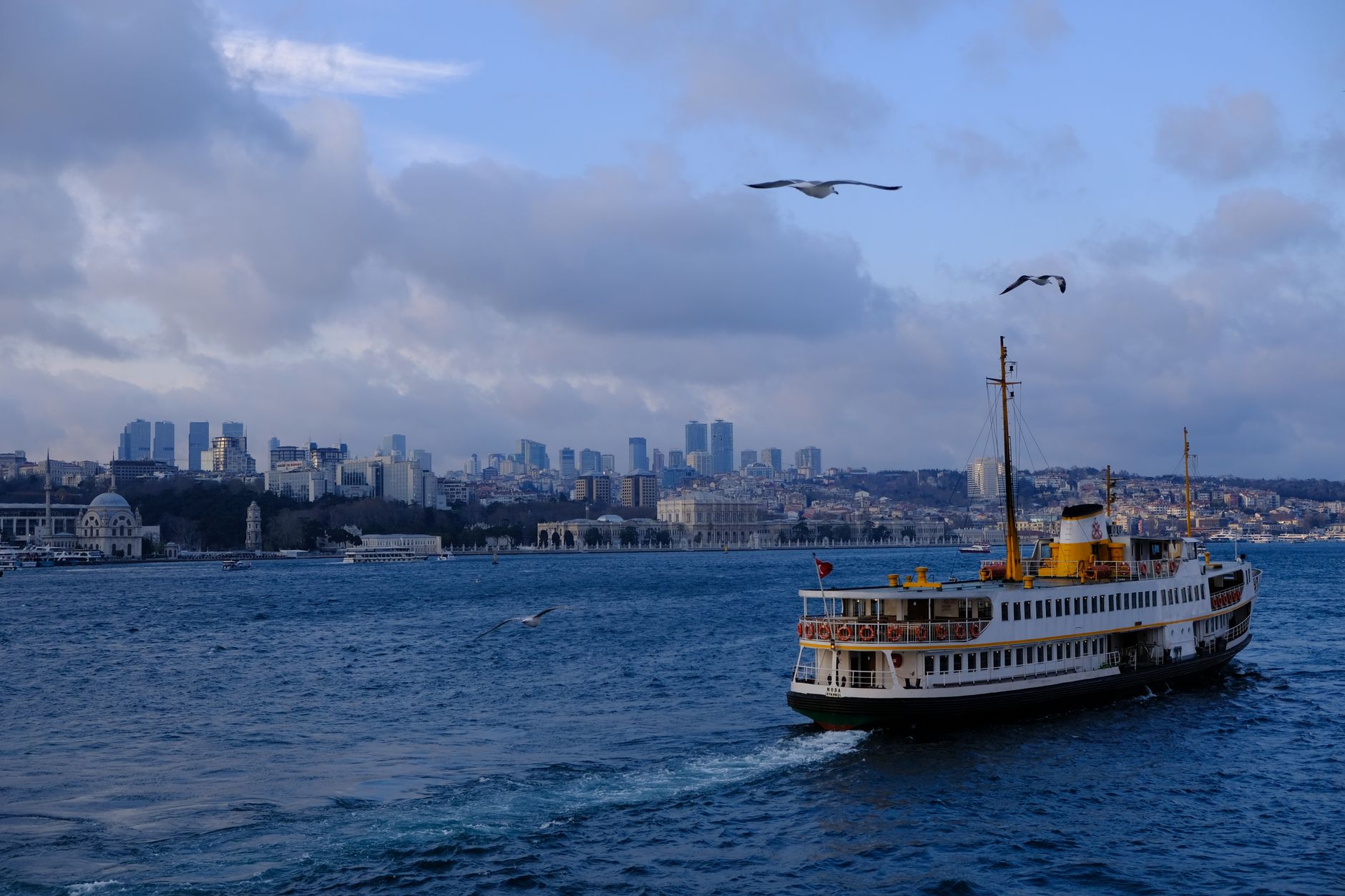
Day 3: Galata, Istiklal and dinner in Asia
Morning: Galata Bridge and a proper Turkish breakfast
Walk across the Galata Bridge, where fishermen line the rails with their rods at every hour of the day. On the far side, settle into a Karaköy café for a real Turkish breakfast: white cheese, olives, tomatoes, honey with thick kaymak cream, eggs sizzling in a little pan, and tea that keeps arriving until you wave it away.
Then climb the steep lanes to Galata Tower. The viewing deck is paid and often has a line, so go early, or simply admire it from the square below with a coffee in hand.
Afternoon: Istiklal Avenue and Dolmabahçe
From the tower, stroll up Istiklal Avenue, the long pedestrian street where a little red nostalgic tram rattles through the crowds. Duck into the side passages for old-Istanbul atmosphere and a quick street snack.
If it isn’t Monday, head down to the waterfront at Kabataş and walk to Dolmabahçe Palace, the sultans’ later and far glitzier home, all crystal chandeliers and grand European-style halls right on the water.
Evening: a ferry to Kadıköy
End your 3 days in Istanbul on the Asian side. Ferries cross from the European shore to Kadıköy, where the market streets smell of grilled fish, pickles and warm bread. It feels less like a sight and more like the city at home: students, families, meze plates, and the sunset glowing behind the old city’s minarets across the water.
Short on time, or want someone else to handle the logistics? Guided walks, food tours and sunset cruises can slot into any gap in the plan.
What to eat in 3 days (a quick cheat sheet)
- Simit: crunchy sesame rings from the street carts, perfect with tea for breakfast on the move.
- Balık ekmek: grilled fish sandwiches by the water at Eminönü, with raw onion and a squeeze of lemon.
- Kumpir: giant baked potatoes loaded with toppings, the classic snack in Ortaköy.
- Baklava: Karaköy is famous for it. Yes, you’ll want a second piece.
- Midye dolma: mussels stuffed with spiced rice, sold by street vendors late into the night.
Skip this, do that
- Skip the restaurant touts on the main Sultanahmet streets. Do walk a few blocks back where locals actually eat.
- Skip picking up a shoe-shine brush a stranger “drops” in front of you; it’s a well-known setup for an overpriced shine. Do keep walking with a smile.
- Skip the friendly stranger’s invitation to his cousin’s carpet shop. Do shop in the bazaar on your own terms.
- Skip cramming Topkapı and Dolmabahçe into one day. Do pick one palace a day and actually enjoy it.
Questions travelers ask
Is 3 days in Istanbul enough for a first visit?
Yes, for the highlights. Three days covers the old city, the bazaars, a Bosphorus ferry and a taste of the Asian side without rushing. A fourth day lets you add the colorful Balat neighborhood or a boat trip to the Princes’ Islands.
Is the Museum Pass Istanbul worth it for three days?
It depends on your list. The pass covers Topkapı and several museums, but it isn’t valid at Hagia Sophia, the Basilica Cistern or Dolmabahçe. Add up the tickets you’ll actually use and check the official site for what’s currently included.
What should I wear to visit mosques in Istanbul?
Cover your shoulders and knees, and women should bring a headscarf. Shoes come off at the door, so easy slip-ons help. Most mosques lend coverings if you forget, but your own is more comfortable.
Which days are hardest to plan around?
Tuesday for Topkapı, Sunday for the Grand Bazaar and Monday for Dolmabahçe. Friday midday is tricky for mosque visits because of the long congregational prayer, so save that slot for a ferry or the bazaar.
One last thing: keep a light scarf and your Istanbulkart in your pocket at all times. When the ferry horn sounds at sunset and the minarets turn gold, head straight for the open deck. That’s the moment you’ll still be talking about at home.
Some links in this post are affiliate links. If you book through them, we may earn a small commission at no extra cost to you.
Cover photo by Mathias Reding on Pexels