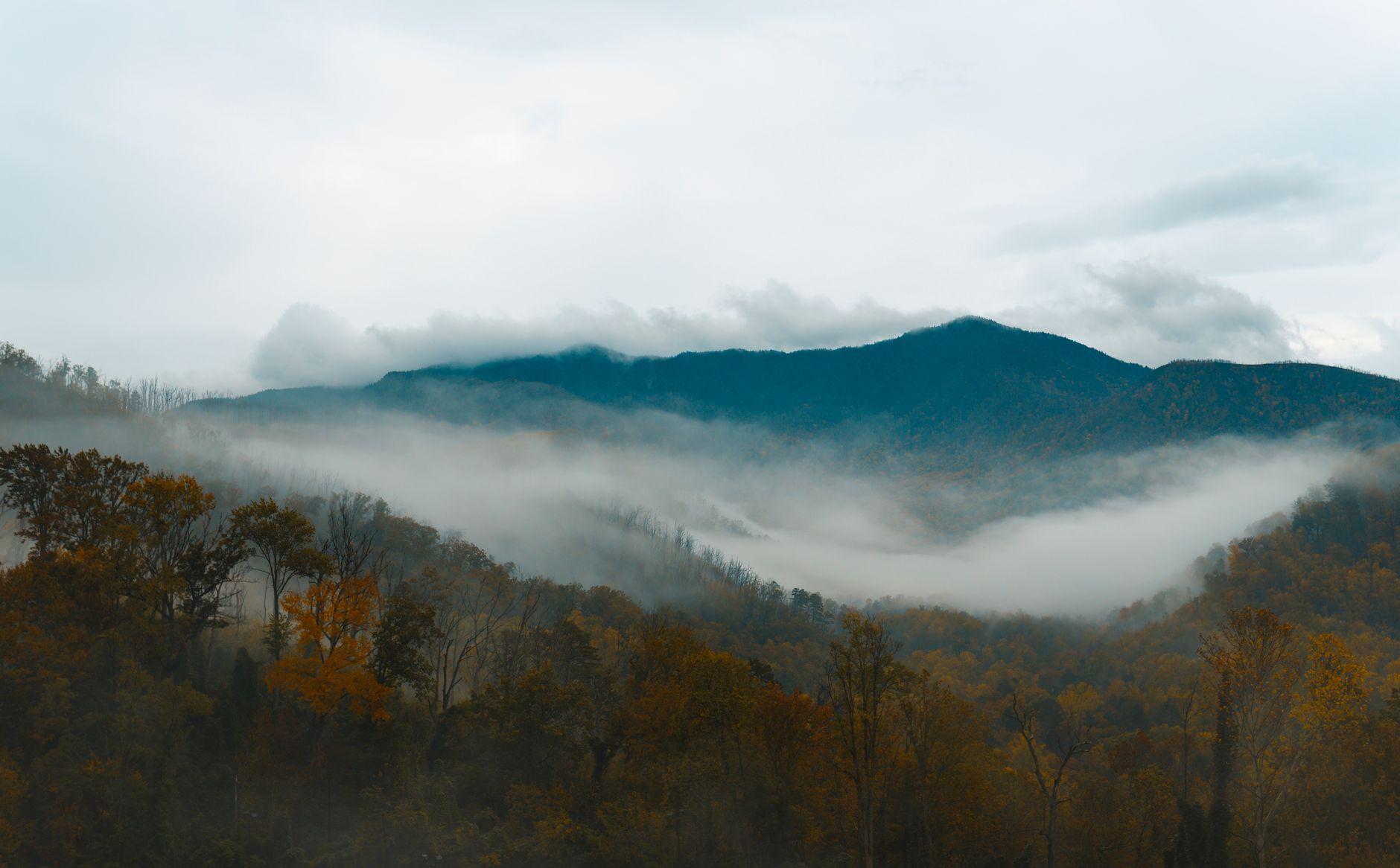
It’s just past 7am on Newfound Gap Road. Fog still sits in the hollows below, the air smells like wet leaves and woodsmoke, and every curve opens onto another ridge washed in orange and gold. That’s the Great Smoky Mountains in fall, before the day’s traffic has even found its car keys.
Then late morning hits, and the same road turns into a slow parade of brake lights. The Smokies are the most visited national park in the country, and October is one of their busiest months. The good news? Almost every crowd problem here has a simple fix, and most of it comes down to timing.
Below you’ll find the drives worth your gas, the viewpoints worth pulling over for, and the small tricks that help you see the color without the chaos. For tours and more planning help, see our full list of Great Smoky Mountains tours and guides.
- Peak color: early to mid October up high, mid October into early November in the valleys
- Time needed: 2 to 3 days to drive the big roads without rushing
- Getting there: fly into Knoxville for the Tennessee side or Asheville for the North Carolina side, then drive
- Budget: no entrance fee, just a parking tag if you stop for more than 15 minutes
- Best trick: be on the road before 8am or after 4pm
When the Great Smoky Mountains in fall hit peak color
Here’s what makes the Smokies easier than most leaf-peeping spots: there isn’t one peak week. The park climbs from low valleys to over 6,600 feet, and color starts at the top and slides downhill for weeks.
- Late September: the first patches of yellow birch, beech and mountain maple appear on the highest ridges around Kuwohi.
- Early to mid October: everything above about 4,000 feet lights up, with dark spruce and fir behind it for contrast.
- Mid October to early November: the valleys take over. Sugar maples, scarlet oaks, sweetgum and hickories turn Cades Cove and the lower roads red and gold.
So if you arrive and the valley still looks green, drive up. If the summit trees are bare, drive down. You’re almost always one elevation change away from peak color. Sunny days and chilly nights bring out the brightest reds, and the park’s official fall color page is the best place to see how the season is going.
The best fall drives in the Smokies (and when to do each)
Newfound Gap Road: the big one
This is the road that crosses the whole park, from Gatlinburg in Tennessee to Cherokee in North Carolina. You climb from roughly 1,300 feet to 5,046 feet at Newfound Gap, and the forest changes around you as you go: hardwoods in full color down low, dark spruce up top. It’s open year-round, weather permitting, and it’s the one drive to do if you only do one.
Start early, stop often, and don’t just race to the top. The overlooks facing the Chimney Tops on the Tennessee side are some of the prettiest of the whole route.
Cades Cove Loop Road: slow, golden and famous
An 11-mile, one-way loop around a wide valley of meadows, log cabins, old churches and split-rail fences, with mountains on every side. Deer graze in the fields in the morning, and black bears often show up in the trees along the edges.
The catch: it’s one of the busiest places in the park in October, and once you’re on the loop, you’re committed. A drive that takes an hour on a quiet day can stretch to several when the whole valley stops for one bear. Go at opening time, or save it for the late afternoon light.
Roaring Fork Motor Nature Trail: the cozy one
A narrow, one-way lane just outside Gatlinburg that winds through dense forest past mossy streams, old homesteads and the trailhead for Grotto Falls. It feels like driving through a storybook, and because it sits lower down, the color arrives here later in the season.
Foothills Parkway: the crowd escape
Running along the park’s northern edge, the western stretch between Wears Valley and Chilhowee Lake follows a high ridge with big views of the Smokies on one side and rolling farmland on the other. The park itself suggests it for avoiding fall crowds, and it shows: fewer cars, plenty of overlooks, not a single billboard.
Don’t skip Look Rock. A short paved walk from the parking area leads to an observation tower with a 360-degree view that rivals the park’s highest summit, minus the elbows. There are no trash cans along the parkway, so pack out what you bring.
Kuwohi Road: up to the roof of the Smokies
A seven-mile spur off Newfound Gap Road climbs toward Kuwohi, formerly Clingmans Dome, the highest point in the park at 6,643 feet. From the parking lot, a steep paved half-mile path leads to the observation tower. The lot fills fast, and the road closes for winter from December through March.
Viewpoints worth pulling over for
Some of the best views in the Smokies come straight through the windshield or a few steps from the car. If you love scenery without a long hike, you’ll feel right at home here, a lot like the Dolomites views anyone can reach.
- Morton Overlook: just below Newfound Gap on the Tennessee side, famous for sunsets that pour gold down the valley. The lot is small, so arrive early.
- Newfound Gap: the state line, with long views into North Carolina and a cold wind that reminds you how high you’ve climbed.
- Kuwohi tower: layer after layer of blue ridges on clear days, a sea of fog on the moody ones.
- Look Rock Tower: the Foothills Parkway’s sunset spot, with far fewer people than the summit.
- Oconaluftee fields: near the North Carolina entrance, where elk graze in the open meadows early and late in the day. In fall, you might hear the bulls bugling.
How to beat the fall crowds in the Smokies
The Great Smoky Mountains in fall are at their most beautiful exactly when they’re at their busiest. The park’s own advice is refreshingly simple: arrive before 8am or after 4pm. Between those hours, the famous lots fill up and the loop roads slow to a crawl.
- Go midweek. October weekends bring the heaviest traffic, especially around Gatlinburg.
- Enter from a quieter side. Townsend in Tennessee and Cherokee in North Carolina feel far calmer than Gatlinburg’s main entrance.
- Have a backup, and a backup for your backup. If a lot is full, move on instead of circling.
- Park only in marked spots. Roadside parking damages plants and jams traffic for everyone behind you.
- Pick quieter trails. The park points fall visitors to Little River, Porters Creek and Lynn Camp Prong Cascades.
Skip this, do that
Skip: Cades Cove at midday on an October Saturday. Do: the Foothills Parkway instead, then roll into Cades Cove for golden hour.
Skip: circling the Kuwohi lot at noon. Do: go up for sunrise, when the fog below looks like an ocean.
Timing tricks travel well, by the way. The same early-start logic works wonders for Kyoto’s autumn leaves and their crowds too.
Parking tags, weather and wildlife
There’s no entrance fee, and simply driving through costs nothing. But every vehicle parked for more than 15 minutes needs a parking tag. Daily, weekly and annual versions are all cheap, and the weekly one is the better deal if you’re staying more than a couple of days. Buy it online and print it at home, or pick one up at a fee machine or visitor center. It has to be a physical tag on your dashboard, and it doesn’t guarantee you a spot. Check the official fees page for current prices.
Fall weather swings fast. A crisp, sunny morning can turn into cold drizzle at the summit by lunch, so dress in layers and keep a rain shell in the car.
Fall is also prime time for bears and elk. Stay at least 50 yards away (half a football field), use your zoom, and never leave food out at a picnic spot.
Where to stay and how to get around
You’ll need a car. There’s no public transport through the park, and the drives are the whole point. Most visitors fly into Knoxville for the Tennessee side or Asheville for the North Carolina side, then pick up a rental and head for the hills.
Gatlinburg puts you right at the main entrance, with pancake houses on every corner, but also the worst traffic. Townsend, the quiet gateway, sits closest to Cades Cove. On the North Carolina side, Cherokee and Bryson City suit early Newfound Gap Road mornings and elk-spotting at Oconaluftee.
A cabin with a porch and a mountain view is the classic Smokies stay, and fall is when those go first. Browse cabin rentals near the park well ahead of your dates.
If you only have one fall day
- Sunrise: Kuwohi or Newfound Gap, coffee in hand and fog below.
- Morning: drive down Newfound Gap Road toward Gatlinburg, stopping at the overlooks before the traffic builds.
- Midday: escape to the Foothills Parkway and Look Rock Tower while everyone else queues in the loops.
- Late afternoon: Cades Cove in the golden light, eyes on the fields for deer and bears.
- Evening: dinner in Townsend, where the roads are calm and nobody’s honking.
Questions travelers ask
When is the best time to see fall colors in the Smoky Mountains?
Higher elevations usually peak in early to mid October, while the lower valleys peak from mid October into early November. Because color moves downhill, there’s good color somewhere in the park for several weeks. Check the park’s fall color updates before you go.
Do you need a parking pass for the Great Smoky Mountains in fall?
Yes, if you park anywhere in the park for more than 15 minutes. Driving through or stopping briefly doesn’t need one, and there’s no entrance fee. Tags come in daily, weekly and annual versions.
Is Cades Cove worth it in October?
Absolutely, if you time it right. Go at opening or in the late afternoon, and expect it to take much longer than on a quiet day. At midday on weekends, the loop can crawl for hours.
What’s the least crowded scenic drive in the Smokies?
The Foothills Parkway, which the park itself recommends for dodging fall crowds. It has ridge-top views, plenty of overlooks and the Look Rock Tower for a 360-degree panorama.
One last trick: when the famous overlooks are packed, pull into any quiet pullout, turn off the engine and just listen. Leaves ticking down through the branches, a creek somewhere below, a woodpecker hard at work. That’s the Smokies in fall, and you don’t need a famous view to hear it.
Some links in this post are affiliate links. If you book through them, we may earn a small commission at no extra cost to you.
Cover photo by Esteban Carriazo on Pexels