Get to Tofukuji right at opening on a late-November weekday and the covered bridge is almost quiet. Come back two hours later and the queue runs back past the ticket booth. That gap is the whole game with Kyoto autumn leaves: the color is spectacular, and so is the crowd that turns up for it.
The good news is that the crowds are predictable. They follow the same few temples, the same late-morning hours and the same weekends. Step slightly outside that pattern and you’ll get the maples with room to breathe.
This guide covers where the color is worth the effort, when it usually turns, and the timing habits that keep you out of the worst lines.
At a glance
- Peak color: usually the second half of November in central Kyoto, often lasting into early December.
- Earliest color: the northern hills around Kibune and Ohara, roughly a week ahead of the city.
- Time needed: two to four days lets you see two big spots a day without rushing.
- Budget: most temples charge a modest entry fee; a few charge more in autumn or sell separate night tickets.
- Biggest mistake: arriving at a famous temple at 11am on a Saturday.
When do Kyoto’s autumn leaves peak?
Autumn color in Japan moves from north to south and from the mountains down to the valleys. By the time it reaches Kyoto’s city temples, it’s usually the last two weeks of November. In a warm year the best days slide into early December.
The hills to the north turn first. Kibune, Kurama and Ohara often look their best while the center is still half green. Low valley temples like Tofukuji and the forest at Shimogamo Shrine tend to hold their color the longest.
Don’t lock in dates from a single article, this one included. Japanese weather services publish a koyo (autumn leaves) forecast every year, and it sharpens as the season gets close. Book your Kyoto nights around the likely peak, then shuffle which temple you see on which day once the forecast firms up.
One timing trap: the late-November public holiday weekend brings a wave of domestic visitors on top of the international ones. If your dates are flexible, work around it. And if you arrive in early October expecting red maples, you’ll mostly find green.
The best spots for Kyoto autumn leaves
These are the famous ones, and they’re famous for good reason. Pick two or three rather than trying to tick off all of them.
Tofukuji: the maple valley
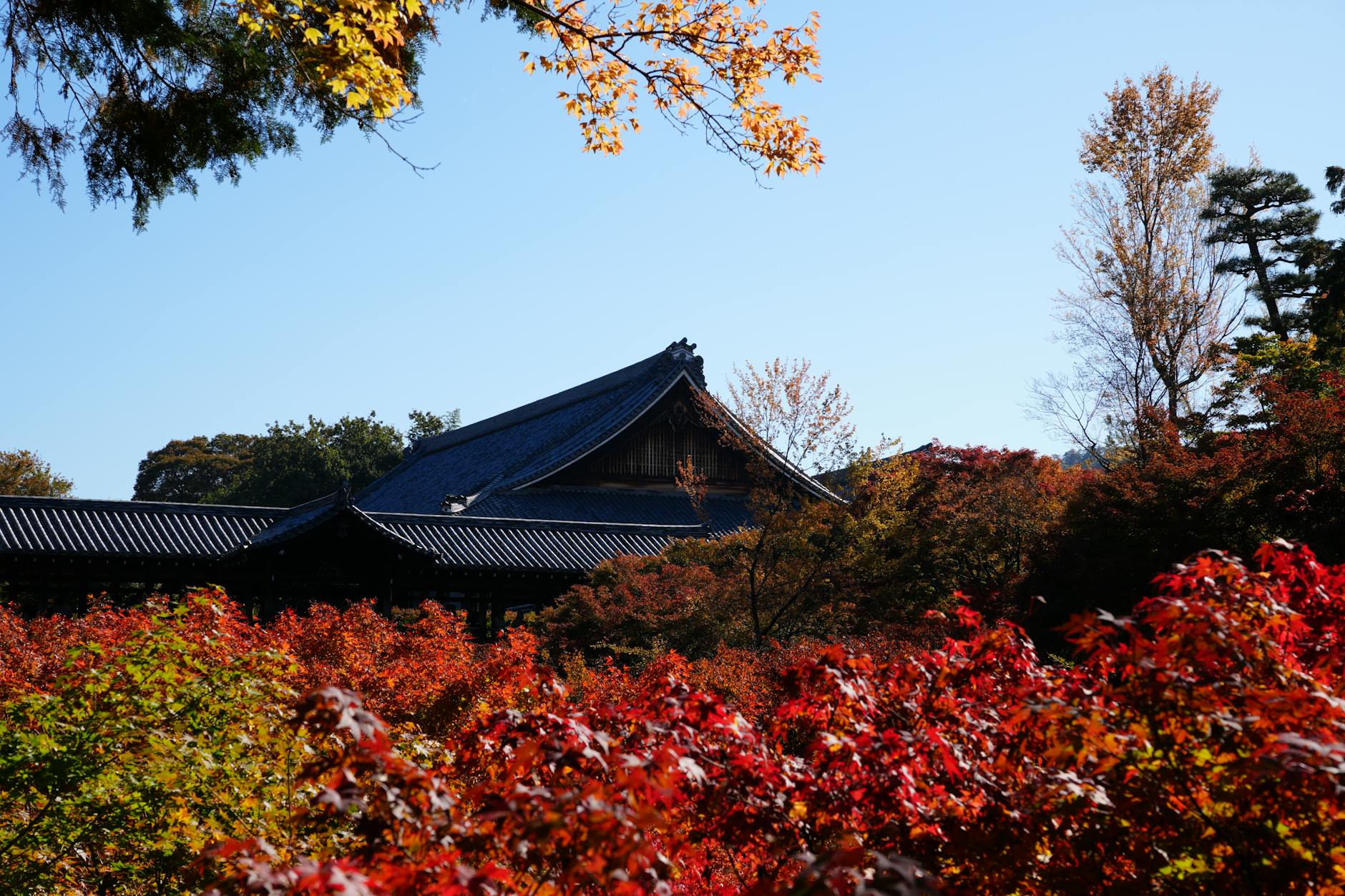
If you only have room for one big spot, make it this one. The Tsutenkyo, a covered wooden bridge, crosses a ravine packed with around 2,000 maples, and at peak the view down is a solid sheet of red and orange.
A few things to know. The bridge area charges a higher fee during the autumn season, and stopping for photos on the bridges isn’t allowed at peak, so take in the view and keep moving; you’ll get better angles from the paths below. It’s one stop from Kyoto Station on the JR Nara Line, and the next stop south is Inari, so pair it with Fushimi Inari for an easy half day.
Go right at opening, or in the last hour before the gates close, when the light softens and the tour groups have left.
Eikando: the best night viewing
Eikando (formally Zenrin-ji) has roughly 3,000 maples climbing a hillside, a small pagoda poking out of the canopy, and a pond that catches the reflection. It’s one of the most popular temples in Kyoto in autumn, and it’s worth it.
The evening illumination is the real draw. It runs for a limited stretch in late autumn and needs its own ticket, separate from the day visit. Lines form before the evening session opens, so arrive early. By day, aim for before 10am or mid-afternoon onward.
Kiyomizu-dera: the classic postcard
The wooden stage jutting over a hillside of maples is the image most people have of Kyoto in autumn. The view holds up.
The problem is getting there. The lanes leading up, Ninenzaka and Sannenzaka, are among the most crowded streets in the city by late morning. Honestly, a midday visit in peak week isn’t much fun. Go at opening, or save it for the evening light-up that runs for a couple of weeks in late autumn.
Arashiyama and Sagano
Here the color covers whole hillsides behind the Togetsukyo Bridge rather than a single garden. Tenryu-ji’s pond garden, with the hills as a backdrop, is worth the small fee.
Skip the bamboo grove at midday; it’s shoulder to shoulder. Walk north instead to Jojakko-ji and Nison-in, two hillside temples that get a fraction of the visitors and some of the best maples in western Kyoto. Take the train here, not the bus. Buses to Arashiyama crawl in late November.
Rurikoin: the famous reflection
Rurikoin is the temple behind the photo of red maples mirrored in a polished black desk. It opens only for special seasons, and in autumn you need to reserve a time slot in advance. Slots go fast, and it’s one of the pricier temple entries in Kyoto.
To get there, take the Eizan Railway from Demachiyanagi to Yase-Hieizanguchi and walk a few minutes. Worth it if you land a slot. Not worth rebuilding your whole trip around.
Quieter maple spots without the queues
These won’t make the top of every list, which is exactly why they’re pleasant at peak.
- Shinnyo-do: a short walk from the Philosopher’s Path, with free grounds, a pagoda and maples that locals come to on weekday mornings. Often calm when Eikando is packed.
- Nanzenji: right next to Eikando, with a huge wooden gate, a brick aqueduct and grounds big enough to spread the crowd thin.
- Ohara and Sanzen-in: moss gardens under maples, about an hour north by bus. The color here usually comes earlier than in the city, so it’s a good pick if your trip falls early in the season.
- Kibune: a shrine village in a narrow valley north of the city, reached on the Eizan line. Another early-season choice.
- Shimogamo Shrine: the Tadasu no Mori forest often keeps its color into December, when most other spots are fading.
How to beat the crowds
You don’t need a secret temple list. You need a schedule that runs against everyone else’s.
- Be at the gate at opening. The first hour matters more than which temple you choose. Several temples open a little earlier during the autumn season, so check the day before.
- Choose weekdays. Any weekday beats any weekend in late November.
- Limit yourself to two big spots a day. Pair a famous one with a quiet one nearby: Eikando with Shinnyo-do, Tofukuji with Fushimi Inari, Arashiyama with Jojakko-ji.
- Use trains, not buses. Buses to Higashiyama and Arashiyama get stuck in traffic, and full buses sail past stops.
- Split day and night. Walk the gardens by day, then do one illuminated temple after dark.
- Try the last hour. Late afternoon brings thinner crowds and warmer light at most day-only temples.
- Consider early December. The crowds drop off sharply, and the valley temples often still have good color.
Pack layers, too. Autumn days in Kyoto are usually clear and mild, but mornings at the gate and evenings at a light-up get properly cold.
Where to stay for autumn leaf season
Late November is one of the busiest stretches of the year for Kyoto hotels, and well-placed rooms disappear months ahead. Book as soon as your dates are set.
Location decides how easy those early starts are. Staying near Kyoto Station puts Tofukuji and Fushimi Inari one or two train stops away and makes day trips simple. Staying in Higashiyama means you can walk to Kiyomizu-dera before the lanes fill and stroll back from an evening light-up. If early mornings are your plan, the official Kyoto travel guide is useful for checking what’s near each neighborhood, and you can compare hotels in Higashiyama once you know which temples you’re starting with.
Questions travelers ask
When is the best time to see autumn leaves in Kyoto?
Usually the second half of November, with some years running into early December. Northern spots like Ohara and Kibune turn about a week earlier. Check the annual koyo forecast a few weeks before you go and adjust your day-by-day plan.
Is early December too late for Kyoto’s autumn colors?
Not always. Many hilltop spots will have dropped their leaves, but low valley temples and Shimogamo Shrine often hold good color. The crowds and hotel prices also ease off, which makes it a smart gamble for flexible travelers.
Do I need to book temple tickets in advance in autumn?
For most temples, no; you buy tickets at the gate. Rurikoin is the big exception and needs a reservation in autumn. Some night viewings also use timed or separate tickets, so check each temple’s official site before you go.
Which spot should I choose if I only have one day?
Start at Tofukuji at opening, take the JR Nara Line one stop south to Fushimi Inari, then head to Eikando for the evening illumination. That covers the maple valley, the famous gates and the best night viewing in one well-paced day.
One last tip
Keep one flexible slot in your plan. Kyoto’s maples don’t all peak together, so if a temple on your list is still green or already bare, swap it for one that’s at its best that week. Tourist information centers and the Japan National Tourism Organization are good places to check current conditions before you commit your morning.
Some links in this post are affiliate links. If you book through them, we may earn a small commission at no extra cost to you.
Cover photo by Lorenzo Castellino on Pexels