It’s just before the lifts open. The groomers worked through the night, the corduroy outside your window is still untouched, and all you have to do is click into your bindings by the door and push off. No shuttle bus, no boot-walk across an icy car park, no skis digging into your shoulder. That’s the promise of ski-in ski-out hotels, and it’s exactly why they cost more.
The real question is whether that promise holds for your trip. For some skiers the premium buys back hours every single day. For others, it’s money spent on a view of a run they’ll never actually ski home on.
Here’s how to tell the difference, what the label really means (spoiler: nobody regulates it), and where you can get slope access without a luxury budget. Still picking a destination? Start with our worldwide travel guides and planning tips.
- Typical premium: often around 15% over a comparable place in the village, and 25–30% over lodging further out
- Worth it most for: families with kids who can already ski, short trips, early risers
- Skip it if: you’re a true beginner, your ski school meets in the village, or nightlife matters
- Cheapest way in: self-catered apartments in purpose-built resorts, midweek, outside school holidays
What “ski-in ski-out” really means (and how listings stretch it)
In its purest form, you ski from the door onto a run in the morning and ski back to the door in the afternoon, without taking your skis off. No walking. No bus. Just snow.
The catch: the term isn’t regulated, and properties use it generously. All of these get sold under the same label:
- True ski-in ski-out: you step outside onto groomed snow and ski both ways.
- Ski-in only: you can ski home, but mornings start with a walk or shuttle to the lift.
- Ski-out only: the reverse, usually a lovely downhill start and an uphill trudge to finish.
- Slopeside: next to a run or lift, but there may be a road, stairs or a flat path in between.
- “Steps from the lifts”: whose steps, and in which boots? Treat this as walking distance, nothing more.
A hillside hotel can have a run passing right behind it and still sit a five-minute walk from the nearest chairlift. And some ski-in tracks only work when snow cover is deep, so early or late in the season you may end up carrying your skis after all.
What the extra money actually buys you
The honest answer isn’t “convenience”. It’s time and energy, and both add up faster than you’d think.
- Earlier first runs. You’re on the snow as the lifts spin up, while day visitors are still hunting for parking. Fresh groomers feel completely different before the crowds carve them up.
- A real lunch break. Ski home, eat at your own table, thaw your toes, ski back out. The mountain-restaurant tray becomes optional.
- No boot walk. Anyone who’s clomped through a village in ski boots, skis on one shoulder and poles in the other hand, knows exactly what this is worth.
- Easy exits. Someone tired, cold or simply done by mid-afternoon just skis home. Everyone else keeps going.
- Gear that stays put. Many slope-access hotels have a ski room with lockers, and the good ones warm your boots overnight. Warm boots at dawn. Pure luxury.
Over a week, skipping two shuttle rides a day can hand you back several hours of skiing. On a three-day trip, that time is an even bigger slice of your holiday.
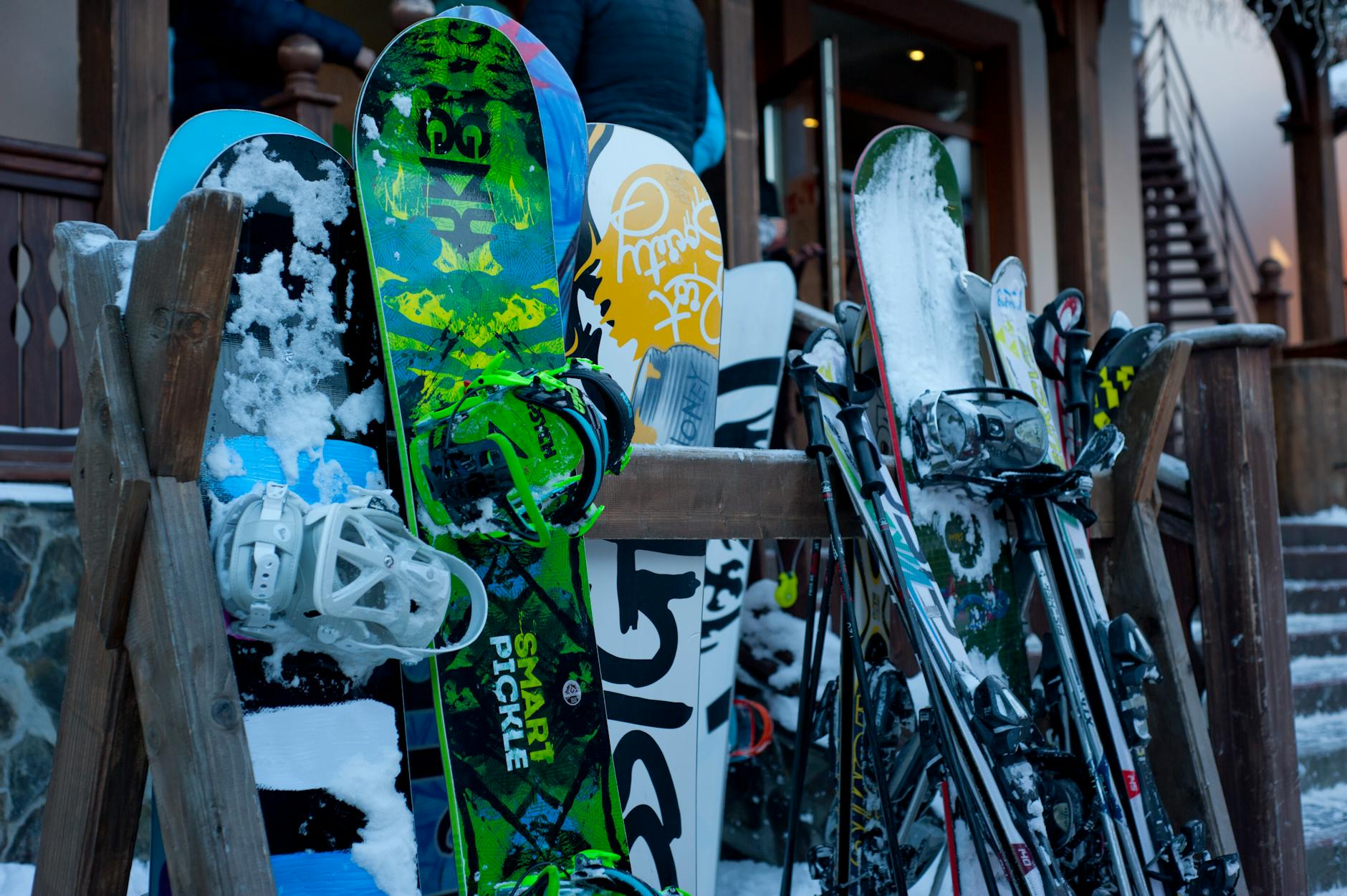
When ski-in ski-out hotels are worth every extra cent
The premium earns its keep when a few of these line up:
- Kids who can already ski. Getting small children, plus their skis, boots, helmets and gloves, out the door is a daily battle. Remove the shuttle and half the battle’s gone.
- Short trips. On a long weekend, every lost hour is a bigger share of the whole holiday.
- Strong skiers and early risers. If you live for first chair and untouched corduroy, you’ll use the location every single morning.
- Mixed-energy groups. One of you wants eight hours on the hill, another wants three and a hot chocolate. A ski-home option keeps the peace.
- Big, spread-out resorts where the village and the lifts are far apart and shuttles run packed at peak times.
If two or three of those describe you, the premium is usually money well spent. If none do, keep reading before you book.
When to skip it and stay in the village instead
Now the less glamorous side. In a few situations, slope access actually makes your trip harder.
- True beginners. If you can’t ski the access run yet, you’re paying for a feature you’ll use on foot.
- Ski school in the village. SKI Magazine’s travel editor points out that families can end up driving or shuttling new skiers down to the village for lessons or daycare every day, the exact trip you paid to avoid.
- Non-skiers in the group. A hotel up on the mountain can feel isolated for someone who wants cafés, shops and a stroll around town.
- Dinner and nightlife. Mid-mountain hotels often mean a bus or gondola ride for dinner, and not every lift runs in the evening.
- Compact resorts with frequent free shuttles. When the bus comes every few minutes and the village is small, the real difference shrinks to almost nothing.
Where slope access gets surprisingly affordable
Here’s what most people miss: in purpose-built resorts, slope access is the default, not a luxury. France built a wave of these from the 1960s onward, designed so buildings face the slopes and you ski right through the village.
- Val Thorens: Europe’s highest ski resort at 2,300 m, with a compact, largely car-free center and slope access from almost anywhere in the village.
- Avoriaz: fully car-free, perched on a cliff edge and built so nearly every building sits on the snow. A favorite with families.
- Flaine, La Plagne and Les Arcs: big stocks of self-catered apartments with slope-side access at prices that don’t need a five-star budget.
The trade-off is character. Some of these resorts are proudly 1960s concrete, so don’t expect the timber-and-church-spire charm of an old farming village. In those traditional villages, slope access is scarce and priced to match. The official France Montagnes resort guide is a handy place to compare French resorts and their family labels.
In North America, true slope-access hotels tend to cluster at upscale resorts, and prices follow. Condos are usually the friendlier route there.
Apartments bring their own maths. Cleaning fees and minimum stays can change the picture, so see how rentals and hotels really compare once the fees land before you commit. And if an Alpine chalet hotel offers half board, check whether half board actually saves you money.
How to check a ski-in ski-out hotel before you book
Five minutes of homework saves a week of uphill trudging. Run through this list:
- Open the resort’s piste map and find the exact building. Which run passes it, and how difficult is it?
- Check the satellite view. Look for roads, car parks or staircases between the door and the snow.
- Read the wording closely. “Direct piste access” beats “moments from the lifts”. Vague phrases guarantee nothing.
- Search guest reviews for “ski back” or “ski home”. Skiers are brutally honest about uphill walks.
- Ask about early and late season. Does the ski-in route rely on deep natural snow?
- Confirm the ski room. Lockers, boot warmers, and whether it opens straight onto the snow.
- In big complexes, ask about your unit. Access can differ a lot from one building or wing to the next.
Once a hotel passes the test, compare dates and room types side by side:
Smart ways to pay less for slope access
Want the ski-home life without the peak-week bill? These moves make the biggest difference:
- Go midweek and avoid school holidays, Christmas and New Year, when rates climb the steepest.
- Ski early or late in the season at high-altitude resorts, where snow is more reliable.
- Choose an apartment over a hotel in a purpose-built resort, and cook a few dinners.
- Share a bigger place. Split between a group, a multi-bedroom chalet or condo on the slopes often beats separate hotel rooms per person.
- Look one short walk away. A hotel a couple of minutes from the piste can cost noticeably less and feel almost the same.
Always check the official hotel or booking site for current prices, because rates swing hard between quiet weeks and holiday weeks.
Questions travelers ask
What does ski-in ski-out mean?
It means you can ski from your accommodation onto a run and ski back to the door at the end of the day, without walking or taking a shuttle. The term isn’t regulated, so always check the piste map to see how direct the access really is.
How much more do ski-in ski-out hotels cost?
A common estimate is around 15% more than a comparable place in the village and 25–30% more than lodging further out. The gap is often smaller in purpose-built resorts, where slope access is standard. Check current rates for your dates.
Are ski-in ski-out hotels good for beginners?
Only if the access run is an easy one. If the route home is an intermediate or expert run, or your ski school meets down in the village, a central village hotel is usually the easier choice.
Is slopeside the same as ski-in ski-out?
Not always. Slopeside means close to a run or lift, but there might be a walk, stairs or a road in between. True ski-in ski-out lets you ski both ways, door to snow and back.
One last trick before you go: on your first evening, ski the route home once while the light’s still good. You’ll learn every bump and turn, and from the next morning on, that door-to-snow push-off will feel like the best money you spent all trip.
Some links in this post are affiliate links. If you book through them, we may earn a small commission at no extra cost to you.
Cover photo by Jonas Horsch on Pexels