It’s 8:30 in the morning on the Seceda ridge. The first cable car of the day has just emptied out, the grass is still wet, and a wall of jagged green-and-grey peaks drops away at your feet like the torn edge of a page. Your total effort so far? Standing in a cabin for fifteen minutes. That’s the Dolomites without hiking, and it’s easier than you think.
The trip photos never mention it, but you can skip the boots, the blisters and the sunrise slog up a scree slope. Cable cars, high mountain roads and flat lakeside paths put the famous views within reach of kids, grandparents and anyone who’d rather hold a spritz than trekking poles.
The catch is logistics. The easiest spots are also the busiest, and several use parking bookings or daytime road closures. Below are seven places you can reach with a lift, a car or a short stroll, plus the timing tricks that make each one worth it. For more ideas around the country, browse our Italy tours and travel guides.
At a glance
- Best time: late June to mid-September for green meadows and every lift running; September is calmer.
- Getting around: a car gives you the most freedom; buses and lifts cover Val Gardena and Alpe di Siusi well.
- Where to base: Ortisei in Val Gardena for the west, Cortina d’Ampezzo for the east.
- Budget: cable cars are the big spend, from around €25 to over €70 for a round trip on the priciest lifts. Check each lift’s official site for current prices.
Seceda: the famous ridge, minus the climb
Seceda is the view you’ve seen on a hundred phone screens: a grassy slope that suddenly snaps off into a row of razor-edged peaks high above Val Gardena. From Ortisei, a small gondola lifts you to Furnes, then a bigger cable car carries you up to nearly 2,500 meters. The whole ride takes about fifteen minutes.
From the top station it’s roughly a ten-minute uphill walk to the classic viewpoint. It’s a real slope, so take it slowly if the altitude makes you puff, but nobody needs hiking gear on a dry day.
Two honest warnings. This is one of the priciest lifts in the Dolomites, and tickets are sold online in 30-minute time slots, so book ahead on the official Seceda cable car site. Parking in Ortisei is tight too. The bus to Piazza S. Antonio plus the La Curta escalators gets you to the valley station in a few minutes on foot.
Alpe di Siusi: a giant meadow flat enough for strollers
If Seceda is the drama, Alpe di Siusi is the exhale. It’s widely called Europe’s largest high-alpine meadow plateau: rolling green pasture, wooden huts with smoke curling from the chimneys, and the bulky Sassolungo and Sciliar massifs standing guard at the edges.
The trick is getting up. During the main lift seasons, the road is closed to private cars from 9am to 5pm, so most people ride a cable car. The one from Siusi takes about 15 minutes, while the Mont Sëuc lift from Ortisei is handier if you’re staying in Val Gardena. Driving up early is possible, but only with a pre-booked parking space at Compatsch.
Once you’re up, the paths are wide, mostly gentle and dotted with huts. Wander as far as your legs feel like, then turn around. A shuttle bus runs across the plateau toward Saltria, so you can ride one way and stroll back.
Love this kind of easy, big-view walking? It’s the same idea as Madeira’s gentle levada trails for beginners, just with laurel forest and ocean cliffs instead of cowbell country.
Lago di Carezza: the rainbow lake two minutes from your car
Carezza is the easiest win on this list. You park, walk through a short tunnel under the road, and step out onto a viewing platform facing emerald water with the spiky Latemar range behind it. That’s the whole effort. It’s the purest version of the Dolomites without hiking you’ll find.
The lake is fenced to protect it, so no swimming or shoreline selfies, but a flat loop of about half an hour circles the whole thing. The tunnel, platform and loop are barrier-free, which makes this one of the best stops in the region for wheelchairs and strollers. It’s about 35 minutes by car from Bolzano, and buses run from Bolzano too.
Lago di Braies: the rowboat lake (plan this one properly)
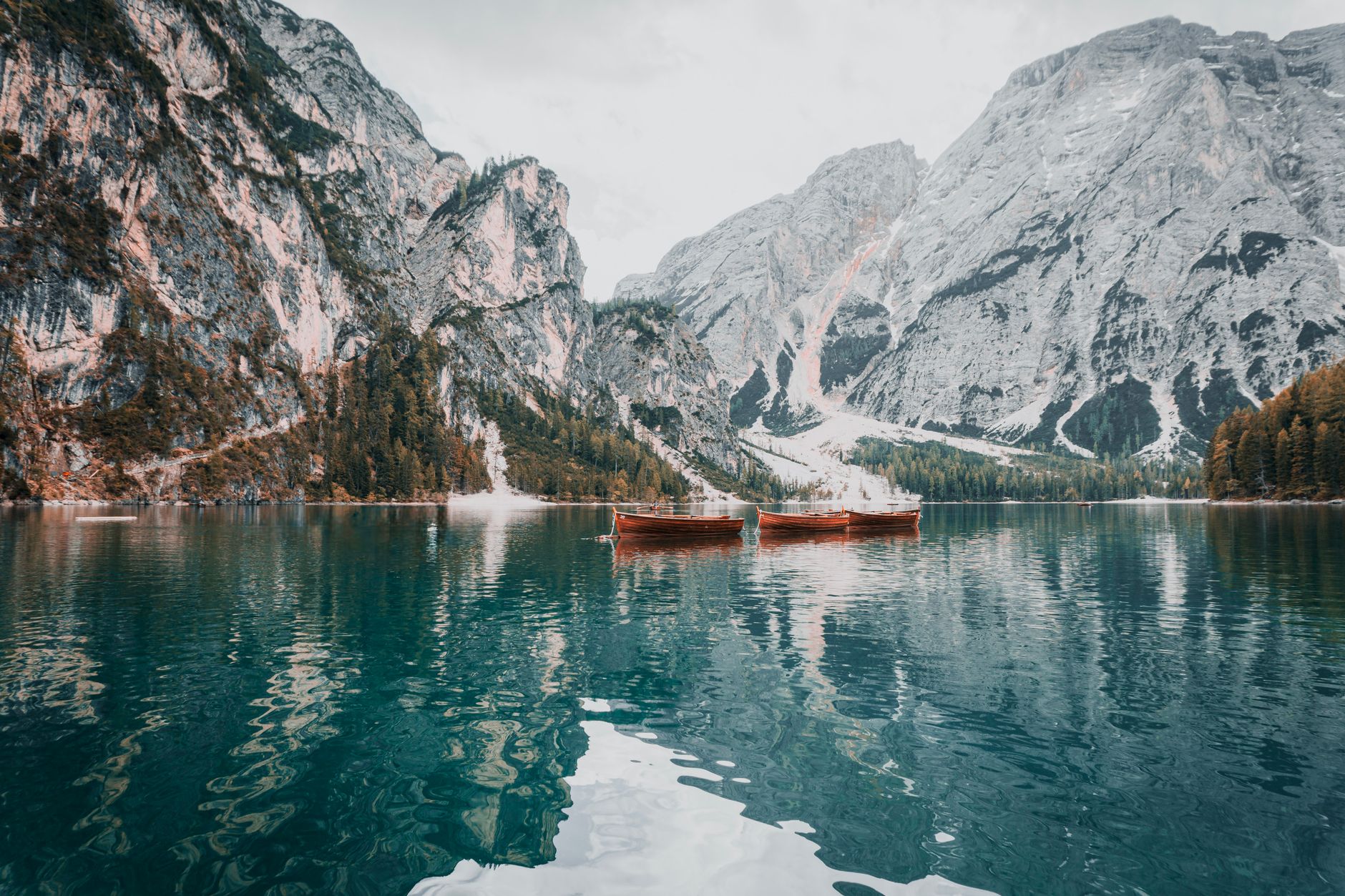
Wooden rowboats knocking gently against the dock, turquoise water, a pale limestone wall rising straight out of the far shore, and the smell of pine and fresh coffee from the lakeside bistro. Lago di Braies earns its fame. The path around the lake is mostly flat and takes about an hour with photo stops, and an hour in a rowboat here is the most relaxing hour you’ll spend in the Alps.
Here’s what trips people up. In peak summer, roughly July to mid-September, you can’t drive into the valley in the middle of the day without a pre-booked parking spot or transit permit, and buses in that window need booking too. Outside those hours or that season, you simply drive up and pay for parking. Check the current rules on the official Braies valley site before you set off.
Lagazuoi: a WWI museum in the sky, three minutes from the car park
At Passo Falzarego, a big cable car climbs over 600 meters in under three minutes to Rifugio Lagazuoi, just below the summit at roughly 2,750 meters. Step onto the terrace and much of the eastern Dolomites spreads out around you, peak after peak, the thin air making every ridge look sharper.
This whole area was a front line in the First World War, and the mountain is now an open-air museum of trenches and tunnels. In summer, the cable car, the hut and even the path to the summit cross are wheelchair accessible. Dogs can ride up too.
Stay for lunch. The hut serves simple mountain food, and eating it on that terrace is as close as you’ll get to the reward of a summit without earning it.
Tre Cime from Rifugio Auronzo: the icons, no loop required
The Tre Cime di Lavaredo, three giant stone fingers, are the most famous peaks in the range, and the full loop around them is a proper three-to-four-hour hike. You don’t have to do it. A toll road from near Lake Misurina climbs straight to Rifugio Auronzo at about 2,330 meters, where you park right at the foot of the peaks.
From there, trail 101 starts as a wide, flat gravel path. Walk about a kilometer to the little Cappella degli Alpini chapel, with the spiky Cadini di Misurina lined up across the valley, and you’ve had the best of it with barely any climbing. Turn back whenever you like.
The toll road needs a mandatory online booking that includes your parking, and it’s usually open from late May to October, snow permitting. No car? Summer buses run up from Cortina and Dobbiaco.
Passo Giau: the view you drive to
Some views you don’t walk to at all. Passo Giau is a high road pass between Cortina d’Ampezzo and Selva di Cadore, reached by a road stacked with tight hairpins. At the top you pull over, step out, and grassy slopes roll up to a ring of bare rock peaks. There’s a mountain hut for coffee, and that’s the whole plan.
Go late in the day if you can. The rock turns orange and pink, the day-trippers have gone home, and all you can hear is the wind.
Skip this, do that
Skip: Lago di Sorapis. It looks like an easy lake stop on social media, but it’s a hike of several hours with narrow, exposed stretches. Do: Carezza or Braies for the turquoise-water fix with no drop-offs.
Getting around the Dolomites without hiking (or stress)
These seven spots sit on two sides of the range, and a car is the easiest way to link them. Mountain roads are narrow and full of bends, but they’re well paved and well signed. If it’s your first time renting in Italy, our Sicily driving guide is a good primer. You can compare rental cars on DiscoverCars and pick something small: parking at lifts and lakes is tight.
Without a car, focus on Val Gardena. Buses link Ortisei with the Seceda and Alpe di Siusi lifts, and summer buses reach Braies and Tre Cime from the eastern towns.
Base yourself in Ortisei for Seceda and Alpe di Siusi, or in Cortina d’Ampezzo for Lagazuoi, Passo Giau and Tre Cime. With a week, split your stay between the two. Walking distance to a lift station saves you the daily parking scramble, so it’s worth checking when you browse hotels in Ortisei.
If you only have one day
- Take one of the first lifts up to Seceda from Ortisei and be back down by late morning.
- Ride the Mont Sëuc lift from Ortisei to Alpe di Siusi for a lazy meadow lunch at a hut.
- Drive about an hour to Lago di Carezza for the late-afternoon light on the Latemar.
Questions travelers ask
Can you enjoy the Dolomites without hiking?
Absolutely. Cable cars like Seceda, Lagazuoi and the Alpe di Siusi lifts drop you right at the big views, and lakes like Carezza and Braies have flat paths. Most of the famous photos can be taken within ten minutes of a lift station or car park.
What is the most accessible place in the Dolomites?
Lago di Carezza is the easiest: its tunnel, viewing platform and lake loop are barrier-free. Lagazuoi is a great high-altitude option, since the cable car, hut and summit path are wheelchair accessible in summer.
When do the Dolomites cable cars run?
Most summer lifts run from around late May to late October or early November. Many close in the shoulder seasons, roughly mid-April to mid-May and November to early December, so check each lift’s official schedule before you plan a day around it.
Do you need a car to visit the Dolomites?
Not strictly. Val Gardena works well by bus and lift. A car makes it much easier to combine the eastern spots like Lagazuoi, Passo Giau and Tre Cime, but several roads need advance bookings in summer.
Is Seceda worth the cable car price?
If you only splurge on one lift, it’s a strong pick, because the ridge view is ten minutes from the top station. On a tight budget, Alpe di Siusi and Carezza give you big scenery for much less.
One last thing: set an alarm. Almost every spot here is twice as good before 9am, when the light is soft, the car parks are half empty and that ridge, that lake or that terrace is almost yours alone. Breakfast can wait until the first hut.
Some links in this post are affiliate links. If you book through them, we may earn a small commission at no extra cost to you.
Cover photo by Alejandro Henriquez on Pexels