It’s mid-morning on the coast road out of Cefalù. The window’s down, the air smells of salt and fig trees, and a little three-wheeled truck piled with lemons is puttering along ahead of you. Behind you, a Fiat Panda is already tapping its horn. That’s driving in Sicily in one scene: gorgeous, a bit chaotic, and the best way to see the island.
Trains and buses link the big cities, but the good stuff lives in between. Baroque hill towns, Greek temples on empty hillsides, beaches at the end of dusty lanes. A rental car gets you there on your own schedule.
It also comes with a few traps that catch tourists every day, from camera-guarded old towns to deposits that swallow your credit limit. Here’s what to sort out before you pick up the keys, and how to enjoy the ride once you have them. For the bigger picture, browse our Italy tours and travel guides.
At a glance
- Documents: your home license, plus an International Driving Permit if it was issued outside the EU/EEA
- Payment: a credit card in the main driver’s name for the deposit
- Best car: the smallest one that fits your bags
- Tolls: only on the motorways out of Messina; Palermo to Catania is free
- Biggest risk: ZTL camera zones in historic centers
- Emergency number: 112
What you need to rent a car in Sicily (bring these or stay home)
If your license comes from outside the EU or EEA (the US, Canada, Australia and others), Italian law expects you to carry an International Driving Permit or an official Italian translation alongside it. The US Embassy in Italy tells American visitors to get the permit before they leave home.
Some rental desks never ask for it. The police can, though, and the fine is far bigger than the small cost of the permit. Get it from your home country’s automobile association a few weeks before you fly.
The second thing that sends people home without a car is the card. Rental companies block a deposit to cover the insurance excess, and most want a real credit card in the main driver’s name with enough free limit to hold it.
Age matters too. Most companies set a minimum age and add a young-driver fee for drivers under 25, so read the terms if that’s you. A second driver usually costs extra per day.
Pick the right car (and the right insurance)
Go small. Really small. Sicilian old towns were built for donkeys, not SUVs, and you’ll thank yourself the first time a lane narrows to a stone archway with a scooter coming the other way.
Manual gearboxes are the default. Automatics exist, but there are fewer of them and they cost more, so book early if you need one. Hill starts in Ragusa Ibla are no place to relearn the clutch.
Now the part people skip. Basic rentals come with collision cover that still leaves you liable for an excess that can run past a thousand euros, and it often leaves out tires, glass and the underside of the car. Sicilian curbs, potholes and tight parking produce a lot of small scrapes, so full coverage buys real peace of mind here. The same logic we use in our breakdown of which rental insurance to buy and which to skip applies on this island too.
Comparison sites make it easier to see price, deposit and excess side by side. You can compare Sicily rental cars with their insurance options, then read the fine print for your exact pickup location.
Before you drive off, film a slow lap around the car, the wheels, the windshield and the fuel gauge. Two minutes of video can save you a long argument at drop-off.
The ZTL: Sicily’s most expensive wrong turn
Most Italian historic centers are a ZTL (Zona a Traffico Limitato), a limited traffic zone that only permit holders may enter during its active hours. The sign is a white circle with a red border, sometimes with times underneath. A camera reads every plate that passes.
Miss the sign and the fine doesn’t arrive at the scene. It arrives by mail, often many months later, and your rental company adds its own admin fee for passing your details on. One wrong loop through an old town can trigger more than one fine.
In Sicily, expect ZTLs around the old quarters of Palermo, Catania, Ortigia in Siracusa, Taormina, Cefalù, Trapani and Noto, among others. The rule is simple: when your GPS points you into a historic center, stop and park outside it.
Motorways, tolls and the roads in between
Good news for your wallet: most Sicilian motorways are free. Tolls apply only on the A18 from Messina to Catania and the A20 from Messina to Palermo. The A19 across the island between Palermo and Catania costs nothing, and neither does the A29 heading west toward Trapani and Mazara del Vallo.
On toll roads you take a ticket when you enter and pay when you leave. Steer into the lanes marked for cash or cards, not the ones reserved for Telepass devices, or you’ll be the person reversing out of a barrier with a queue behind you.
Off the motorways, things get more fun and slower. State and provincial roads wind through hills, past olive groves and over passes where the only traffic might be a flock of sheep. Surfaces vary, potholes happen, and hairpins come thick and fast. Add a healthy buffer to whatever your GPS promises, especially inland.
The drive up Mount Etna’s south side to the Rifugio Sapienza area is one of the island’s great roads, all black lava fields and pine forest. Conditions on the volcano change, so check the local situation on the day. Rather let someone else handle the switchbacks? You can book a Mount Etna jeep tour from Catania and spend the ride staring out the window instead.
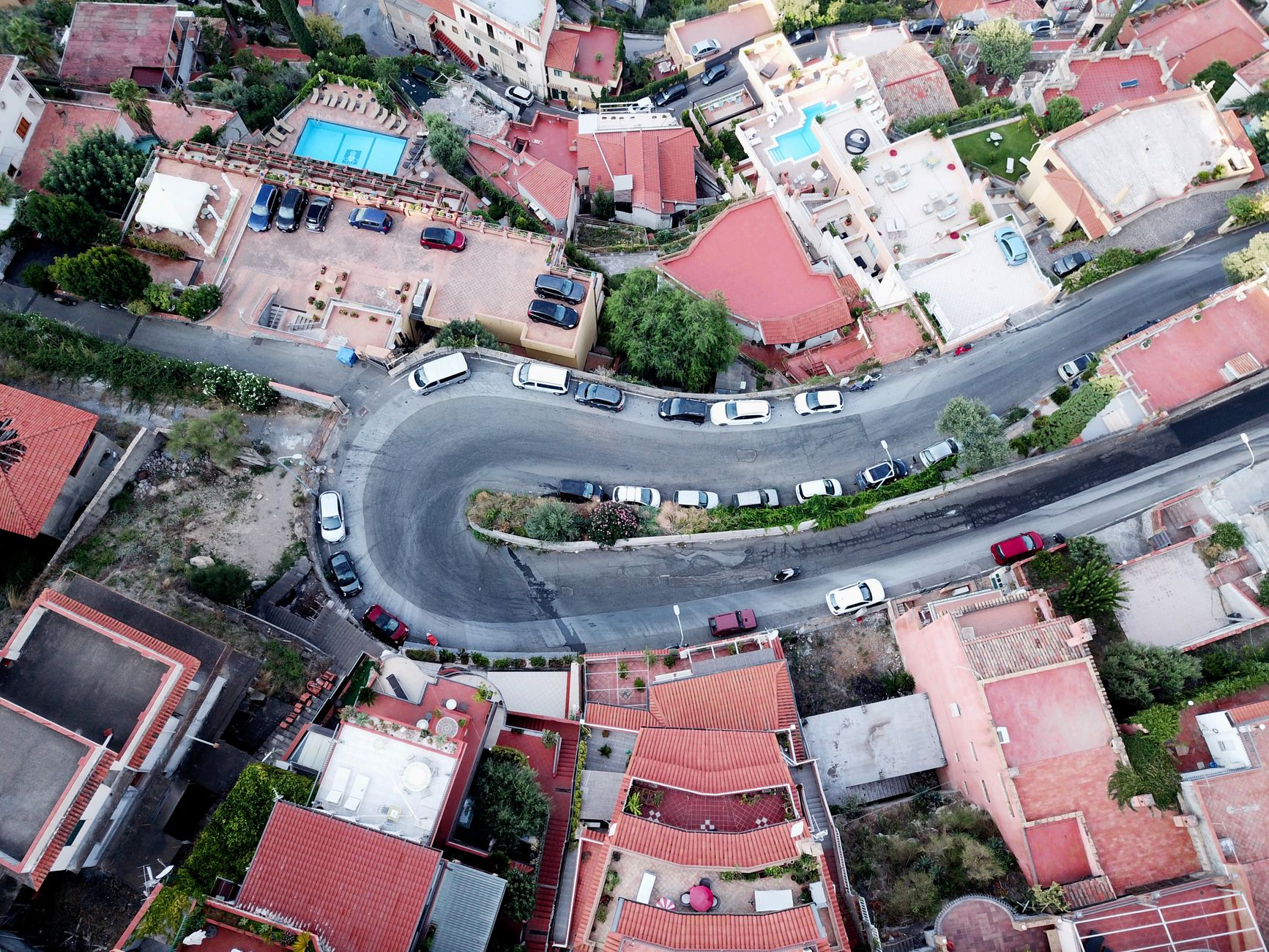
Driving in Sicily like a local (without the stress)
Sicilian drivers are confident, quick and creative. A short horn tap often means “I’m here”, not “you’re an idiot”. Scooters appear in gaps you didn’t know existed. Double parking is a lifestyle, and lane markings in city traffic can feel more like suggestions.
None of that is a reason to stay home. It’s a reason to drive calmly and predictably. Hold your line, signal early, let the tailgater pass on the next straight, and never try to match the local pace on blind curves.
The smartest move of all: don’t drive in central Palermo or Catania. Traffic is heavy, parking is scarce, and the ZTLs are waiting. Pick up your car on the day you leave the city, or return it on the day you arrive. City days are for walking and eating arancini, not circling for a space.
A quick “skip this, do that”:
- Skip: following the GPS to your hotel’s door in an old town.
- Do: park in a garage or lot just outside the center and walk in with a light bag.
- Skip: a big car “for comfort”.
- Do: the smallest car that fits your luggage, and pack soft bags.
Rules of driving in Sicily that cost real money
Italy is serious about enforcement, and cameras don’t care that you’re on holiday. The standard limits for cars:
- Motorways: 130 km/h, dropping to 110 in rain
- Main roads outside towns: 110 km/h, dropping to 90 in rain
- Other roads outside towns: 90 km/h
- Towns: 50 km/h, sometimes lower where signed
If you’ve held your license for less than three years, your motorway limit is 100 km/h. Some motorway stretches use average-speed cameras that time you between two points, so a quick burst between checkpoints still counts.
Dipped headlights must be on during the day on motorways and roads outside towns. The blood alcohol limit is 0.5 g/l, and zero for drivers in their first three years. Hand-held phones are banned, and the penalties have grown stiffer. Your rental should come with a warning triangle and high-visibility vest; check they’re in the trunk before you leave.
Parking without drama
Street parking follows a color code. Blue lines are paid, white lines are usually free, yellow lines are reserved for residents, disabled drivers or loading. Paid zones use meters or apps, and EasyPark works in Palermo and other cities, which beats hunting for coins at a broken machine.
Garages cost more but save stress, especially overnight. Whatever you choose, leave nothing on the seats. An empty car is a boring car.
Parking can quietly change what a place to stay really costs. If you’re weighing a central apartment against a hotel with its own lot, our look at what Airbnbs and hotels really cost after fees helps you count the extras.
If you only have a few days: two loops that work
East loop from Catania: the lava fields of Etna one morning, Taormina the same afternoon. Next day, Siracusa and a walk around Ortigia (car parked outside), then on to Noto. Finish through Ragusa Ibla and Modica, where the chocolate is grainy, spiced and dangerously easy to eat in the car.
West loop from Palermo: Cefalù’s beach and cathedral, the lonely Greek temple at Segesta, salt pans and sunsets around Trapani, and a hilltop coffee in Erice. Add a long day south for the Valley of the Temples at Agrigento.
Mainland Italy plays by different rules, and around the capital the train usually beats the car, as our guide to easy day trips from Rome by rail shows. Sicily is the opposite: here the car wins.
Questions travelers ask
Do I need an International Driving Permit to drive in Sicily?
If your license was issued outside the EU or EEA, yes. Italian law requires an International Driving Permit or an official Italian translation with your home license. Some rental desks won’t ask, but police can, and fines are steep.
Is driving in Sicily hard for tourists?
Motorways and country roads are manageable for most confident drivers. The hard parts are big-city centers, narrow old towns and assertive local driving. Park outside historic centers, pick a small car and allow extra time, and it’s very doable.
Are there tolls on Sicilian motorways?
Only on the A18 between Messina and Catania and the A20 between Messina and Palermo. The A19 between Palermo and Catania and the A29 toward Trapani are free.
Can I take a Sicilian rental car on a ferry?
It depends on the company. Many restrict taking cars off the island or charge extra for it, and insurance may not cover you at sea. Check your rental terms before planning trips to the smaller islands or the mainland.
Should I rent a car in Palermo or Catania?
Both airports have plenty of rental companies. Pick up at the airport on the day you start exploring, rather than in the city center, so you avoid city traffic and ZTL zones from the first minute.
One last trick before you go: fill the tank before you head inland. Sicily’s interior is wide, empty and beautiful, and the view from a quiet hilltop road with a full tank and no schedule is the whole reason you rented the car in the first place.
Some links in this post are affiliate links. If you book through them, we may earn a small commission at no extra cost to you.
Cover photo by Alejandro De Roa on Pexels