Tokyo is so big that the wrong base can quietly cost you an hour a day on trains. That’s the real question behind where to stay in Tokyo on a first trip: not which area is “best”, but which one puts you close to what you’ll actually do, with an easy ride in from the airport.
The good news is that the transport is excellent, so none of the areas below is a bad choice. The differences come down to noise, price, room size and how many transfers you’ll make with a suitcase.
Here are seven neighborhoods first-timers actually book, compared honestly, with who each one suits and who should skip it. Once you’ve picked, browse our Tokyo tours and travel guides to plan what you’ll do there.
Tokyo areas at a glance
- Best all-rounder: Shinjuku
- Best for shopping and nightlife on foot: Shibuya
- Best for bullet-train day trips: Ginza and Tokyo Station
- Best for old-Tokyo atmosphere: Asakusa
- Best value near the Narita train: Ueno
- Best budget big-hub option: Ikebukuro
- Best for art and late nights: Roppongi
How to choose where to stay in Tokyo
Start with one train line: the JR Yamanote Line. It’s a loop that links most of the big districts, and a hotel a few minutes’ walk from one of its stations makes almost everything simple. Five of the seven areas here sit on it. Asakusa and Roppongi don’t, which isn’t a dealbreaker, just one more transfer.
Then think about your airport. The Narita Express runs straight to Tokyo, Shibuya and Shinjuku stations, while the Keisei Skyliner is the fastest link to Ueno. You can check every route on Narita Airport’s official train access page. Haneda is easier from almost anywhere, since it sits much closer to the city.
Last, be honest about rooms. Tokyo hotel rooms, especially in business hotels, are small. A standard double can leave just enough floor to open one suitcase. If you’re traveling with big luggage or kids, filter by room size, not just price.
1. Shinjuku: the easiest base for most first-timers
Shinjuku Station is one of the busiest stations in the world, and it’s busy for a reason. From here you can reach almost anywhere: the Yamanote Line, several subway lines, the Narita Express, plus direct trains and buses toward Hakone and the Fuji Five Lakes.
The area has two personalities. The west side is office towers and big hotels, quiet after dark. The east side is where the evenings happen: tiny bars in Golden Gai, yakitori smoke in Omoide Yokocho and the neon of Kabukicho. Shinjuku Gyoen, one of the city’s loveliest gardens, is a short walk away.
Good for: first trips, short stays, anyone planning day trips west. Skip it if: crowds stress you out. The station is a maze of exits, and Kabukicho has pushy touts. Ignore anyone inviting you into a bar and you’ll be fine.
Price: every level, from capsule hotels to luxury towers. Mid-range hotels near the south and east exits give the best balance.
2. Shibuya: shopping, food and late nights on foot
Shibuya is younger and louder than Shinjuku. The famous scramble crossing is right outside the station, Harajuku and Omotesando are a pleasant walk north, and the side streets are packed with ramen counters, record shops and standing bars.
It’s a strong pick if you want to step out of the hotel and already be somewhere. The Narita Express stops here too, and the Yamanote Line plus several subway lines make the rest of the city easy.
Good for: couples, friends, shoppers, night owls. Skip it if: you’re on a tight budget. Hotels here cost more for the room size, and weekend nights get noisy around Center Gai.
One tip: Shibuya is hilly, and the station is split across levels run by different rail companies. Leave extra time the first few times you catch a train.
3. Ginza and Tokyo Station: polished, central and made for day trips
If your plan includes Kyoto, Osaka or Kanazawa, staying near Tokyo Station saves real time. It’s the starting point for the Shinkansen heading west and north, so you can roll out of bed and onto a bullet train. When you’re ready to price that leg, compare the train and bus options from Tokyo to Kyoto, and see our wider Japan travel guides for the stops beyond the capital.
Next door, Ginza is Tokyo at its most refined: department store food halls in the basements, quiet coffee bars on the side streets and a main avenue that closes to cars on some weekend afternoons. The Tsukiji Outer Market is close enough for a sushi breakfast on foot.
Good for: multi-city trips, business travelers, anyone who wants calm evenings. Skip it if: you want nightlife on your doorstep. The office streets empty out late in the evening, and this is one of the pricier areas to stay.
4. Asakusa: old Tokyo at lower prices
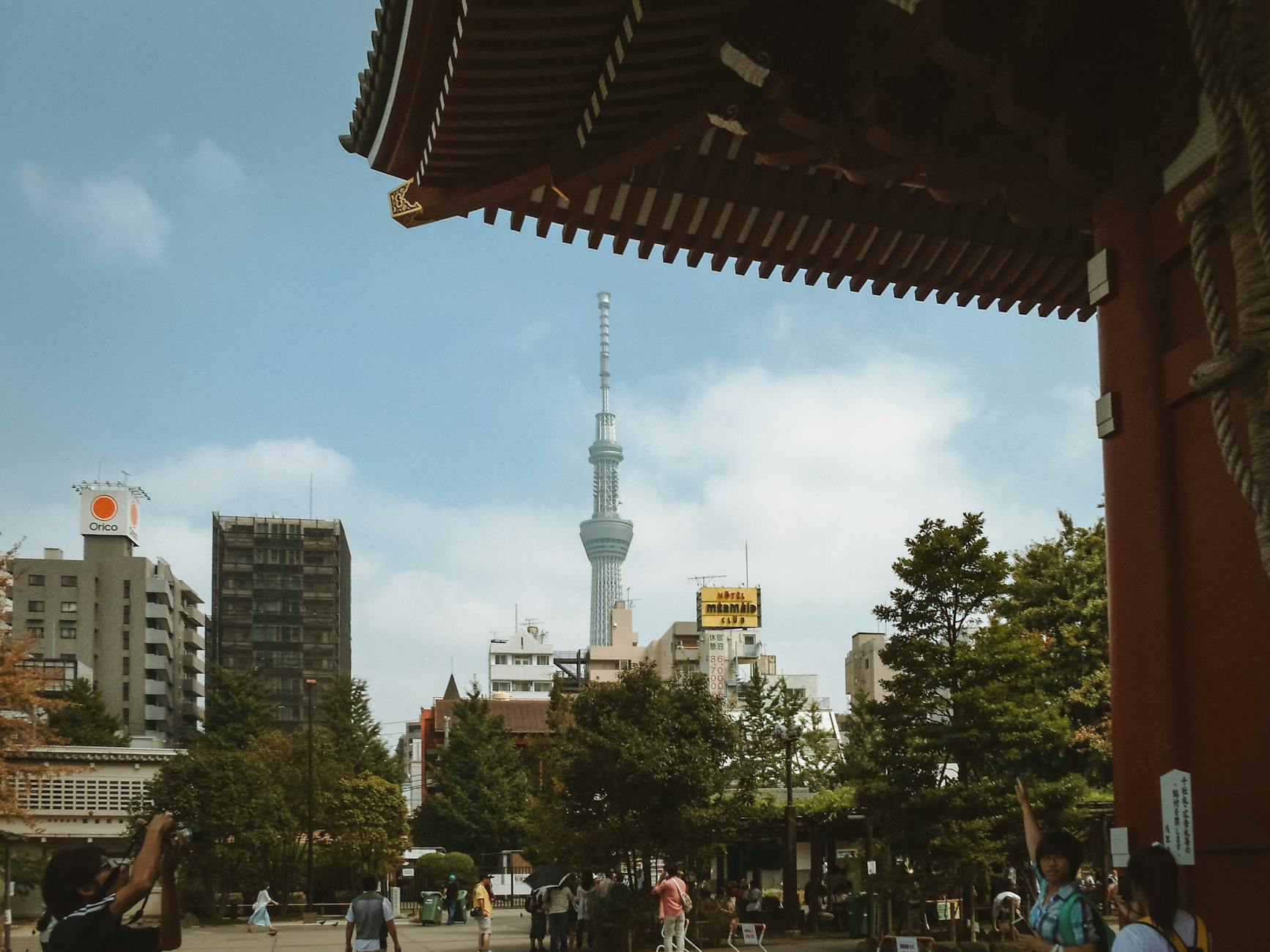
Asakusa is the Tokyo of paper lanterns and wooden shopfronts. Senso-ji, the city’s oldest temple, is here, along with Nakamise shopping street, rickshaw runners and the Sumida River, with Tokyo Skytree just across the water.
Staying here means you see Senso-ji at its best: early morning or after dark, once the day-trip crowds have gone. Hotels and ryokan-style inns are generally cheaper than in Shinjuku or Shibuya, and some trains on the Toei Asakusa Line run straight through to both Narita and Haneda, which helps on arrival day.
Good for: culture lovers, budget travelers, families who want quieter nights. Skip it if: most of your plans are on the west side. Reaching Shibuya or Shinjuku takes around half an hour or more each way, and that adds up over a week.
5. Ueno: good value right off the Narita train
Ueno’s big selling point is the Keisei Skyliner, the fastest train from Narita Airport, which gets you here in well under an hour. Add the Yamanote Line and a few subway lines, and it’s a very practical base. Asakusa is only a few minutes away on the subway.
Ueno Park holds the Tokyo National Museum, the zoo and a pond covered in lotus leaves in summer. Right outside the station, Ameyoko market sells street snacks, dried fish and discount sneakers under the train tracks.
Good for: budget trips, museum fans, travelers landing at Narita. Skip it if: you want charm outside your door. The streets around the station feel gritty and hectic, especially at night.
Backpackers will find plenty of well-rated budget beds around Ueno and Asakusa, so compare Tokyo hostels and their private rooms before you pay hotel prices.
6. Ikebukuro: a big hub without the big prices
Ikebukuro is Shinjuku’s less famous cousin. It’s another huge station on the Yamanote Line, with department stores, cheap eats and the Sunshine City complex with its aquarium and observation deck, but it draws far more locals than tourists.
That’s exactly why it works. Hotels near the station often cost noticeably less than similar ones in Shinjuku or Shibuya, and you’re still one line away from most sights. Anime and manga fans will like the shops around Otome Road.
Good for: budget-minded travelers who still want convenience. Skip it if: you’re after atmosphere. It’s practical rather than pretty, and it’s a longer ride to Asakusa and Ginza.
7. Roppongi: art, views and nightlife
Roppongi has two faces. By day it’s one of Tokyo’s best art districts: the Mori Art Museum at Roppongi Hills, the National Art Center and the Suntory Museum of Art are all within a short walk. Some of the best views of Tokyo Tower are from here, too.
By night it’s the city’s most international party district, with clubs and bars open very late.
Good for: art lovers, nightlife fans, travelers who like upscale international hotels. Skip it if: you want easy transport on a first visit. Roppongi isn’t on the Yamanote Line, so you’ll rely on the Hibiya and Oedo subway lines. The main strip also has aggressive bar touts, and some visitors report inflated bills, so stick to places you chose yourself.
So which Tokyo area should you book?
If you’re still deciding where to stay in Tokyo, here’s the short version:
- First trip, under a week, want the easiest answer: Shinjuku.
- Want to walk straight out into shops and nightlife: Shibuya.
- Taking the bullet train more than once: Tokyo Station or Ginza.
- Traveling on a budget or with kids: Asakusa or Ueno.
- Want big-hub convenience for less: Ikebukuro.
Whatever you choose, look for a hotel within about five minutes’ walk of a station. In Tokyo, that single detail matters more than the neighborhood name.
Practical tips before you book
Check the exit, not just the station. Big stations like Shinjuku have dozens of exits. A hotel “at” the station can still be a ten-minute underground walk from your platform, so look at the map before you pay.
Arriving early is fine. Check-in is usually mid-afternoon, but most hotels will hold your bags so you can go out and explore.
Send big suitcases ahead. Japan’s luggage-forwarding services (takkyubin) can carry bags between hotels or to the airport, and most front desks can arrange it. It’s a lifesaver if you’re heading on to Kyoto.
Book early for spring and autumn. Cherry blossom season and the autumn foliage weeks are the busiest times, and hotel prices climb fast. For neighborhood guides and seasonal events, the GO TOKYO official tourism site is worth a look before you commit.
Questions travelers ask
What is the best area to stay in Tokyo for first-time visitors?
Shinjuku is the safest pick for most first-timers. It has the most transport links, hotels at every price and plenty to do at night. Shibuya is a close second if you prefer a younger, shopping-heavy feel.
Is it better to stay in Shinjuku or Shibuya?
Shinjuku has more hotel choice and better value, plus direct trains toward Hakone and Mount Fuji. Shibuya feels trendier and more walkable but costs more for smaller rooms. Both are on the Yamanote Line and the Narita Express.
Is Asakusa too far from the main sights?
Not for the east side: Ueno, Akihabara and Skytree are close. It becomes a trade-off if you’re heading to Shibuya or Shinjuku most days, since each ride takes around half an hour or more.
How many nights should I spend in Tokyo?
Four to five nights covers the main districts without rushing, with room for one day trip. If you’re planning several day trips, stay near Tokyo Station or Shinjuku and add a night or two.
Should I switch hotels during my stay?
Usually not. The trains are good enough that one well-placed base beats losing half a day to packing and moving. On longer trips, splitting your time between a west-side and an east-side base can cut commuting.
One last check before you book: open the hotel’s address in a map app and look at the walk to the nearest station. If the route is short and simple, you’ve found your base. If it involves a hill, two main roads and a shopping mall, keep looking.
Some links in this post are affiliate links. If you book through them, we may earn a small commission at no extra cost to you.
Cover photo by Andrey Grushnikov on Pexels
