It’s barely 7am at Lake Kawaguchiko. The water is still as glass, the air nips at your fingers, and Mount Fuji hangs above a wall of red maples before the clouds drift in. That’s Japan autumn foliage without a single Kyoto temple queue, and it’s only one of seven places worth building a trip around.
Kyoto gets the headlines, and it earns them. But the color starts weeks earlier up north and hangs on later down south. Plan it right and you can chase the leaves for two whole months. For tours and more trip ideas, browse our full list of Japan tours and travel guides.
Below are seven spots from Hokkaido down to Hiroshima, in the order they usually turn, with how to get there and what first-timers get wrong. Still set on the old capital too? Our guide to Kyoto’s best leaf spots and how to beat the crowds has you covered.
- Season: mid-September in Hokkaido’s mountains to late November around Nagoya and Hiroshima
- Getting there: trains plus local buses reach all seven; a car is handy in Hokkaido but not essential
- Time needed: a day for most spots; sleep over at Kamikochi, Oirase or Kawaguchiko to catch the early light
- Budget: the leaves are free; you pay for transport, ropeways and mountain beds that get pricier at peak
When Japan autumn foliage peaks (it moves, so you should too)
Leaves turn from the top down and from north to south. High mountains go first, cities last. Nikko alone stays colorful for close to two months, starting on its highest peaks in late September and reaching the town by mid-November.
The rough order: Hokkaido’s high country in mid-September, northern Honshu and the Japan Alps through October, the Fuji Five Lakes in early to mid-November, and the Nagoya and Hiroshima areas in mid to late November. A warm year pushes everything back a week or so. Check the latest leaf forecasts on the official Japan tourism site before you lock in dates.
1. Daisetsuzan, Hokkaido: the first red in the country
You step off the Asahidake Ropeway at about 1,600 meters and the whole slope below you is on fire: rowan bushes in scarlet, birch in gold, steam hissing out of volcanic vents. This is where Japan autumn foliage season starts, usually around mid-September up high.
The easy win is the loop around Sugatami Pond, about an hour on foot, with sulfur on the breeze and Hokkaido’s highest peak right in front of you. Buses run from Asahikawa Station to the ropeway. On the park’s north side, the Kurodake Ropeway climbs from Sounkyo Onsen, where the color slides down into the gorge by around mid-October.
Pack a proper warm layer. The summit often has its first dusting of snow by late September, while you’re still in the thick of the leaves.
2. Oirase Gorge, Aomori: 14 km of waterfalls and moss
Picture a clear, fast stream tumbling over mossy boulders, with a waterfall every few bends and maple and beech leaves drifting down onto the water. The Oirase Gorge runs about 14 km from Lake Towada to Yakeyama, and a flat, well-kept trail follows it the whole way.
The full walk takes four to five hours one way, but you don’t have to do it all. Hop off the bus partway, walk a few scenic kilometers, and flag the next one. Rental bikes are available at Yakeyama too. Color usually starts near the lake in mid-October and peaks from late October into early November.
Getting there takes planning: JR buses run from Hachinohe or Shin-Aomori stations, roughly one and a half to two hours, and only from late April to mid-November.
3. Nikko, Tochigi: two months of color on one mountain road
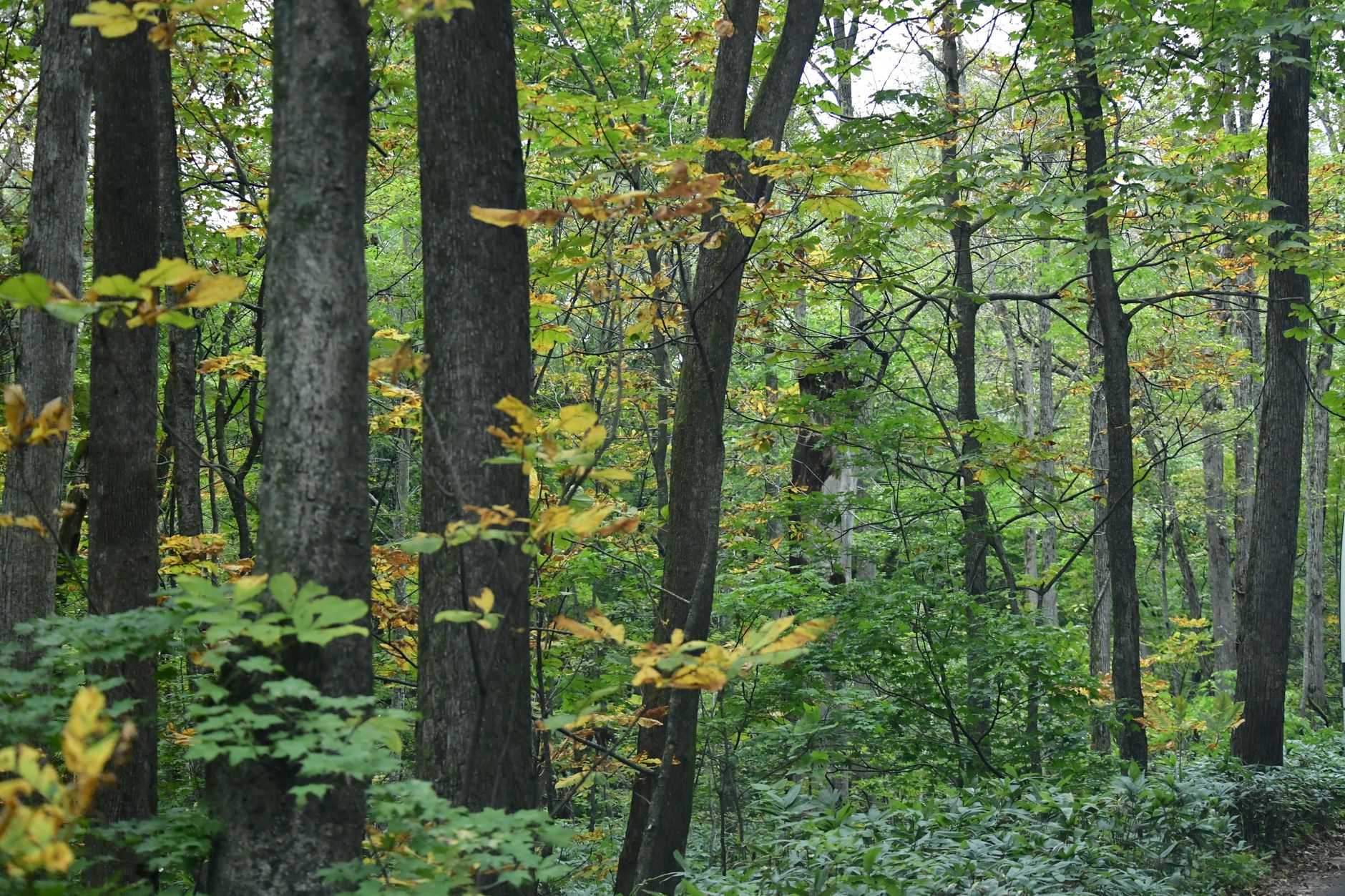
Nikko is the easy pick from Tokyo, and it’s the perfect lesson in how leaves move downhill. The Senjogahara marsh turns gold and the larches glow yellow first. Then the color sweeps down to Lake Chuzenji and the roaring Kegon Falls, then down the hairpins of the Irohazaka road, and finally into Nikko town.
Head up to the Akechidaira plateau for the classic view over Kegon Falls and the lake. Back in town, the maples in Shoyoen Garden at Rinnoji Temple are some of the last to turn, and the garden usually lights up in the evenings during the season.
Basing yourself in the capital? Pick a neighborhood near a big rail hub. Our rundown of the best Tokyo areas for first-timers makes early departures a lot less painful.
4. Kamikochi, Nagano: golden larches under the Alps
No cars, no billboards, just a clear river, a wooden bridge and larch forests turning molten gold under jagged 3,000-meter peaks. Kamikochi sits at about 1,500 meters in the Northern Alps, and private cars are banned. You come in by bus or taxi from Sawando or Hirayu Onsen, or by train from Matsumoto to Shin-Shimashima and then about an hour by bus.
October is the month here, with the larches usually at their best around the middle to late part of it. The valley shuts for winter in mid-November, and services thin out in the final weeks. Check the Kamikochi visitor site for bus schedules before you go.
Stock up on snacks before you board, since shops inside the valley are few and pricey. Our list of what to actually try at a Japanese convenience store works anywhere in the country.
5. Lake Kawaguchiko: red maples with Fuji on top
This is the postcard shot of Japan autumn foliage. The Momiji Corridor is a short stretch of giant maples arching over a small stream on the lake’s north shore, and when Fuji is out behind it, people audibly gasp. At 800 to 900 meters, the lake usually peaks from early to mid-November.
Every November an autumn leaves festival fills the area with food stalls and craft sellers, and the corridor is lit up from sunset well into the night. From Tokyo, take the train from Shinjuku via Otsuki to Kawaguchiko Station, then a short bus ride to the corridor. If you’d rather not juggle connections, you can book a Mount Fuji and Lake Kawaguchiko day tour from the city.
6. Korankei, Aichi: 4,000 maples near Nagoya
Korankei is a river valley in the hills of Toyota City, with around 4,000 maples lining the Tomoe River and a vermilion bridge, the Taigetsukyo, that everybody photographs. The story goes back to the 17th century, when a priest at Kojakuji Temple planted maples along the approach and locals followed his lead.
Color usually peaks mid to late November. In November the valley fills with food stalls, and the maples are lit up after sunset. Getting there takes just under two hours from Nagoya with at least one transfer, often via Higashi-Okazaki Station and a Meitetsu bus toward Asuke.
Skip weekends if you can. November buses get stuck in traffic, so go early on a weekday and wander the old Asuke streets while the day-trippers are still on the road.
7. Miyajima, Hiroshima: maple valley, bridge and deer
You wander inland from the famous floating torii gate and, in about 15 minutes, the path drops into a valley of roughly 700 maples. A vermilion bridge crosses a clear stream, deer nose around the benches, and the leaves go crimson around mid to late November. This is Momijidani Park, and it sits at the foot of Mount Misen, so you can ride the ropeway up afterward.
Missed the peak? Oku-Momijidani, a little further uphill, and Omoto Park along the bay often hold their color a week or so longer, which makes Miyajima the last big stop on the Japan autumn foliage trail.
Where to sleep (and why you book now)
Japan autumn foliage season is one of the country’s busiest travel periods, and the small mountain towns fill first. Onsen inns in Sounkyo, around Lake Towada, in Kamikochi and on the Kawaguchiko shore can sell out weeks ahead, especially for Saturday nights.
If you can only pick one overnight, make it the place where morning light matters most: Kamikochi for the mist, or Kawaguchiko for a clear Fuji. Weeknights are cheaper and calmer almost everywhere on this list.
Questions travelers ask
When is the best time to see autumn leaves in Japan?
It depends on where you are. Hokkaido’s mountains turn in mid-September, the Japan Alps and northern Honshu in October, and the areas around Tokyo, Nagoya and Hiroshima from early to late November. Check a leaf forecast a few weeks out, since timing shifts each year.
Where can I see autumn leaves near Tokyo?
Nikko and Lake Kawaguchiko are the two classic trips, and both work as long day trips by train and bus. Nikko peaks earlier in its high areas, while Kawaguchiko is usually best in early to mid-November.
Is a rail pass worth it for chasing autumn colors?
It can be if you’re covering long distances, say Tokyo to Aomori and back plus a trip west. Run the numbers with our breakdown of when the Japan Rail Pass actually saves you money before you buy.
Do I need to book ahead during leaf season?
For beds, yes, especially in small mountain towns on weekends. Kamikochi bus seats also fill fast on October weekends, so reserve a few days ahead.
One last thing: pack for two seasons. You might be sweating on a sunny Nikko trail at noon and shivering on a Hokkaido ropeway the next morning, and a light down jacket rolled into your bag turns a cold dawn at the lake into the best hour of your whole trip.
Some links in this post are affiliate links. If you book through them, we may earn a small commission at no extra cost to you.
Cover photo by Paulino Acosta Santana on Pexels
