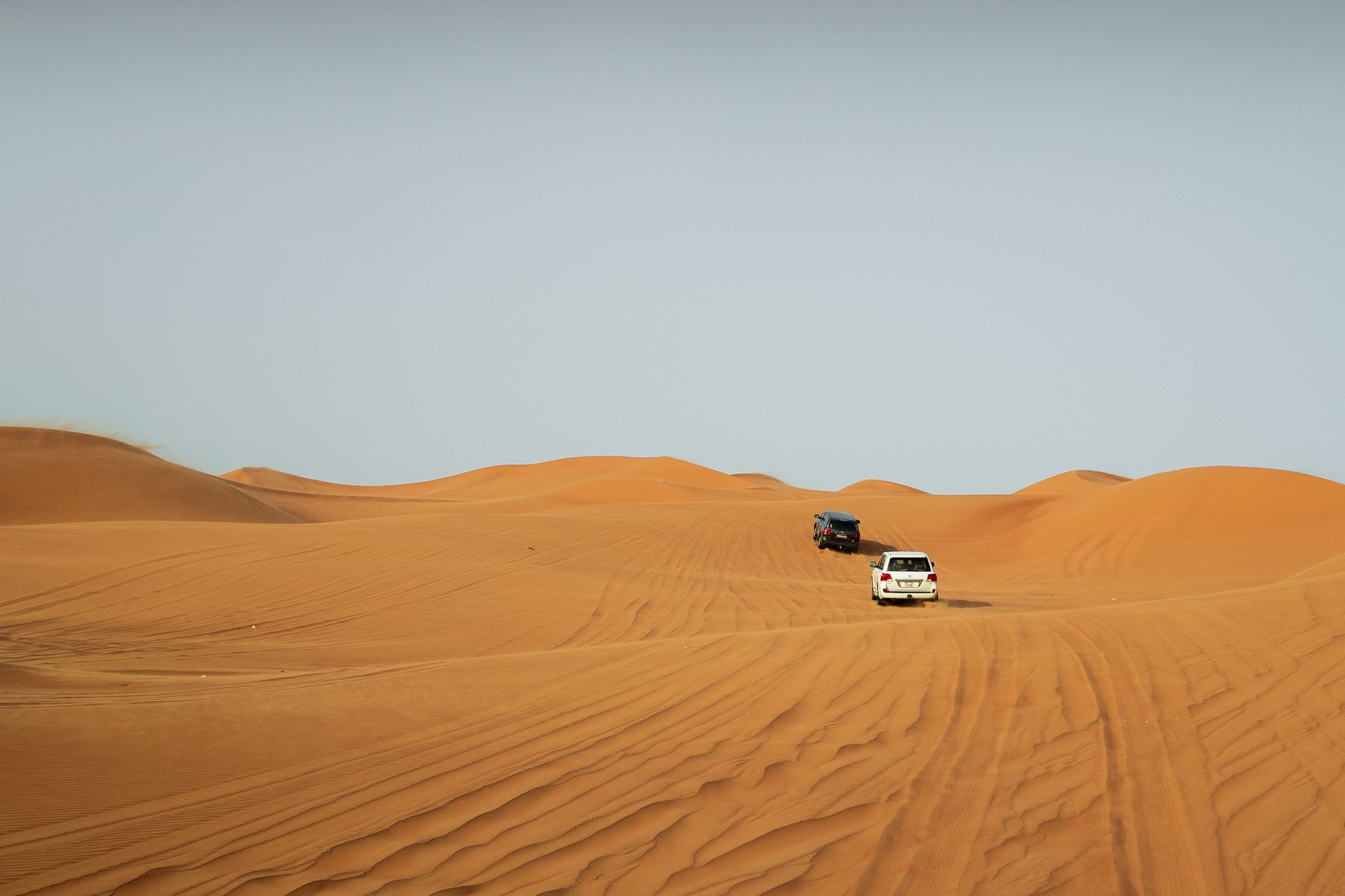
It’s a little after 4pm, the driver is letting air out of the tyres, and the red dunes of Lahbab roll away in every direction. Twenty minutes later you’re gripping the grab handle and laughing while the Land Cruiser slides sideways down a slope that looked like a wall. That’s the moment everyone pictures. But the morning vs evening desert safari question decides a lot more than when it happens.
Dubai sells three quite different trips under one name. A morning run is a short, sharp shot of dune bashing and sandboarding. An evening safari adds sunset, a camp, a barbecue and a show. An overnight stay keeps you out there until the sky turns pink again at dawn.
Pick the wrong one and you’ll either miss the part you came for or spend six hours doing things you didn’t care about. Here’s how each one really plays out, who it suits, and the booking traps that catch people far more often than the timing does.
The quick answer (if you’re in a hurry)
- Morning: pickup roughly between 7 and 9am, back by early afternoon. Dune bashing, sandboarding, sometimes a camel stop. No dinner, no shows.
- Evening: pickup mid-afternoon, back around 9 or 10pm. Sunset dune bashing, a desert camp, barbecue buffet and live entertainment. The classic first-timer pick.
- Overnight: the full evening program, then a night in a tent, a sunrise camel ride and breakfast. Back at your hotel the next morning.
- The drive out: usually 45 minutes to an hour each way from central Dubai.
- Best season: roughly October to April, when all three work well.
Planning the rest of your stay too? Keep our Dubai tours and travel guides open in another tab while you decide.
Morning desert safari: short, sharp and done by lunch
Your pickup arrives while the city is still yawning. By the time you reach the dunes, the light is soft and low, the air is at its coolest, and the only marks on the ridges are the ripples the wind left overnight.
Then the fun starts. A session of dune bashing, a few runs of sandboarding down a soft slope, and often a camel photo stop. It’s all action and very little waiting around, and you’re back at your hotel in time for a late lunch and a lazy afternoon by the pool.
Book the morning if:
- You’re travelling with young kids who won’t last until a 10pm return.
- You only have one free evening in Dubai and want it for something else.
- You care about the driving and the photos more than the dinner and the dancing.
- You get motion sick and want the shortest possible time in the car.
The honest downside: there’s no camp, no food and no show. It feels more like an activity than an experience. And even early in the day the desert sun is strong with almost no shade, so it’s a hat-and-sunscreen trip in every season.
If that sounds like your kind of morning, you can compare morning red dune safaris with sandboarding and check exactly what each one includes.
Evening desert safari: the one everyone pictures
This is the full show, and for most first-timers it’s the right call. Pickup is mid-afternoon, the dune bashing happens as the heat starts to ease, and then everyone climbs out on a high dune to watch the sun sink into the sand. The sky goes orange, then pink, then deep blue, and the dunes fade to shadow around you in minutes.
From there it’s on to camp. Expect low majlis-style cushions (or plastic chairs at budget camps), henna, a short camel ride and the smell of grilled chicken and lamb drifting across the sand. Dinner is a barbecue buffet with hummus, salads and rice: solid camp cooking, not fine dining, but there’s plenty of it. Then the lights drop for the Tanoura dancer, spinning in a blur of coloured skirts, often followed by fire and belly dance shows.
Book the evening if you want the sunset, the camp atmosphere and dinner in one go. Couples, groups of friends and families with older kids usually love it.
The catch? It’s a long outing, often six hours or more, and you won’t be back in the city until late. Camp quality also varies hugely, and the camp is exactly where cheap operators cut corners.
Visiting during Ramadan? Camps stay open, but belly dancing is paused, alcohol is limited or served only after sunset, and the Tanoura show is usually the main entertainment. Some camps mark sunset with dates and a hibiscus drink for iftar, which makes for a calmer, rather lovely version of the evening.
Overnight desert safari: sunset, stars and sunrise in one go
The evening crowd heads back to the city around 9pm. You don’t. The camp goes quiet, the music stops, and the stars come out in a way they never do over the city lights.
An overnight safari runs the full evening program, then puts you to bed in a tent. Standard camps give you a mattress, blankets and a shared bathroom block. Pricier ones swap that for a private tent with a proper bed and its own shower, and some add a hosted stargazing session with a telescope.
The alarm goes early, before 6am, so you can step out into cool, still air and watch the dunes turn from grey to gold. A sunrise camel ride and a simple breakfast of bread, cheese, eggs and coffee follow, and you’re back at your hotel by mid-morning.
Be honest with yourself: sleep is basic. It’s not your hotel bed, and you’ll find sand in places you didn’t know existed. Still, travelers almost always say the sunrise made up for it.
Book overnight if you have a spare day, love stargazing or photography, or you’re celebrating something. Skip it on a tight itinerary or the night before an early flight. When you’re ready, browse overnight desert camps with sunrise camel rides and compare the tent types before you commit.
Morning vs evening desert safari: which one suits your trip?
Still torn? Here’s the shortcut most people need, overnight option included:
- First time in Dubai, one safari only: go in the evening. It’s the version most people imagine, and it packs the most into one booking.
- Kids under about six: go in the morning. Dune bashing can scare little ones, and a tired child at a loud camp at 9pm is nobody’s idea of fun.
- Short on time: morning again. You get the thrills and keep your evening free.
- Anniversary or honeymoon: overnight, ideally in a private tent.
- Photographers: morning for clean dune lines, overnight if you want both golden hours.
- Pregnant, or dealing with back or neck problems: skip the dune bashing and ask for a camp-only or gentler scenic option.
When to go (and how the heat changes everything)
From roughly October to April, all three safaris are a pleasure. Days are warm, evenings are mild, and desert nights can get genuinely chilly, so pack a layer.
From about June to September, the desert is fiercely hot. Avoid anything in the middle of the day. The earliest morning slots and the sunset trips are the only comfortable options, and a night in a tent loses some of its charm when the sand is still warm at midnight.
Whatever the season, build in slack. Pickups run across a window rather than an exact time because the car collects guests from several hotels, so don’t book a dinner reservation straight after a morning trip. Most operators pick up from central Dubai hotels, and if you’re still weighing up where to base yourself, our look at whether an Airbnb or a hotel works out cheaper once fees are added is worth a read.
How to book a desert safari without getting stung
Choosing between a morning vs evening desert safari is the easy part. The real risk is booking on price alone and discovering that half the fun costs extra. A few questions sort the good operators from the rest:
- How many people per vehicle? Shared Land Cruisers typically take around six. Ask whether that’s fixed or a maximum.
- What exactly is included? Sandboarding, camel ride, drinks, dinner. Get it itemised, not a vague “activities included”.
- What does the camp look like? Shaded seating and real majlis cushions versus plastic chairs makes a big difference.
- Which desert? Lahbab’s red dunes are the classic dune-bashing spot. Trips inside the Dubai Desert Conservation Reserve run with a small number of approved operators and lean more towards wildlife, including Arabian oryx and gazelles.
- What do recent reviews say? Look for mentions of overcrowding and on-the-day upselling, not just the star rating.
On price: shared morning and evening trips often land in a similar range, and budget evening deals can even undercut mornings. Overnight stays usually cost roughly double a standard evening trip or more, and private vehicles cost more again. Rates move with the season and the operator, so check the booking page for current prices before you compare.
What to wear and pack
- Closed shoes. Sand fills sandals in seconds.
- Sunglasses, a hat and sunscreen, even on evening trips.
- Light, loose clothes that cover shoulders and knees.
- A warm layer for evenings and overnight stays outside summer.
- A zip bag for your phone, because dune bashing kicks up fine dust.
- Motion sickness tablets if you need them, and a light lunch before an evening trip.
Questions travelers ask
Is a morning or evening desert safari better in Dubai?
For most first-time visitors, the evening safari is better because it combines dune bashing, sunset, dinner and entertainment in one trip. The morning safari suits families with small children, travelers short on time and anyone who mainly wants the driving and sandboarding.
How long does a Dubai desert safari take?
A morning safari usually takes four to six hours including hotel transfers. An evening safari runs about six to seven hours, and an overnight safari lasts around 16 to 18 hours, from an afternoon pickup to a drop-off the next morning.
Is dune bashing safe for kids?
With a licensed operator, dune bashing is a well-established activity, but it’s rough and fast, and very young children can find it frightening. Many families choose a morning trip for a shorter ride. It isn’t recommended for pregnant travelers or anyone with back, neck or heart problems.
Is an overnight desert safari worth it?
It’s worth it if you have a spare day and want the stars and the sunrise, which evening trips miss. Sleeping conditions are basic at standard camps, so pay for a private tent if comfort matters to you.
Are quad bikes included in a desert safari?
Usually not. Quad biking and dune buggies are the most common paid add-ons, along with photo packages. Check the inclusions list before booking so the price you see is the price you pay.
One last thing. Whichever you pick, when the car stops on that first high dune, put your phone away for a minute. The silence out there, just wind and the tick of a cooling engine, is the part people remember long after the photos.
Some links in this post are affiliate links. If you book through them, we may earn a small commission at no extra cost to you.
Cover photo by Stephane Hurbe on Pexels