It’s 9am in Barrio Santa Cruz. The lanes are barely wider than your outstretched arms, orange trees throw shade across the cobbles, and a café owner is dragging chairs onto the pavement. Give it two hours and this same corner will be shoulder to shoulder. 2 days in Seville is plenty to fall for the city, as long as you spend those hours in the right order.
This plan does the big three (the Alcázar, the cathedral and Plaza de España) while it’s cool, saves Triana and the tapas bars for when the city wakes up, and tells you which famous things can wait. For more ideas across the country, browse our Spain tours and travel guides.
One honest warning: Seville runs hot. In high summer the afternoons can top 40°C, so this itinerary is built around early starts, long lunches and late nights. Exactly how locals do it.
- Best time: spring and autumn; summer works if you rest through the afternoon
- Getting in: airport bus or taxi from San Pablo Airport, or a high-speed train into Santa Justa
- Time needed: two full days covers the highlights at an easy pace
- Budget: the two big monuments are each under €20, and tapas keep dinner surprisingly cheap
Getting there (without losing your first morning)
Seville’s San Pablo Airport sits about 10km from the center. The EA airport bus runs from early morning until around midnight, stops at Santa Justa station and ends at Plaza de Armas, right on the edge of the old town. A one-way ticket costs just a few euros, paid on board by card or cash, and the ride takes 35 to 40 minutes depending on traffic.
Traveling with heavy bags or in a group? Airport taxis charge a regulated fixed fare into the center, which gets close to the bus price once you split it. Coming from Madrid, high-speed trains pull into Santa Justa in roughly two and a half hours.
Day 1 morning: the Alcázar and the cathedral before the heat
Be at the Real Alcázar at opening time, with a timed ticket booked online. You step through the Lion Gate into courtyards of carved plaster and glazed tiles, water trickling down the long pool of the Patio de las Doncellas, peacocks strolling the gardens like they own the place. They basically do.
Give it two to three hours and save the gardens for last, when you’ll want the shade. Two details catch people out: tickets carry your name, so bring your passport or ID, and you can’t take food or drinks in apart from water. Adult tickets sit under €20; check the official Alcázar website for current prices and time slots.
Then cross Plaza del Triunfo to the cathedral. Inside, the scale is almost silly: a gilded altarpiece that fills a whole wall, Columbus’s tomb carried on the shoulders of four giant figures, and cool air that feels like a gift after the Alcázar gardens.
Your ticket covers the Giralda bell tower too, and here’s the fun part: you climb ramps, not stairs, 35 of them, built wide enough for a rider on horseback. The view from the top takes in every rooftop terrace in the old town. The same ticket also gets you into the Church of El Salvador, so keep it. Opening hours change with the seasons and religious services, so check the cathedral’s official site before you go.
Want the stories behind the tiles without juggling two booking systems? You can book a guided Alcázar and cathedral tour with entry included and let someone else handle the time slots.
Day 1 afternoon: Plaza de España and sunset from Las Setas
Do what Seville does after lunch: slow right down. Eat late, around 2pm, then hide in your hotel through the hottest hours.
Around 5pm, wander through María Luisa Park to Plaza de España. It’s a huge half circle of brick and colored tiles built for an international expo in the 1920s, with a canal you can row across and a tiled alcove for each Spanish province. Pick your favorite, sit on its bench, and listen to the street guitarist echoing under the arches. Entry is free, every day.
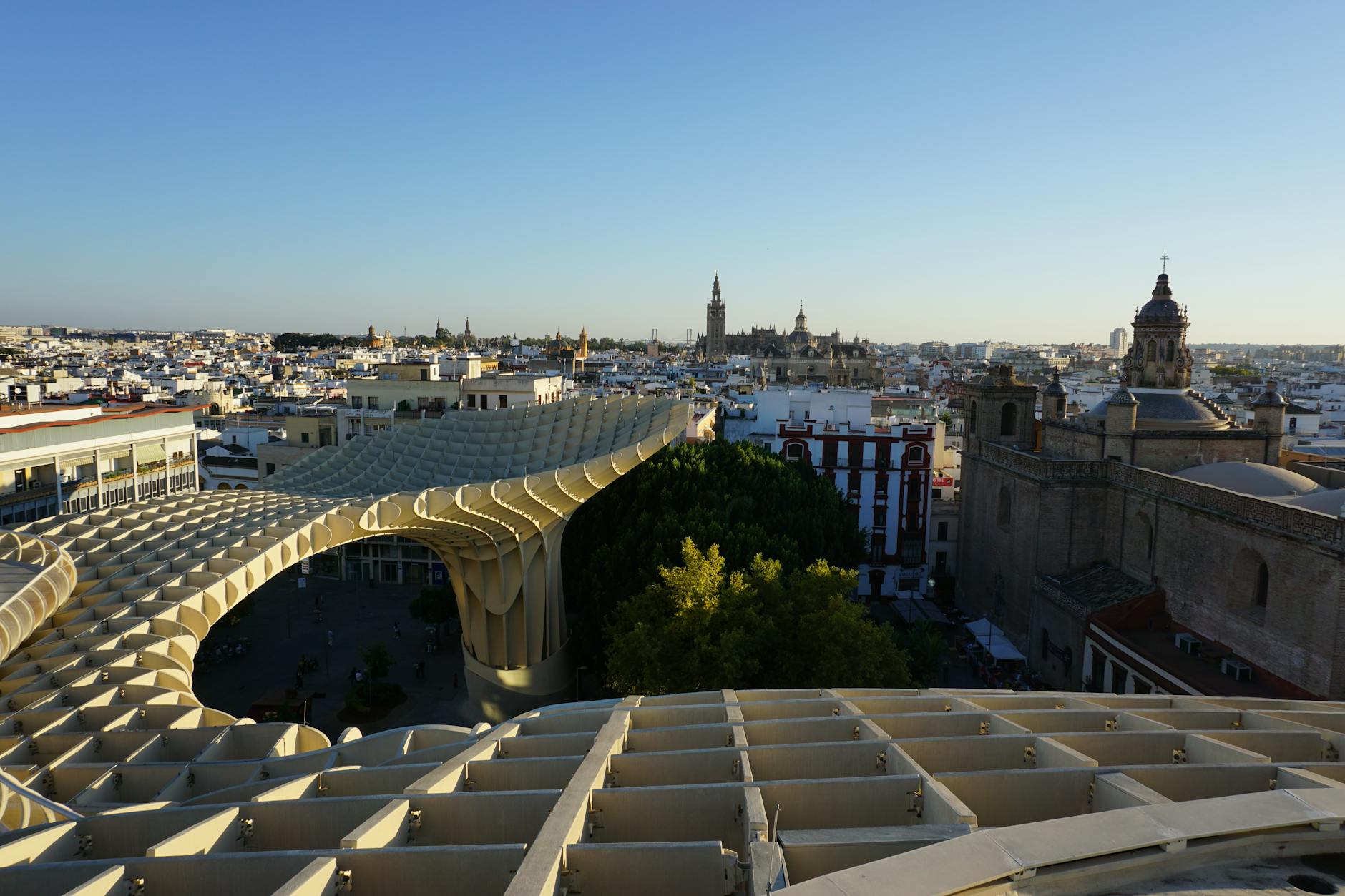
Then head north to the Metropol Parasol, which locals simply call Las Setas, “the mushrooms”. This giant wooden canopy looks like it landed from another planet, and its rooftop walkway gives you 360° views over the old town. Tickets cost about the same as the big monuments, and the walkway is at its best in the last hour of daylight.
Day 2: Triana, tiles and the other side of the river
Cross the Isabel II bridge (everyone just calls it the Triana bridge) in the morning and you’re in the neighborhood that gave Seville its potters, sailors and flamenco singers. Start at the Mercado de Triana at the foot of the bridge: glossy olives in barrels, hams hanging over the counters, fish on crushed ice, and little bars where you order a coffee and a tomato tostada standing up.
Then wander the streets behind it. Ceramic workshops still sell hand-painted tiles and bowls, and they make far better souvenirs than anything in the shops around the cathedral.
After lunch and a rest, walk along Calle Betis at golden hour, with the Torre del Oro glowing across the water and locals crowding the riverside terraces. Spend the rest of the evening back in Barrio Santa Cruz, now emptied of tour groups, getting pleasantly lost in its whitewashed lanes and tiny plazas.
Tonight: flamenco, the real kind
End your 48 hours with a flamenco show. Skip the big dinner-and-show halls and go for a small tablao, where you sit close enough to hear every heel strike and see the singer close their eyes on the high notes. Shows usually run about an hour, and the later ones tend to have the best atmosphere.
What to eat in Seville (and when to eat it)
Timing matters more than the menu. Lunch runs from about 2pm to 4pm, and nobody serious sits down to dinner before 9pm. Order tapas at the bar, a couple at a time, then move on to the next place. That’s the whole night.
- Espinacas con garbanzos: spinach and chickpeas slow-cooked with cumin and garlic, Seville’s ultimate comfort food
- Salmorejo: a thick, cold tomato cream topped with egg and ham, perfect when it’s 35°C outside
- Carrillada: pork cheeks braised until they fall apart at the touch of a fork
- Montadito de pringá: a small toasted roll stuffed with the slow-cooked meats from the stew pot
- Pescaíto frito: lightly fried fish, best eaten on the Triana side of the river
For atmosphere, find El Rinconcillo, one of the oldest bars in the city, with tiled walls, hams overhead and bar staff who move at twice your speed. Yes, it’s on every list. Yes, it’s still worth elbowing in for one plate of spinach and chickpeas.
Where to stay for 2 days in Seville
With only two days, location beats everything. You want to walk home for that afternoon siesta.
- Santa Cruz and the center: steps from the Alcázar and cathedral, but pricier and noisier at night
- Arenal: between the cathedral and the river, a good middle ground with plenty of tapas bars
- Triana: more local, often better value, and a 10 to 15 minute walk to the monuments
Planning around the big spring festival weeks? Hotels fill up months ahead and prices jump, so book early or pick another weekend.
What to skip (and what to do instead)
- Skip the horse carriages by the cathedral: a short ride costs about as much as a nice dinner and covers streets you’ll walk anyway. Do rent a rowboat on the Plaza de España canal instead.
- Skip restaurants with photo menus facing the cathedral. Do walk five minutes into Santa Cruz or across to Triana, where the tapas are better and cheaper.
- Skip sightseeing between 2pm and 5pm in summer. Do a long lunch and a proper siesta; half the city does the same.
- Skip queueing for the inside of the Torre del Oro if time is tight. Do admire it from Calle Betis, where it looks its best.
Questions travelers ask
Are 2 days in Seville enough?
Yes, for the highlights. Two days lets you see the Alcázar, the cathedral, Plaza de España, Las Setas and Triana without rushing. A third day gives you time for a museum or a day trip.
Do I need to book the Alcázar in advance?
You should. Timed tickets sell out on busy days, especially in spring, and the free Monday slots are online only. Bring the ID that matches the name on your ticket.
When is the best time to visit Seville?
Spring and autumn bring warm days and comfortable evenings. Summer is very hot but quieter in the afternoons, and winter is mild enough for sightseeing. If you’d rather have guaranteed beach days in winter, see how to pick the right Canary Island for winter sun.
Can I fit a day trip into 48 hours in Seville?
Only if you cut something. Córdoba is under an hour away by high-speed train, but a day trip there means dropping either Triana or the Setas sunset. First visit? Stay in the city.
On your last morning, look for one of the old-town convents that sell sweets through a wooden turntable: you ring a bell, put your coins on the wheel, and a box of almond biscuits spins back from a nun you never see. It’s the most Seville goodbye there is. And if you’re collecting city breaks, our first-timer’s Istanbul itinerary follows the same early-start, eat-late rhythm.
Some links in this post are affiliate links. If you book through them, we may earn a small commission at no extra cost to you.
Cover photo by DANIEL YAMPOLSCHI on Pexels