It’s late morning in Pinhão. The train doors open onto a platform lined with blue-and-white tiles of grape pickers, the air smells of warm stone and river, and the vine terraces above you climb so steeply they look stitched onto the hills. Now comes the question every Douro Valley wine tour raises: do you head back to Porto tonight, or stay?
Both work. They just give you two very different valleys. A day trip shows you the postcard. A night there gives you the quiet, a sunset from a hilltop viewpoint, and tastings without one eye on the clock.
Here’s how to choose, what each option really looks like, and the small moves that make the day feel longer than it is. For more ideas around the country, browse our Portugal tours and travel guides.
- Getting there: about 1.5 hours by road from Porto, or roughly 2 to 2.5 hours by train to Pinhão
- Best bases: Pinhão for atmosphere, Peso da Régua for convenience
- Best time: late spring, and the harvest from mid-September into early October
- Time needed: one long day minimum, two or three nights to do it properly
- Budget: the train is cheap, tastings are moderate, full-day guided tours cost the most
Day trip or overnight? The short answer
Pick a day trip if you only have two or three days in Porto, you want someone else to drive, and you’re happy with two winery visits, a long lunch and a short boat ride. That’s exactly what most organized tours deliver, and they do it well.
Stay overnight if wine is a big reason you came to Portugal, you want the valley at golden hour, or you hate being herded. One night roughly doubles what you see and halves the share of your trip spent in a van.
The honest math: the valley is about three hours of round-trip travel from Porto before you pour a single glass. On a day trip, that’s a big slice of your day. Spread over two days, it barely registers.
The Douro Valley wine tour as a day trip from Porto
A day trip is absolutely doable. You just need to pick the right way in, because each one shapes the whole day.
Option 1: a guided tour (the easy button)
Most full-day tours collect you in Porto in the morning, drive about an hour and a half into the valley, and bundle two quinta tastings, lunch and a river cruise. Expect Port and still Douro reds, sometimes olive oil on the side, and a return to Porto by early evening.
The upside is obvious: no timetables, no mountain roads, and nobody has to stay sober. The downside is the fixed script. You’ll see the viewpoints the van stops at, not the one you spotted from the window. Small-group tours, often capped at around eight people, feel far less like a school outing and are usually worth the modest extra cost.
Option 2: the train on your own
This is the one travelers rave about. The Douro line leaves from Porto’s São Bento station, famous for its tiled entrance hall, and reaches Pinhão in roughly two and a quarter to two and a half hours. Régua comes sooner, in under two. The first stretch is suburban. Past Régua, the tracks hug the river so closely you can watch fishermen on the bank.
Tickets are cheap, and a single to Pinhão is usually well under €15. There are only a handful of direct trains a day, so the classic plan is a morning train out, lunch and one or two tastings near Pinhão, and an early-evening train back. Check the timetable and current fares on the Comboios de Portugal website before you go, since schedules change and the line sometimes has maintenance works.
The catch: there’s no food or Wi-Fi on board, and many quintas need a booking. Grab a pastry at one of the cafés opposite São Bento, bring water, and email your tastings ahead. If this style of trip is your thing, our favorite train escapes from Rome follow the same easy formula.
Option 3: driving yourself
A car gives you total freedom and the famous N222 between Régua and Pinhão, all tight bends and river views. It also gives you a problem: someone has to skip the wine. As a day trip, driving only makes sense if one of you is happy to taste grape juice all day. For an overnight stay it’s a different story, and you can compare rental cars from Porto and take the valley at your own pace.
Why one night in the valley changes everything
Here’s what the day-trippers miss. By late afternoon, the tour vans head west. The dock in Pinhão goes quiet, the heat eases off the terraces, and the light turns the stone walls honey-colored.
That’s your cue to head up to a miradouro (viewpoint) for sunset. Casal de Loivos sits about ten minutes’ drive above Pinhão and looks straight down on the river bend. São Leonardo de Galafura, above Régua, is higher and wilder, with a small chapel and lines from the poet Miguel Torga set in tiles.
Then dinner: grilled fish or a plate of cured ham in a small Pinhão restaurant, with a bottle from the hill you were standing on an hour ago. No train to catch. No van at half past five.
The next morning is the real prize. You can book an early tasting before the tour groups arrive, ride a rabelo (the flat-bottomed wooden boats that once carried Port barrels downriver), or walk a vineyard path while it’s still cool. An overnight Douro Valley wine tour is simply less rushed, and the wine tastes better for it.
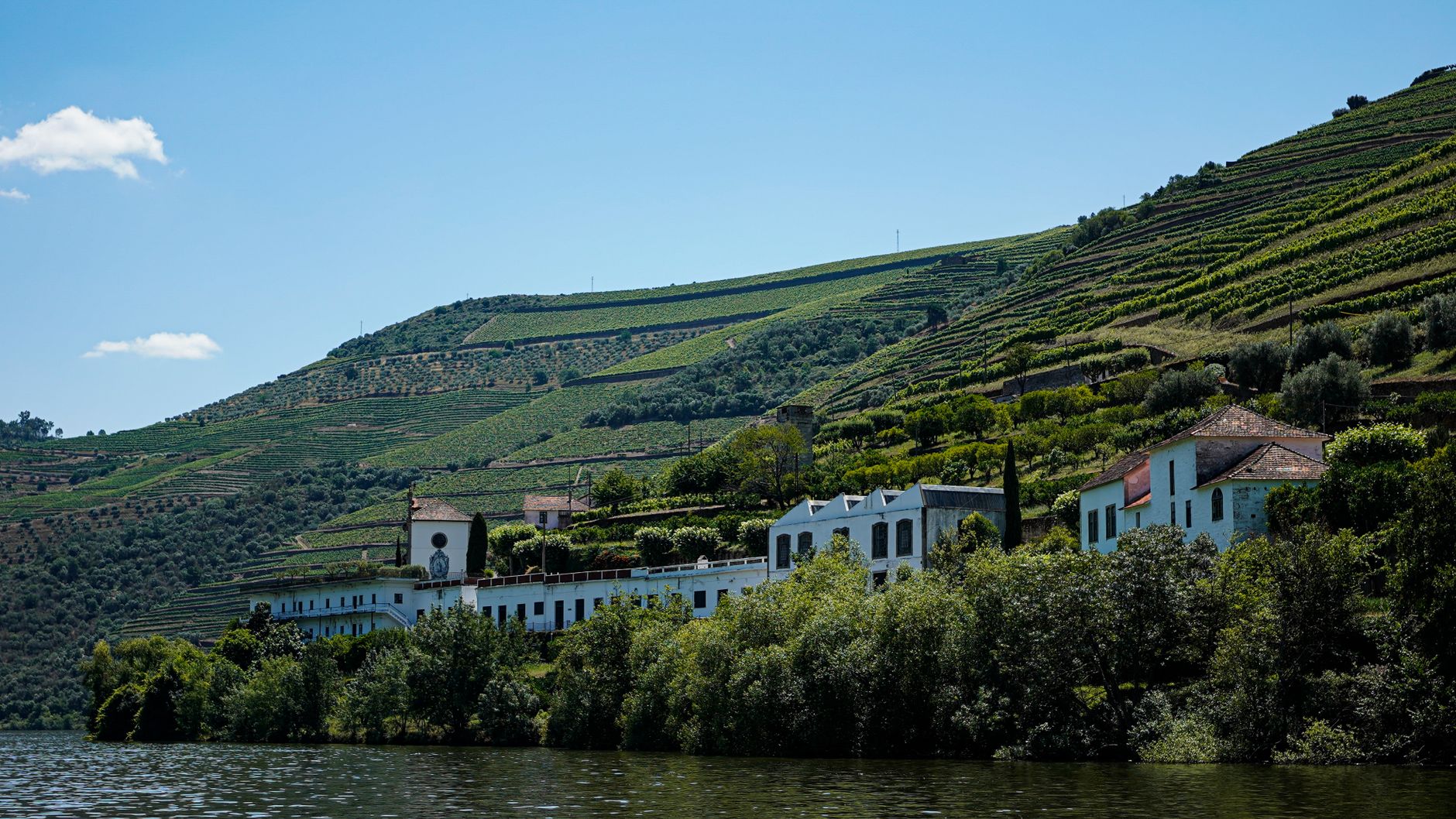
A two-day plan that actually works
Day 1
- Morning train from São Bento to Pinhão, right-side seat, pastry in hand.
- Lunch in Pinhão, then a tasting at a quinta within walking distance or a short taxi ride.
- Check in and hide from the afternoon heat.
- Sunset at a viewpoint, then dinner back in the village.
Day 2
- A morning rabelo cruise from the Pinhão dock, usually around an hour.
- A second tasting, ideally at a small family estate for contrast.
- Afternoon train back to Porto, or ride east toward Pocinho if you want the wildest stretch of track.
Only have one day? Keep the first two steps of Day 1, skip the check-in, and catch the early-evening train home.
Where to stay: Pinhão or Régua?
Pinhão is the pick for most first-timers. It’s small and pretty, it has the tiled station and the boat dock, and several well-known quintas sit within a short drive. You can do a whole stay here without a car.
Peso da Régua is the valley’s main town. It’s less charming, but it has more restaurants, more hotel choice and easy access to the western estates. It suits drivers and anyone chasing better value.
Then there are the quinta stays: rooms on working wine estates, where you wake up to vines outside the window. Many have only a handful of rooms, and the best fill up weeks ahead, especially around harvest. Book those first, then build the rest of the trip around them.
When to go (and when the grapes steal the show)
Harvest runs roughly from mid-September into early October, and it’s the valley at full volume: pickers on the terraces, tractors on the roads, the sweet smell of fermenting grapes drifting over the river. Some estates offer grape-picking or treading experiences. It’s also the busiest time, so book tastings and rooms well ahead.
Late spring is the sweet spot for many travelers, with green terraces, warm days and fewer crowds. Summer is beautiful but seriously hot down in the valley, far hotter than breezy Porto, so plan tastings for mornings and late afternoons. Winter is quiet and moody, with bare vines and some quintas on shorter hours.
Skip this, do that
- Skip cramming four wineries into one afternoon. Do two or three well-chosen visits and actually taste.
- Skip the midday rush at the Pinhão dock. Do the first cruise of the morning or the last of the afternoon.
- Skip driving after tastings. Do the train, a taxi or a tour, and enjoy the Port properly.
- Skip just turning up. Do email quintas a week or two ahead, since many only take visits by appointment.
Questions travelers ask
Is a Douro Valley wine tour worth it from Porto?
Yes, if you like wine or big landscapes. The Alto Douro Wine Region is a UNESCO World Heritage site, shaped by centuries of hand-built terraces. Just know it’s a long day with around three hours of travel, so choose a tour with fewer stops if you want time to enjoy it.
Can you visit the Douro Valley without a car?
Easily. The train reaches Régua and Pinhão, several quintas are walkable or a short taxi ride from Pinhão, and boats leave right from the dock. A car helps for remote viewpoints, but you don’t need one.
How many days do you need in the Douro Valley?
One day shows you the highlights. Two or three nights let you add sunsets, quieter tastings and a cruise without rushing.
Do you need to book wineries in advance?
Usually, yes. Many quintas work by appointment, and slots fill quickly from late spring through harvest. Book a week or two ahead, and much earlier for harvest weekends.
One last tip: on your Douro Valley wine tour, buy a bottle at the estate you loved most rather than waiting for the airport. Every time you open it back home, you’ll be right back on that terrace, glass in hand, watching the river turn gold. Saúde!
Some links in this post are affiliate links. If you book through them, we may earn a small commission at no extra cost to you.
Cover photo by Gotta Be Worth It on Pexels